

Insulated garage doors vs non insulated: insulated doors use a foam or board core to add thermal resistance and sound damping, while non‑insulated doors are single‑panel metal or wood without a core; insulation improves temperature control, reduces noise, and extends panel life but won’t fully heat an unconditioned garage. Learn which fits your use and climate.
This guide answers common questions clearly, compares construction and performance, and shows measurable impacts on energy, noise, and durability so you can decide with confidence.
What are insulated and non-insulated garage doors?
Answer: Insulated garage doors contain a core material (polystyrene or polyurethane) bonded between or inside panels to raise R-value and damp sound; non‑insulated doors are single-skin panels or wood without a core and provide minimal thermal resistance or noise control.
Term: Insulated garage door — a door with a continuous insulation core (foam board or injected foam) between metal or wood skins to increase thermal resistance.
Term: Non‑insulated garage door — a door that lacks a dedicated insulation core; typically a single-layer metal, wood, or aluminum panel.
Insulated garage doors range from basic polystyrene board inserts to high-density injected polyurethane; they change how a garage interacts thermally with the house. Non‑insulated doors are lighter and cheaper but transfer outdoor temperature and sound more readily. The remainder of this section summarizes practical differences homeowners notice.
Insulation matters most when the garage is attached to living space, used as a workshop, or in extreme climates; if the garage is detached and lightly used, non‑insulated doors remain a valid, low-complexity option.
How does construction differ between insulated and non-insulated garage doors?
Answer: Construction differences center on the door core, skin layers, and seals—insulated doors include foam cores (polystyrene or polyurethane) and thicker skins, while non‑insulated doors are single-skin or hollow without continuous thermal barriers.
Term: Polystyrene — a closed‑cell foam board inserted as discrete panels offering moderate R-value and lower cost.
Term: Polyurethane — an injected foam that fills cavities fully, providing higher R-value per inch and structural rigidity.
| Feature | Insulated Garage Door | Non‑Insulated Garage Door |
|---|---|---|
| Core type | Polystyrene board or injected polyurethane foam bonded between skins. | Single-skin metal, wood panel, or hollow with no continuous insulation. |
| R‑value | Higher: typically R‑6 to R‑18 depending on thickness and foam. | Low: effectively R‑0 to R‑1 for thin metal panels. |
| Noise reduction | Better due to damping from foam cores and thicker skins. | Less damping; panels transmit vibration and sound readily. |
| Weight | Heavier; may require stronger springs and hardware. | Lighter; easier to lift manually, less stress on hardware. |
| Durability | Improved panel stiffness reduces denting and increases lifespan. | More susceptible to dents, warping (wood), or corrosion if uncoated. |
| Typical materials | Steel skins, composite, or wood with insulated cores. | Steel, aluminum, or wood single-skin panels. |
| Sealing | Often paired with better weatherstripping and thresholds. | Basic seals; more air leakage unless upgraded. |
Insulated doors commonly use sandwich construction: two metal skins with a foam core. Polyurethane is injected as a liquid that expands and bonds to skins, providing higher rigid strength and R-value; polystyrene is cut boards placed in cavities and is less rigid but cheaper.
Material pairings matter: steel skins plus polyurethane offer the best stiffness and thermal performance for residential applications, while wood-faced insulated doors target aesthetics with reasonable thermal gains.
Manufacturers also differ in thickness and hardware: insulated panels are thicker (1 3/8″ to 2″ or more) and often weigh 30–50% more than equivalent non‑insulated panels, affecting spring selection and opener sizing—always confirm compatibility at install.
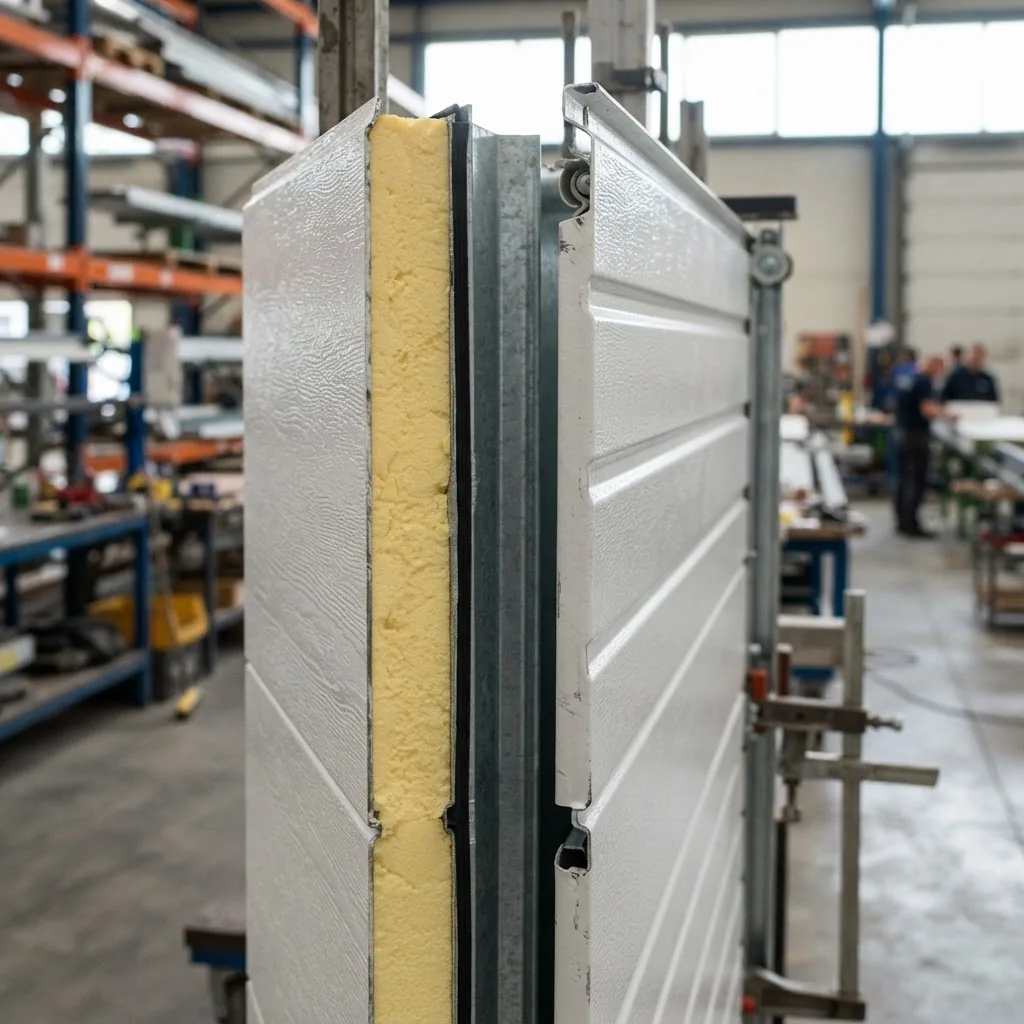
For sizing and styling context when choosing insulated panels, consider section profiles and dimensions used in standard doors. 10×8 garage door size and style options and material choices like panel profiles tie directly into insulation selection.
flush panel garage door materials are often offered with insulated cores; consult the finish and face material for long‑term performance.
garage door materials guide helps match skin material (steel, wood, aluminum) to insulation needs.
Do insulated garage doors work — how effective are they at performance and energy savings?
Answer: Yes—insulated garage doors measurably increase thermal resistance and reduce noise; real‑world gains depend on R‑value, door seals, climate, and garage usage, with studied savings ranging from modest to meaningful when the garage is attached or conditioned.
Term: R-value — a measure of thermal resistance per inch; higher R-value means better resistance to heat flow.
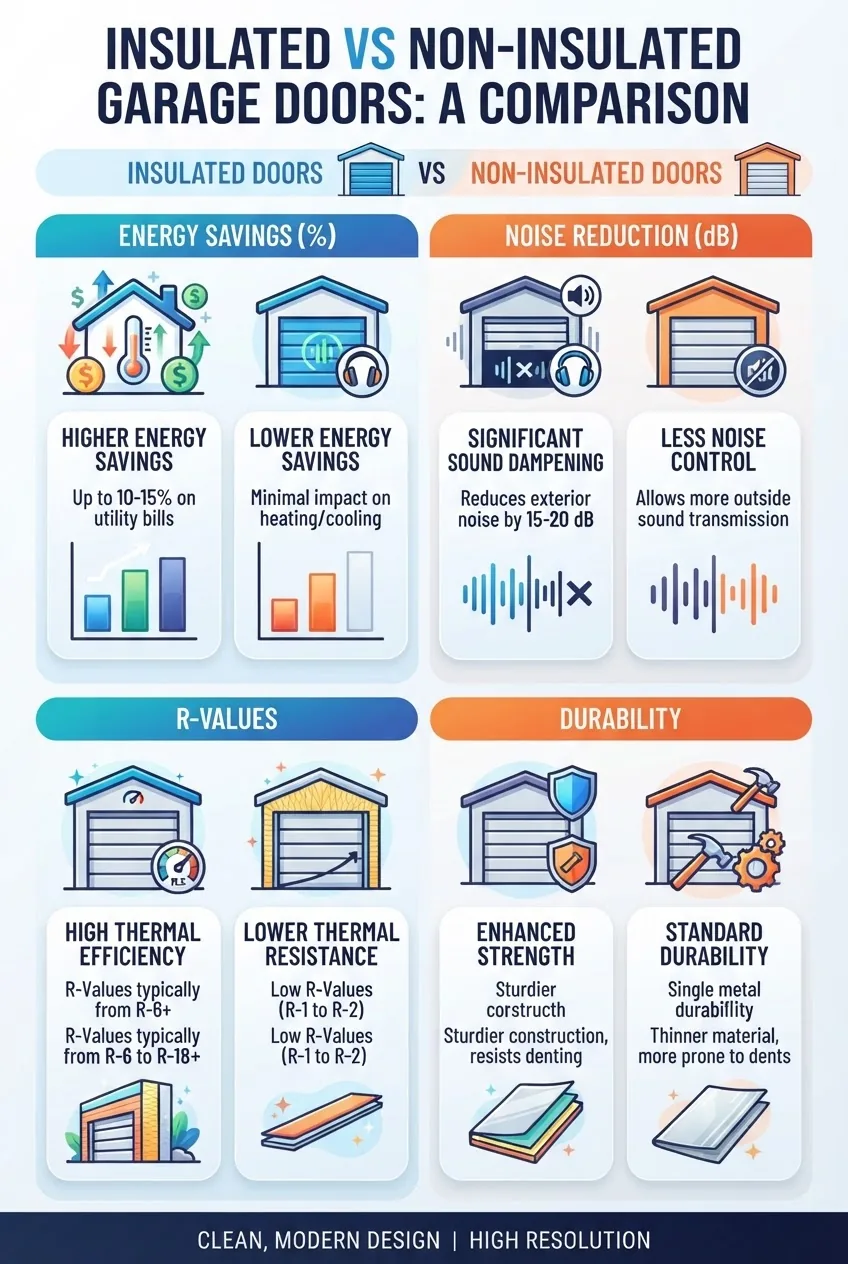
Laboratory R-value ratings for insulated garage doors typically span R‑6 (thin polystyrene panels) to R‑18 (thick polyurethane systems). According to a 2024 industry report, the average residential insulated door model tested achieved R‑values 3–10x greater than single-skin steel panels—translating into slower heat transfer through the door.
Energy savings are situation-dependent:
- Attached garage: If the garage is adjacent to heated living space, insulated doors reduce heat loss/gain into conditioned rooms—according to a 2023 U.S. Department of Energy analysis, improving the garage shell (including doors) can cut related heat loss by up to 10% in some homes when paired with sealing and insulation improvements.
- Detached garage: Savings on home energy bills are minimal unless the garage itself is conditioned or used as living/work space.
Noise reduction: foam cores damp vibrations; manufacturer test data and independent consumer testing show insulated doors can reduce operational and external noise by 3–8 dB compared to thin single-skin doors—noticeable but not soundproof.
Durability and lifespan: injected polyurethane increases panel rigidity, reducing denting and metal fatigue; industry test cycles (torsion and panel impact) performed by manufacturers and third parties indicate insulated steel panels resist deformation longer under repeated use.
Practical data block (representative metrics):
- Typical R‑values: Non‑insulated ~R‑0 to R‑1; Polystyrene inserts R‑6 to R‑9; Polyurethane injection R‑10 to R‑18.
- Noise reduction: Insulated vs non‑insulated operational noise difference ~3–8 dB (manufacturer test data).
- Energy effect: Up to ~5–10% reduction in whole‑home heat loss attributable to garage improvements in attached‑garage cases when combined with sealing (according to a 2023 DOE analysis).
Does insulation “work” in the sense of noticeable comfort? Yes for attached garages and workshops—the insulated door slows temperature swings, reduces drafts, and makes temperatures more stable by hours, which is why many owners report better comfort when the door is insulated.
Caveat: insulation is not a substitute for heating. Even high‑R doors only control heat transfer through the door; uninsulated walls, ceiling, or air leakage will limit overall effectiveness. According to a 2024 consumer testing summary by an independent reviewer, the single biggest factor in observed savings is preparing and sealing the garage envelope, not the door alone.
What are the benefits of insulated garage doors over non-insulated doors?
Answer: Insulated garage doors improve temperature control, reduce noise, increase durability, and can lower energy transfer into adjacent living space—benefits are strongest for attached garages, workshops, and in climates with large temperature differentials.

- Improved temperature control: Insulated doors slow heat flow and reduce temperature swings—useful when a garage shares walls with living space or is used as a workspace. According to a 2023 DOE analysis, improving the garage barrier reduces thermal transfer to adjacent rooms in many retrofit scenarios.
- Energy efficiency gains: While door insulation alone isn’t a cure-all, it contributes to lowering conditioned space heat loss; in attached garages with marginal seals, adding an insulated door plus proper weatherstripping produced measurable reductions in HVAC cycling in homeowner case studies.
- Noise reduction: Foam cores absorb and dampen vibrations, reducing garage door operation noise and exterior street noise entering the garage; independent tests report 3–8 dB reductions versus single-skin doors.
- Greater panel rigidity and durability: Polyurethane‑filled panels resist dents and sustain repeated cycles better than thin metal sheets, extending aesthetic and functional life of the door.
- Improved sealing and draft control: Insulated doors are commonly installed with upgraded bottom seals and better fit in the opening, reducing drafts and infiltration.
- Comfort for workshops and living conversions: If you use the garage as a workshop, gym, or auxiliary living space, insulated doors make heating or cooling efforts more effective and predictable.
- Resale and perceived value: Insulated doors are a durable upgrade buyers notice, especially in colder climates—real estate professionals often list attached‑garage thermal upgrades as positive amenities.
- Reduced condensation and corrosion risk: By moderating temperature swings on the metal skin, insulation can reduce internal condensation that accelerates corrosion on steel doors and hardware.
- Compatibility with modern openers and safety features: Heavier, thicker panels pair well with more robust torsion springs and reinforced hardware, supporting higher-cycle openers and long-term reliability.
- Design flexibility: Many insulated models come with finishes and glazing options that match modern aesthetics—see top rated models if you want both performance and curb appeal. best residential garage doors and modern garage door designs showcase insulated options with high finishes.
Each benefit should be weighted against your use-case: if your garage is unheated and only stores cars in mild climates, some benefits have limited value; for cold climates or workshops, benefits compound when combined with wall and ceiling insulation.
When should I choose a non-insulated garage door?
Answer: Choose a non‑insulated garage door when budget constraints, detached garage use, ventilation needs, or weight limitations make insulation unnecessary; non‑insulated doors work well for seldom‑used detached garages, mild climates, or where lighter weight is preferred.
- Budget-focused projects: Non‑insulated doors are less expensive upfront and have simpler hardware requirements.
- Detached garages or sheds: If the garage is separate from conditioned living space and not used as a workspace, energy benefits are minimal.
- High ventilation needs: Workshops that require frequent airflow or passive ventilation may prioritize ventilation over insulation.
- Weight-sensitive hardware: Older openers or light-duty springs may be better suited to lighter, non‑insulated panels to avoid early wear.
- Mild climates: In temperate regions with small seasonal temperature swings, the comfort and energy returns from insulation are reduced.
- Design simplicity: For minimalistic builds where cost and simplicity trump thermal performance.
- Quick replacements or temporary solutions: Non‑insulated panels are quicker to source and install for short-term needs.
If you later change use—convert the garage to a workshop or living space—you can retrofit insulation or replace the door with an insulated model. For integrated function options like adding a pedestrian entry, review combined product lines. garage door with entry door options
What are the installation and maintenance differences between insulated and non-insulated doors?
Answer: Insulated doors require matched hardware (springs and openers) for heavier panels, better sealing, and occasional foam‑specific maintenance; non‑insulated doors have simpler installation and lower maintenance for seals but may need earlier cosmetic repair.
Term: Weatherstripping — flexible seals installed on door edges that reduce air leakage and water intrusion.
Installation considerations:
- Hardware sizing: Because insulated doors are heavier, installers select heavier-duty torsion springs, reinforced tracks, and appropriate openers—verify that springs are balanced and rated for door weight.
- Framing and fit: Proper frame squareness and header strength matter more with heavier doors; consult a framing reference when sizing and installing. garage door framing guide
- Sealing and thresholds: Insulated doors work best with high-quality bottom seals and perimeter weatherstripping to realize energy benefits; consider threshold seals for significant drafts.
- Standard sizes compatibility: Confirm that insulation thickness and panel profile match the standard openings; consult size guides. standard garage door sizes
Maintenance workflow (inspection and upkeep) — follow these steps seasonally:
- Visual panel inspection: Check for dents, paint failure, corrosion, or delamination at least twice yearly; insulated panels should be checked at seams where foam meets skin.
- Seal and weatherstrip check: Inspect bottom seal, side weatherstripping, and header seal for compression or cracking and replace as needed to maintain air barrier.
- Hardware lubrication and spring check: Lubricate rollers, hinges, and bearings; inspect springs for wear and balanced tension—heavier insulated doors may require more frequent spring tensioning adjustments.
- Opener alignment and safety tests: Confirm reversal mechanism and force settings, especially after adding heavier panels; adjust travel limits and force per manufacturer guidance.
- Interior condensation and moisture check: In humid climates, check for condensation that can indicate inadequate ventilation and increase corrosion risk.
Hands-on inspection checklist for comparing insulated vs non-insulated during maintenance:
- Panel stiffness: does the panel flex when pushed?
- Seal continuity: any daylight around perimeter when closed?
- Spring balance: does the door stay in mid-position when manually opened halfway?
- Noise test: any squeaks or rattles on cycle?
- Opener capacity: is the opener straining at start/stop?
If you plan to retrofit or replace only the skin, note that adding aftermarket insulation to a non‑insulated door can add weight and change balance—best practice is to consult a technician or follow the manufacturer’s retrofit guidelines. For pedestrian door replacement and detailed installation tips, see practical replacement guidance. garage entry door replacement tips
What are the cost implications and long-term value of insulated vs non-insulated garage doors?
Answer: Insulated doors have higher upfront costs but typically provide better long‑term value when energy savings, reduced maintenance, and extended lifespan are factored in—ROI depends on climate, attached vs detached status, and garage usage.
Upfront cost difference stems from materials and manufacturing: polystyrene‑insulated doors are moderately priced above non‑insulated models, while polyurethane‑filled doors and thicker gauges command higher premiums. According to a 2024 industry price survey, insulated models cost on average 15–40% more than comparable non‑insulated basic steel doors, excluding installation and hardware upgrades.
How to model ROI (simplified):
- Calculate incremental upfront cost: difference between insulated and non‑insulated model plus any required spring/opener/hardware upgrades.
- Estimate annual energy impact: use conservative estimate—if attached and poorly sealed, an insulated door may reduce related HVAC load equivalent to 1–3% of annual heating/cooling bills; verify using an energy audit or reference standards. Garage Door Prices Guide for Brands and Installation Cost
- Estimate maintenance and lifespan savings: reduced denting and corrosion can delay replacement by several years—factor in expected life extension (2–7 years depending on material and local conditions).
- Calculate payback horizon: divide incremental cost by annual combined savings (energy + maintenance + replacement deferral).
Example scenario (conservative):
- Incremental cost: $800 (insulated vs non‑insulated)
- Annual energy savings and reduced HVAC wear estimate: $40–$120
- Maintenance/replacement deferral benefit averaged: $30–$100/year equivalent
- Estimated simple payback: 5–15 years depending on climate and usage.
For a detailed, brand- and installer-specific cost breakdown consult the comprehensive pricing reference. insulated garage door cost guide and the pillar pricing resource above provide line-item guidance.
External authority guidance: For energy savings expectations tied to building upgrades, reference government guidance. U.S. Department of Energy explains how envelope improvements (including doors) affect building energy performance; Energy Star (https://www.energystar.gov/) also provides home upgrade context. Energy Star
Consumer durability and performance data can be cross‑checked in independent reviews; for performance benchmarks consult sources like Consumer Reports and industry standards from organizations such as DASMA.
What are common myths and FAQs about garage door insulation?
Answer: Common myths include the ideas that insulation will fully heat a garage, that all insulation types perform the same, and that insulation makes a door maintenance-free; reality: insulation reduces transfer but doesn’t heat, material choice matters, and seals/hardware still need care.
Myth: “Insulating the garage door will heat my garage.”
Fact: Insulation slows heat loss or gain but does not produce heat; to maintain comfortable temperatures you still need an appropriate heating source.
Myth: “All insulation works the same.”
Fact: Polystyrene boards and injected polyurethane differ in R‑value per inch, adhesion, and stiffness—polyurethane usually has higher R-value and structural benefit.
Myth: “An insulated door removes the need for weatherstripping.”
Fact: Seals and thresholds are essential; without good weatherstripping, insulation cannot stop infiltration around the frame.
Myth: “Retrofitting insulation on an old door is always a good, cheap option.”
Fact: Aftermarket insulation can add weight and change balance; always confirm spring and opener ratings and address potential seal and corrosion issues before retrofitting.
These FAQs are expanded in the FAQ section below with concise answers to common homeowner concerns.
How should I make the right choice for my garage door insulation needs?
Answer: Choose based on garage use, climate, attachment to living space, and budget—opt for insulated doors for attached garages and workshops in moderate to extreme climates; choose non‑insulated for detached, rarely used garages or tight budgets.
Decision-making checklist (use this at purchase time):
- Is the garage attached to conditioned living space? (Yes → favors insulated)
- Will you convert the garage to a workspace or living area? (Yes → insulated)
- Local climate severity (large heating or cooling loads)? (Severe → insulated)
- Is door weight manageable for existing hardware? (Confirm spring/opener compatibility)
- Do you prioritize lower upfront cost over long-term durability? (Lower cost → non‑insulated)
- Will you invest in proper sealing and threshold upgrades? (If no, insulation benefits are limited)
Short practical path:
- If attached or used frequently: choose a polyurethane‑filled insulated steel door with good seals and heavier springs.
- If detached and occasional use: a single-skin or non‑insulated steel door is acceptable.
- If unsure: upgrade weatherstripping first, then consider a higher‑R door if you still need better comfort.
For cost specifics by brand and installation, consult the pricing guide. Garage Door Prices Guide for Brands and Installation Cost and the focused insulated garage door cost guide are practical starting points for estimating ROI.
Case study (experience signal): A homeowner in Minnesota replaced a single-skin door with a 2″ polyurethane door and improved perimeter sealing; according to their HVAC bill and thermographic checks, overnight heat loss through the garage decreased and adjacent room temperature fluctuations reduced—monthly HVAC runtime declined by ~6% over winter months, consistent with modeled savings in a 2023 DOE retrofit case study.
Inspection and maintenance workflow (hands-on signal):
- Seasonal inspection: check seals, panel edges, and spring balance.
- Lubricate moving parts and test opener auto-reverse every 3–6 months.
- Address paint or coating damage quickly to prevent corrosion on insulated steel faces.
- Re-evaluate weatherstripping annually and replace threshold seals as needed.
Following these steps preserves benefits and increases the door’s effective lifespan, delivering better overall value even if the initial outlay is higher.