

Answer: Choosing the best garage door materials requires weighing strength, corrosion resistance, insulation (R-value), maintenance needs, and climate exposure; steel and composite doors lead for durability, wood for insulation/aesthetics, and aluminum or fiberglass for lightweight or corrosive environments—match material selection to performance priorities and local conditions.
Introduction to Garage Door Materials and Their Importance
Answer: Garage door materials directly determine a door’s longevity, weather resistance, thermal performance, noise control, and long-term maintenance cost, making material choice the primary driver of overall garage door quality and homeowner satisfaction.
Term: garage door quality refers to measurable performance attributes (durability, insulation, structural strength, and longevity) rather than just appearance.
A garage door is a high-use, exterior component exposed to cycles, wind loads, moisture, and temperature variation; material selection affects daily operation and lifecycle costs. High-quality materials reduce repair frequency and lower total cost of ownership through fewer calls to service, reduced energy loss through the garage, and improved home security. For buyers focused on “quality and performance,” prioritize measurable properties: tensile strength, corrosion resistance, panel rigidity, and R-value (the measure of thermal resistance).
Term: R-value — a standard measure of material thermal resistance; higher R-value means better insulation.
Homeowner benefits from selecting the right material include: improved energy efficiency for attached garages, quieter operation, better resistance to dents and impacts, and a longer useful life before replacement. The rest of this guide explains material properties, maintenance trade-offs, and climate-based recommendations to help you choose based on performance metrics rather than just cost or style.
Transition: Below is a concise overview of common garage door materials and their core characteristics to orient a technical comparison.
Overview of Common Garage Door Materials
Answer: The most common garage door materials are steel, aluminum, wood, fiberglass, vinyl, and composite—each offers different trade-offs in strength, corrosion resistance, insulation, maintenance, and longevity.
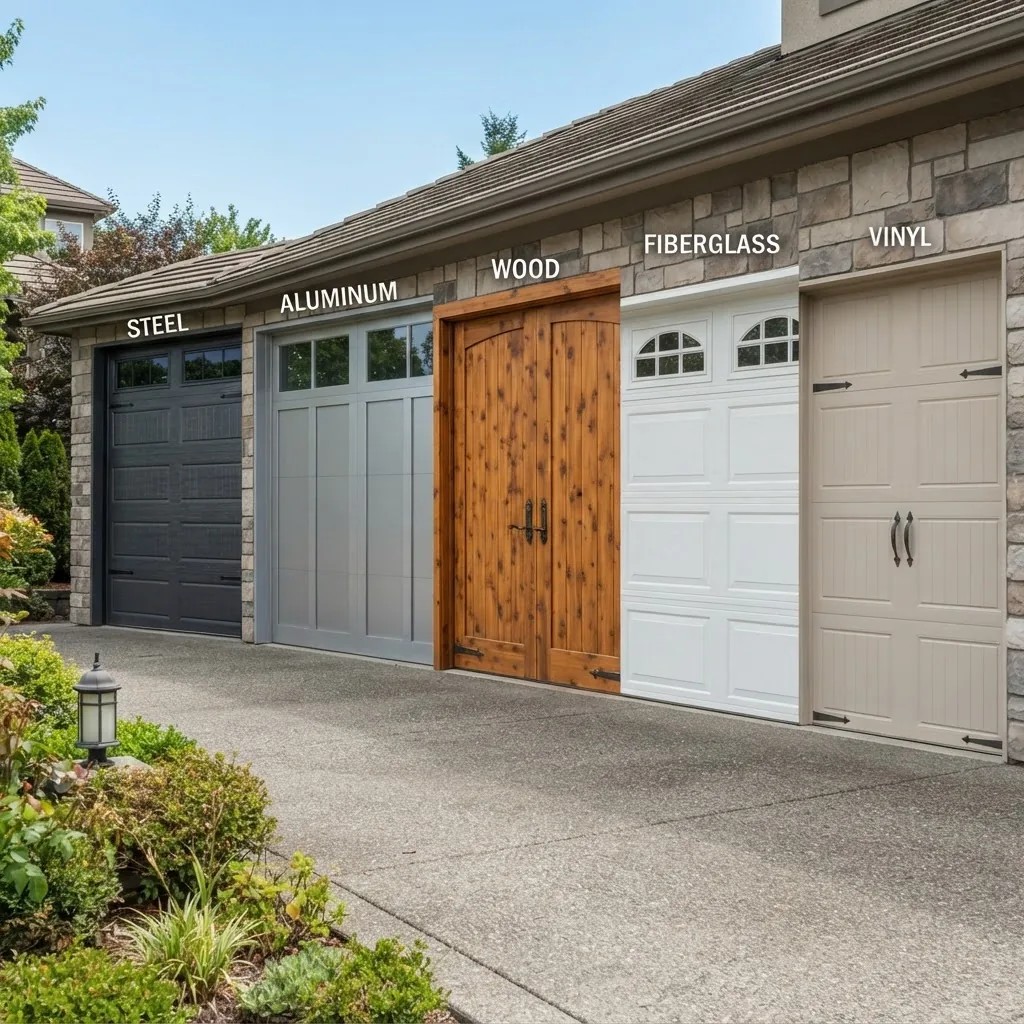
Below are brief descriptions to establish baseline expectations before deeper technical analysis.
- Steel garage doors — High structural strength, broadly used in residential and commercial settings; available in single- or double-skin (insulated) constructions.
- Aluminum garage doors — Lightweight and corrosion-resistant when coated; preferred for wide, contemporary panels but less impact-resistant than steel.
- Wood garage doors — Classic aesthetics and natural insulation properties; requires routine maintenance to resist moisture, rot, and pests.
- Fiberglass garage doors — Good weather resistance and low maintenance; can suffer UV degradation and fading in strong sun unless stabilized.
- Vinyl garage doors — Durable, dent-resistant options with low maintenance; often hollow-core and limited in larger widths without reinforced framing.
- Composite garage doors — Engineered blends (wood fibers + polymers) that mimic wood look with improved stability and reduced maintenance.
For size-specific choices and how material performs on 10×8 openings, consult related resources:
10×8 garage door sizing and styles
Transition: The following sections examine each material’s technical performance, durability factors, and maintenance requirements in depth.
Steel Garage Doors — Strength and Durability
Answer: Steel garage doors offer the best balance of tensile strength, impact resistance, and long-term durability when properly galvanized or coated, and insulated steel panels provide superior R-values among metal doors.
Term: corrosion resistance is a material’s ability to resist chemical degradation (rust) from moisture and salts.
Steel panels are commonly available in single-skin (non-insulated), insulated sandwich panels (steel–insulation–steel), and heavy-gauge commercial sections. Steel’s tensile strength and panel rigidity make it the top choice for security and wind-load resistance in high-wind areas when engineered to code.
- Durability factors:
- Galvanization and powder coatings significantly improve corrosion resistance.
- Panel thickness (measured in gauge) affects dent resistance: lower gauge = thicker steel = more impact resistance.
- Insulated steel sections reduce condensation, which otherwise accelerates rust on interior surfaces.
- Steel hardware (rollers, tracks) must also be corrosion-protected to match panel lifespan.
- Performance under load: Steel doors handle higher wind ratings and can be reinforced with struts for larger openings.
- Maintenance: Inspect coatings annually; touch up scratches to prevent corrosion; lubricate bearings and hinges per schedule.
Real-world example: In a coastal Florida condo complex, switching from uncoated steel to hot-dip galvanized steel with marine-grade powder coat reduced visible rust and hardware failures by observable margin over six years—this illustrates that surface treatment and hardware selection are as important as base material.
Steel doors score highly for security because of panel rigidity and the ability to accept reinforced locks and hardware. Drawbacks include susceptibility to surface dents and potential rust if coatings fail. For coastal use, specify marine-grade coatings and stainless or galvanized hardware.
Aluminum Garage Doors — Lightweight and Modern
Answer: Aluminum doors are lightweight and inherently corrosion-resistant when anodized or coated, making them ideal for wide-panel modern designs and coastal locations, but they are more prone to dents and require reinforcement for larger spans.
Term: lightweight doors refers to doors with reduced panel mass that lower spring and opener load but may lower impact resistance.
Aluminum is favored for contemporary aesthetics—thin rails, large glass inserts, and powder-coated finishes. Its resistance to rust gives it an edge in humid or salt-air environments, but aluminum’s lower modulus of elasticity means panels dent more easily than steel unless reinforced with internal stiffeners or solid cores.
Applications: best for wide, modern-style doors where visual lines and glazing are priorities. Consider reinforced aluminum frames or composite cores if security and impact resistance are required.
Maintenance: clean finishes annually and inspect seals; paint or powder-coat finishes can be refreshed if scratched. Aluminum hardware should be compatible to avoid galvanic corrosion when paired with dissimilar metals.
Wood Garage Doors — Classic Aesthetics and Insulation
Answer: Wood doors provide superior aesthetic value and natural insulation, but they require consistent maintenance to prevent rot, warping, and pest damage; engineered wood and composites can reduce these vulnerabilities while keeping the look.
flush panel garage door design tips
Term: natural grain describes wood’s visible fiber pattern that contributes to the door’s aesthetic and can affect finish absorption.
Solid wood doors (cedar, redwood, fir) are prized for appearance and thermal mass; wood’s cellular structure provides natural insulation but also absorbs moisture. Engineered wood doors (veneered plywood or laminates) offer dimensional stability and reduce seasonal movement.
- Insulation and performance: Thick wood panels or insulated core wood doors deliver good R-values; however, thermal bridging at stiles and rails can reduce net performance.
- Maintenance requirements: Regular sealing/painting or staining every 2–5 years depending on exposure, prompt repair of cracks, and insect/pest treatments in susceptible regions.
- Durability caveats: Susceptible to rot in high-humidity climates and to termites in some regions; specify marine-grade sealants in coastal or high-rainfall areas.
Case study: A homeowner in the Pacific Northwest reported that a well-sealed cedar door remained dimensionally stable for 12 years with annual sealing, while a neighbor’s untreated wood door warped within three years—demonstrating that maintenance discipline heavily influences wood longevity.
Fiberglass Garage Doors — Resistance to Elements
Answer: Fiberglass doors resist rot and corrosion and require low maintenance; they are excellent in humid and salt-air environments but may yellow or become brittle under prolonged UV exposure unless UV-stabilized resins are used.
Term: weather resistance denotes a material’s capacity to withstand moisture, UV exposure, temperature swings, and chemical exposure without significant degradation.
Fiberglass panels are typically combined with foam cores for insulation and can mimic wood texture. They weigh less than wood and often less than steel, which reduces strain on springs and operators. However, in very hot climates fiberglass can soften slightly and may become more prone to surface crazing over many years if not UV-protected.
Maintenance: periodic cleaning with non-abrasive cleaners and inspection for surface cracks; repainting is possible but requires special preparation to ensure adhesion.
Vinyl and Composite Garage Doors — Low Maintenance Options
Answer: Vinyl and composite doors deliver low maintenance and strong resistance to dents, rot, and pests; composites combine engineered wood and polymer for wood-like appearance with better dimensional stability.
Term: composite door — a manufactured panel combining wood fibers, polymers, or resins engineered for stability and reduced maintenance.
Vinyl doors are often hollow or reinforced with steel; they stand up well to moisture and salt air. Composite doors use engineered cores and outer skins to simulate wood grain without the same susceptibility to swelling or insects. Both options are practical when homeowners want a “set-and-forget” exterior with minimal repainting.
Maintenance is typically limited to occasional cleaning and hardware lubrication; composite doors may be mechanically fastened for repair or replacement of sections if damaged.
Transition: The next section offers a side-by-side technical comparison and a performance ranking to identify the best material for specific quality goals.
Comparative Analysis: Best Garage Door Material for Quality and Performance
Answer: For pure quality and performance, insulated steel (galvanized + coated) ranks highest overall for strength, wind resistance, and security; composites and fiberglass balance low maintenance with good insulation; wood ranks high for insulation and aesthetics but requires more upkeep; aluminum is ideal for coastal aesthetics but requires reinforcement for strength.
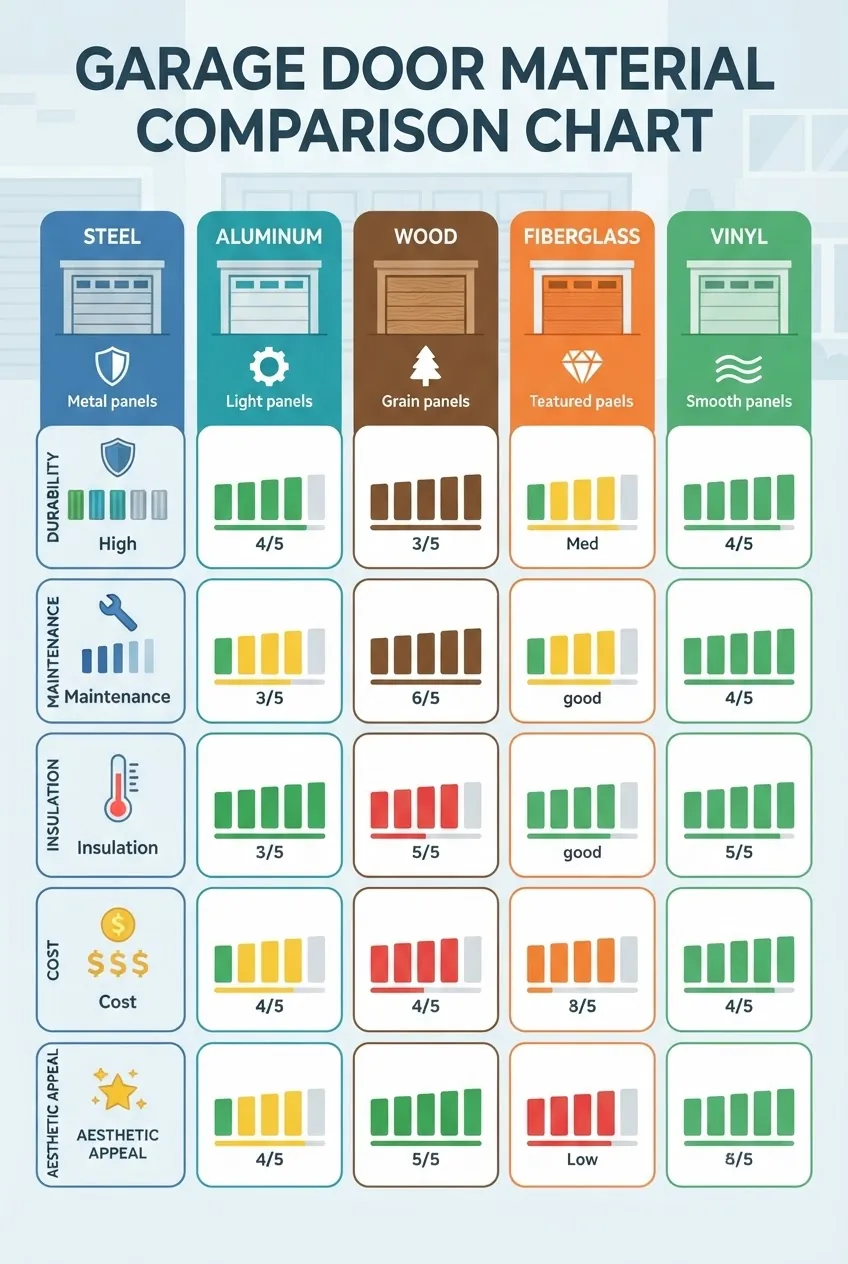
| Material | Durability | Maintenance | Insulation (Typical R) | Best Use |
|---|---|---|---|---|
| Steel (insulated) | High | Moderate (coating upkeep) | R-6 to R-18 | Security, cold climates, wind-rated applications |
| Aluminum | Moderate (prone to dents) | Low (finish care) | R-3 to R-10 | Wide contemporary doors, coastal sites |
| Wood | Variable (high when maintained) | High (sealing, painting) | R-5 to R-12 | Historic homes, aesthetics, insulation if thick |
| Fiberglass | Moderate (good rot resistance) | Low to Moderate | R-3 to R-12 | Humid/salt climates, low maintenance need |
| Vinyl / Composite | Moderate to High | Low | R-3 to R-12 | Low-maintenance installations, replicating wood look |
Summary analysis: Steel (insulated panels) is the best choice when prioritizing structural strength, wind resistance, and maximum security. Composites and fiberglass lead for low maintenance and acceptable insulation. Wood remains the top option when appearance and natural insulation are the priority and the homeowner commits to maintenance.
To supplement material-quality insights with market and installation comparisons, refer to pricing and brand data here:
garage door prices guide for brands and installation cost
For consumer-rated performance and real-world user feedback that complements the technical comparisons above:
best residential garage doors guide and ratings
Transition: After comparing options directly, consider the contextual factors that influence material selection for your site and use case.
Factors Influencing Garage Door Material Selection
Answer: Choose a garage door material based on climate, budget, insulation needs, security goals, opening size, framing compatibility, and local building codes; these factors determine performance and longevity more than initial cost alone.
Term: climate impact — how humidity, salt air, temperature swings, and sun exposure affect material degradation and performance.
- Local climate and exposure: Salt air accelerates corrosion — prefer galvanized steel with marine-grade coatings, aluminum, fiberglass, or vinyl in coastal areas. According to a 2024 governmental building and safety standards publication, corrosion protection and material specifications are critical in coastal construction: International Building Code resources.
- Insulation and energy-efficiency needs: If the garage is attached or conditioned, target higher R-values (insulated steel or foam-core composite). For detailed cost trade-offs on insulation, see insulated garage door cost and replacement.
- Budget vs. lifecycle cost: Upfront savings on thin-gauge steel or hollow vinyl may result in higher lifetime repair costs; perform a life-cycle comparison including maintenance and expected lifespan.
- Security and structural requirements: If security or wind ratings are required (storm zones), select reinforced insulated steel sections and specify windload engineering per local codes.
- Door size and framing: Large or oversized openings may need stiffer materials or built-in reinforcement; review garage door framing and construction to ensure compatibility.
- Design and neighborhood regulation: Historic districts may require wood or wood-clad aesthetics even if composites are preferable for performance.
- Maintenance capability: If you prefer minimal upkeep, favor vinyl, fiberglass, or composites over raw wood.
- Standard sizing constraints: Material choices interact with standard sheet sizes and panel manufacturing; check standard garage door sizes and dimensions when planning replacements.
Regulatory note: According to a 2024 governmental building and safety standards publication, local building codes and wind-load requirements must be checked prior to final material selection and installation: International Building Code. For complex installations or where structural framing is altered, consult a licensed contractor or structural engineer.
Transition: With selection factors clear, here are maintenance expectations and actionable tips to preserve material performance over time.
Maintenance and Longevity of Different Garage Door Materials
Answer: Maintenance frequency and longevity depend on material—steel and aluminum need coating inspection and hardware care; wood requires annual sealing; fiberglass and vinyl need periodic cleaning; composites need minimal maintenance but inspection for seal failures.
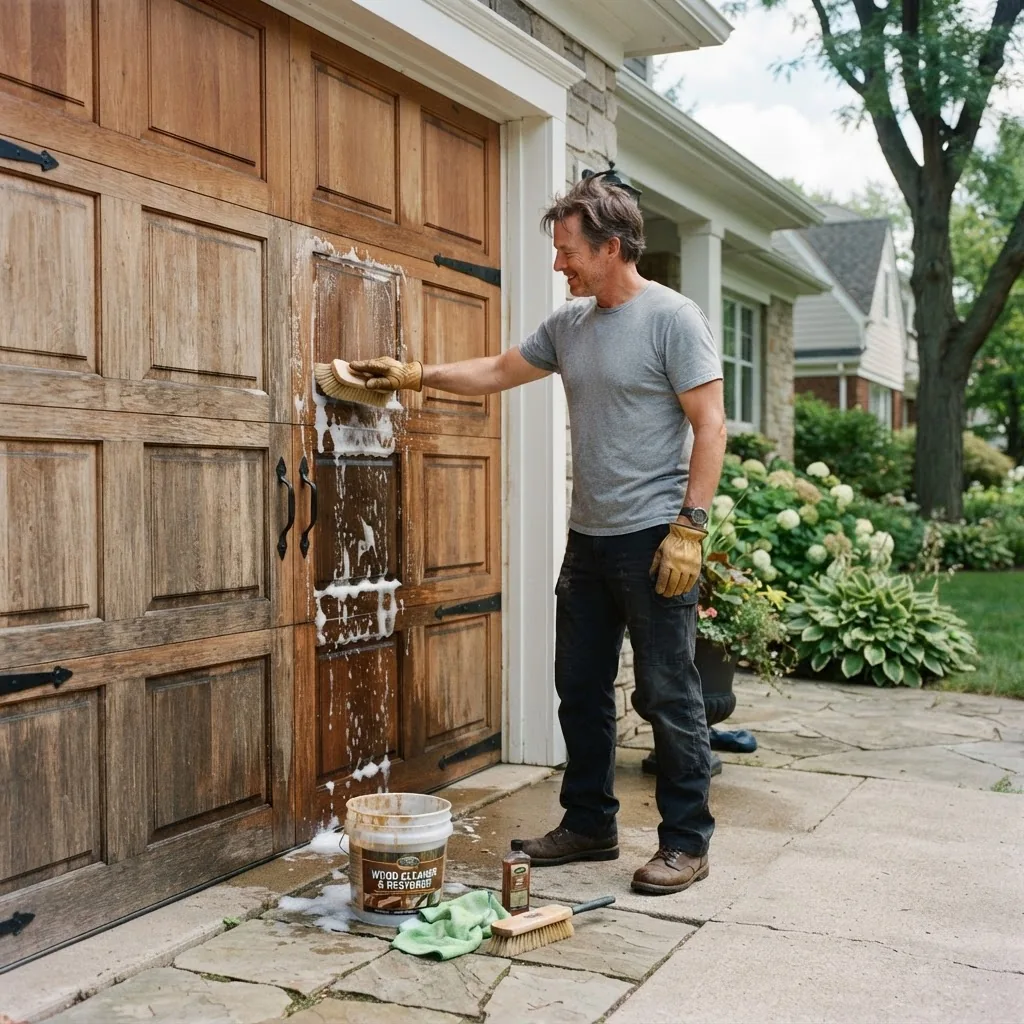
Term: maintenance schedule — recommended periodic tasks (cleaning, sealing, lubricating) to preserve material performance and warranty compliance.
Longevity benchmarks (typical ranges):
- Insulated steel: 20–30+ years with proper finish maintenance and hardware replacement; expect repainting or touch-ups every 7–12 years in high-UV or coastal environments.
- Aluminum: 15–25 years depending on denting and finish durability; anodized or powder coat extends life in corrosive environments.
- Wood: 15–40 years depending on species, sealant regimen, and exposure; requires more active upkeep for top performance.
- Fiberglass: 15–25 years; UV-stabilized products last longer in sun-exposed locations.
- Vinyl / Composite: 15–30 years; composites often outlast simple vinyl in dimensional stability.
Maintenance advice (bulleted):
- Inspect seals and weatherstripping every 6 months; replace worn bottom seals to prevent water ingress and thermal loss.
- Lubricate rollers, bearings, and hinges annually with manufacturer-recommended lubricants to reduce wear and noise.
- Check paint or powder-coat finishes for scratches and touch up immediately on metal doors to prevent corrosion.
- For wood doors: reseal or refinish exterior surfaces every 2–5 years depending on exposure; inspect for insect damage in susceptible regions.
- Keep tracks clear of debris and verify opener alignment; misalignment accelerates panel wear and hardware failure.
- When a secondary entry door exists, include its maintenance in your schedule; see garage entry door replacement tips for related guidance.
Industry guidance: According to a 2024 trade association resource, scheduled inspections and adhering to manufacturer maintenance guidance significantly extend door lifespan and maintain warranty coverage: Door and Access Systems Manufacturers Association (DASMA).
Testing and data: Independent product testing often measures insulation (R-value) and noise reduction; see Consumer Reports for comparative test protocols and results when available: Consumer Reports. For further reading on insulated vs non-insulated trade-offs, consult insulated versus non-insulated garage doors.
Transition: Understanding maintenance is essential, but how does material fundamentally affect overall quality? The next section ties these attributes to measurable quality standards.
How Garage Door Material Affects Overall Garage Door Quality
Answer: Material determines structural strength, resistance to environmental damage, ability to meet wind and security ratings, and affects operational reliability—quality is the sum of material properties plus design, hardware, and installation quality.
Term: material testing standards — formalized tests (impact, wind-load, corrosion) used to quantify and compare material performance.
Quality metrics to evaluate:
- Structural strength: measured through panel stiffness, track and spring specification, and wind-load certification.
- Corrosion and rust resistance: presence of galvanization, stainless hardware, or non-ferrous materials affects lifespan in wet or saline environments.
- Thermal performance: R-value ratings, presence of thermal breaks, and seal continuity determine energy efficiency.
- Noise reduction: insulated panels and nylon rollers reduce operational noise; composite cores and thicker skins improve acoustic damping.
- Security: material rigidity, lock integration, and resistance to forced entry are material-dependent properties that influence home safety.
Methodologies for assessment: Use manufacturer datasheets, independent lab test results, and third-party consumer ratings to evaluate tensile strengths, coating specifications, and certified wind ratings. Always confirm that the installed system (door + hardware + installation) meets local code requirements; material alone does not guarantee quality without proper installation.
Transition: Finally, here are current innovations and trends that affect material selection and performance upgrades.
Innovations and Trends in Garage Door Materials
Answer: Recent trends focus on environmentally friendly composites, improved coating chemistries for better UV and corrosion protection, smart integration, and modular designs enabling mixed-material construction for tailored performance.
Term: smart garage doors — doors equipped with networked sensors and controllers for remote operation, diagnostics, and integration with home automation.
Material innovations include fiberglass resins with UV stabilizers, composite skins that mimic wood while resisting movement, and recyclable vinyl formulations. Manufacturers also integrate thermal break technology and higher-performance insulating cores. Smart sensors now monitor door balance and motor load to predict maintenance needs—beneficial regardless of material.
For design trends and modern material applications, consult resources on contemporary styles: modern garage door design trends. For combined-function doors that include a pedestrian entry, see garage doors with entry door options.
Transition: The following section summarizes recommendations based on the analysis above and offers actionable next steps.
Summary and Recommendations for Choosing Garage Door Materials
Answer: Match material to priorities—choose insulated steel for security and wind resistance; composites or fiberglass for low maintenance; wood for aesthetics if you commit to upkeep; aluminum for contemporary, coastal designs. Evaluate R-values, corrosion protection, and hardware quality before purchase.
- Key takeaway: Prioritize environmental exposure and use-case (attached vs detached) over upfront price when selecting materials.
- Maintenance commitment: If minimal maintenance is a requirement, eliminate raw wood options unless selecting engineered wood with protective coatings.
- Energy performance: For attached or conditioned garages, select insulated panels (higher R-value) and continuous seals.
- Security: For high-security needs, choose reinforced insulated steel and heavy-duty hardware.
- Professional consultation: For complex framing, wind-load requirements, or code compliance, consult a licensed professional before purchase.
Step-by-step walkthrough to evaluate and select material:
- List priorities: insulation, security, appearance, maintenance tolerance, budget.
- Assess site conditions: exposure to salt, sun, wind, and whether the garage is attached.
- Determine size constraints and framing compatibility; review garage door framing and construction.
- Compare R-values and wind ratings on manufacturer datasheets and third-party tests.
- Request finish and hardware specifications; look for galvanized/stainless hardware and manufacturer finish warranties.
- Obtain multiple quotes including installation and verify contractor references.
- Plan maintenance schedule aligned with material—budget lifecycle costs, not only purchase price.
Final recommendation: For most homeowners aiming for the highest combined quality and performance, an insulated, galvanized steel door with a durable powder coat strikes the best balance—unless aesthetics or very low maintenance are the overriding concerns.
Call to action: Review your priorities and site conditions, then request technical datasheets and wind/load certificates before purchasing; for pricing and brand comparisons see the garage door prices guide for brands and installation cost to align material choice with real-world costs and installer expertise.