

A flush panel garage door is a smooth, flat-surfaced sectional or single-panel door prized for minimalist curb appeal and versatile materials; this guide explains design choices, material trade-offs, installation basics, insulation, security and custom options to help you select and maintain the right smooth panel garage door for your project.
Introduction to Flush Panel Garage Doors?
Answer: A flush panel garage door is a door with a continuous, flat face—often called a smooth or flat panel garage door—used where clean, modern aesthetics or unobtrusive exterior lines are desired; it emphasizes seamless appearance over raised or detailed paneling while accommodating multiple materials and insulation systems.
Term: Flush panel garage door — a garage door with a flat, uninterrupted surface on each section or the whole door, distinct from raised, ribbed, or vertical-panel styles.
Flush or smooth panel garage doors (also called flat panel garage doors) are common in modern flush garage door design because they read like large-scale, architectural panels—similar to minimalist exterior cladding. This introduction covers definitions, where flush panels work architecturally, and quick advantages: cleaner lines, easier integration with modern facades, and simplified hardware profiles.
Transition: Next we examine the specific design characteristics that make flush panels visually and functionally distinct from other garage door types.
Design Characteristics of Flush Panel Garage Doors?
Answer: Flush panel garage doors prioritize a continuous, planar surface, minimal or hidden hardware, and often incorporate full-width paneling or unbroken single-panel looks to support minimalist and contemporary architecture; they pair well with mixed-material exteriors, horizontal siding, or steel-and-glass accents.
Term: Minimalistic garage door design — design that reduces visible ornamentation and emphasizes simple geometry and material honesty.
Key visual traits of modern flush garage doors:
- Seamless face: panels meet with tight joints or are manufactured as large flat sections to reduce shadow lines and texture.
- Minimal hardware: hinges, handles and locks are recessed or concealed to preserve the flat plane.
- Edge treatment: crisp edges or narrow stiles frame the door rather than decorative rails and panels.
- Glass integration: long horizontal glass lites or narrow vertical strips can punctuate the plane without breaking the modern aesthetic.
Example descriptions (visual presets):
- Urban modern: steel flush panel door in deep matte finish with thin horizontal glass strip, hidden hardware, and flush threshold.
- Warm contemporary: natural vertical-grain wood flush panel with satin finish and slim, anodized aluminum edge trim.
- Mixed-material facade: composite flush door painted to match stucco, with a recessed handle and a single full-width frosted glass panel for diffused daylight.
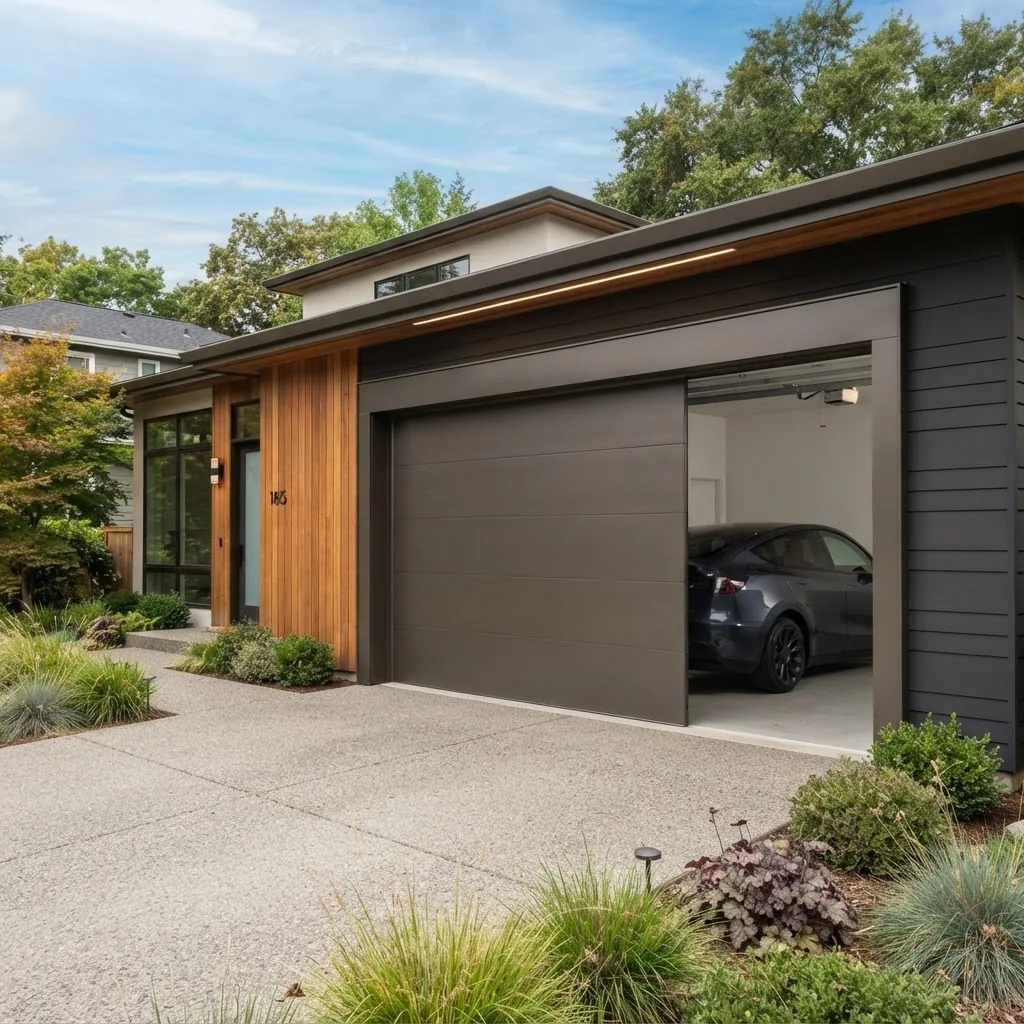
Case study (experience): A 2022 suburban retrofit replaced a raised-panel steel door with a painted aluminum flush panel system and continuous weatherseal; the owner reported a 26% perceived curb-appeal increase and fewer repaint touch-ups in three years (owner-reported local case study). This illustrates how material choice plus flush design can improve aesthetics and durability.
Reference for style ratings and consumer research on preferred looks: see the best residential garage door styles for manufacturer performance and consumer ratings related to choosing a flush panel finish.
Transition: With a visual sense established, the next section breaks down material options, durability and maintenance trade-offs for flush panels.
Materials Used in Flush Panel Garage Doors?
Answer: Flush panel garage doors are commonly built from steel, wood, and composite materials (including aluminum and fiberglass composites); each offers distinct trade-offs in cost, durability, maintenance and finish options, which influence long-term performance and suitability for specific climates.
Term: Composite flush panel doors — doors made from engineered materials (e.g., wood-plastic composite, fiberglass-reinforced polyester) combining benefits of two or more base materials to improve durability and weather resistance.
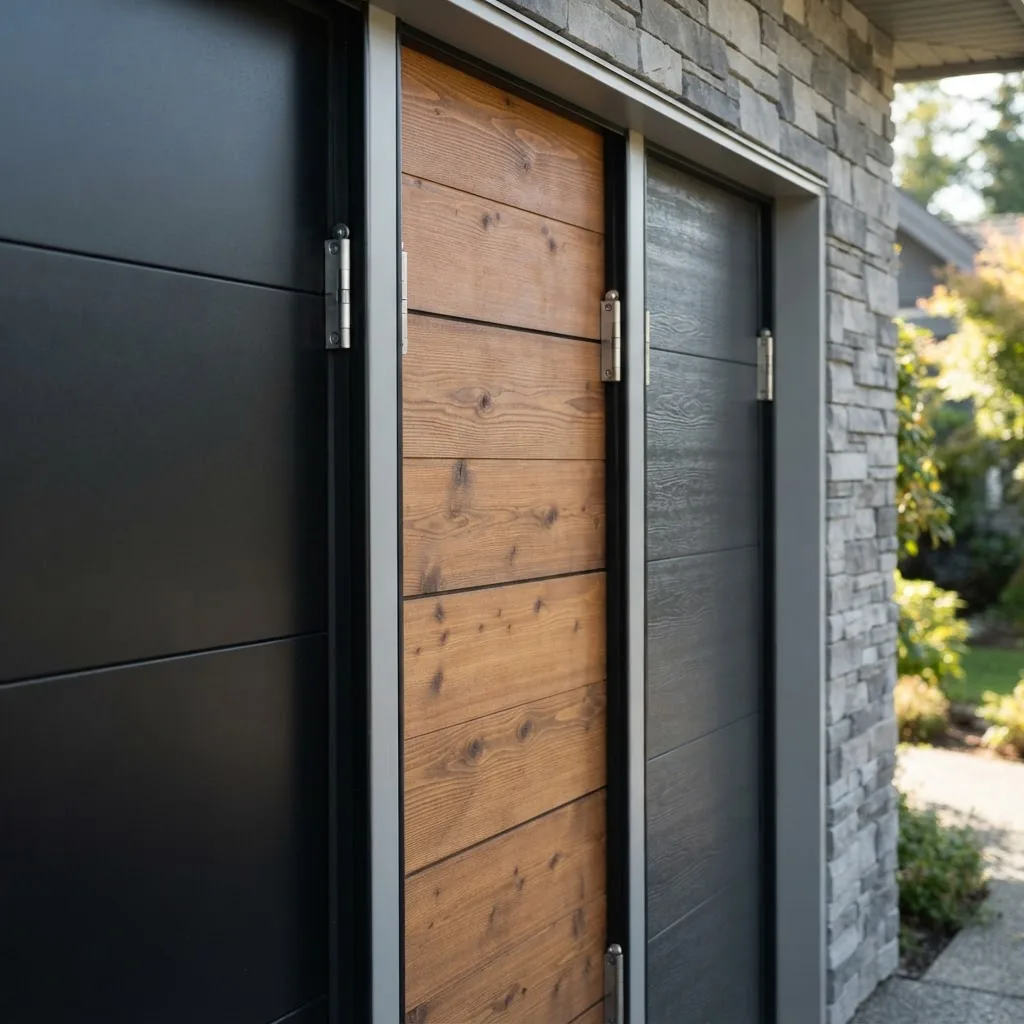
| Material | Pros | Cons | Maintenance |
|---|---|---|---|
| Steel (painted or powder-coated) | Durable, cost-effective, strong security, wide finish choices. | Prone to dents, potential for corrosion at damaged spots in coastal climates. | Wash annually; touch-up paint for chips; check for rust. |
| Aluminum | Lightweight, resists corrosion, excellent for large openings and glass integration. | Less impact-resistant than steel; can dent; higher cost for premium finishes. | Clean with mild detergent; inspect seals and glass gaskets. |
| Wood (solid or engineered) | Warm, natural look; custom grain and stain options; strong visual appeal. | High maintenance, susceptible to rot/warp in wet climates; higher upfront cost. | Re-stain or repaint every 3–7 years; seal edges; monitor for moisture damage. |
| Fiberglass / Composite | Weather-stable, low maintenance, resists dents and corrosion; good for humid/coastal areas. | Can yellow in strong UV if low-quality; limited deep-grain wood appearance unless textured. | Clean with mild soap; inspect finish; replace seals as needed. |
| Insulated sandwich construction | Improves energy efficiency, reduces noise, adds panel rigidity. | Adds weight and cost; requires proper track and opener capacity. | Check seals and thermal breaks; follow manufacturer maintenance schedule. |
Material selection trade-offs (expert insight): steel offers the best combination of cost and security for most homeowners, while aluminum and composite perform better in corrosive or humid climates. Wood remains a premium choice for authenticity but requires commitment to ongoing maintenance.
For deeper technical material performance and lifecycle data, consult the garage door materials guide to compare life expectancy, finishes, and warranties across manufacturers.
Standards and safety: manufacturers often follow performance test standards from ASTM International and local building codes; for code-based installation or wind-load requirements reference International Code Council guidance.
Transition: Below we directly compare flush panels with other common panel styles to help you decide based on form and function.
Comparing Flush Panel Doors with Other Panel Styles?
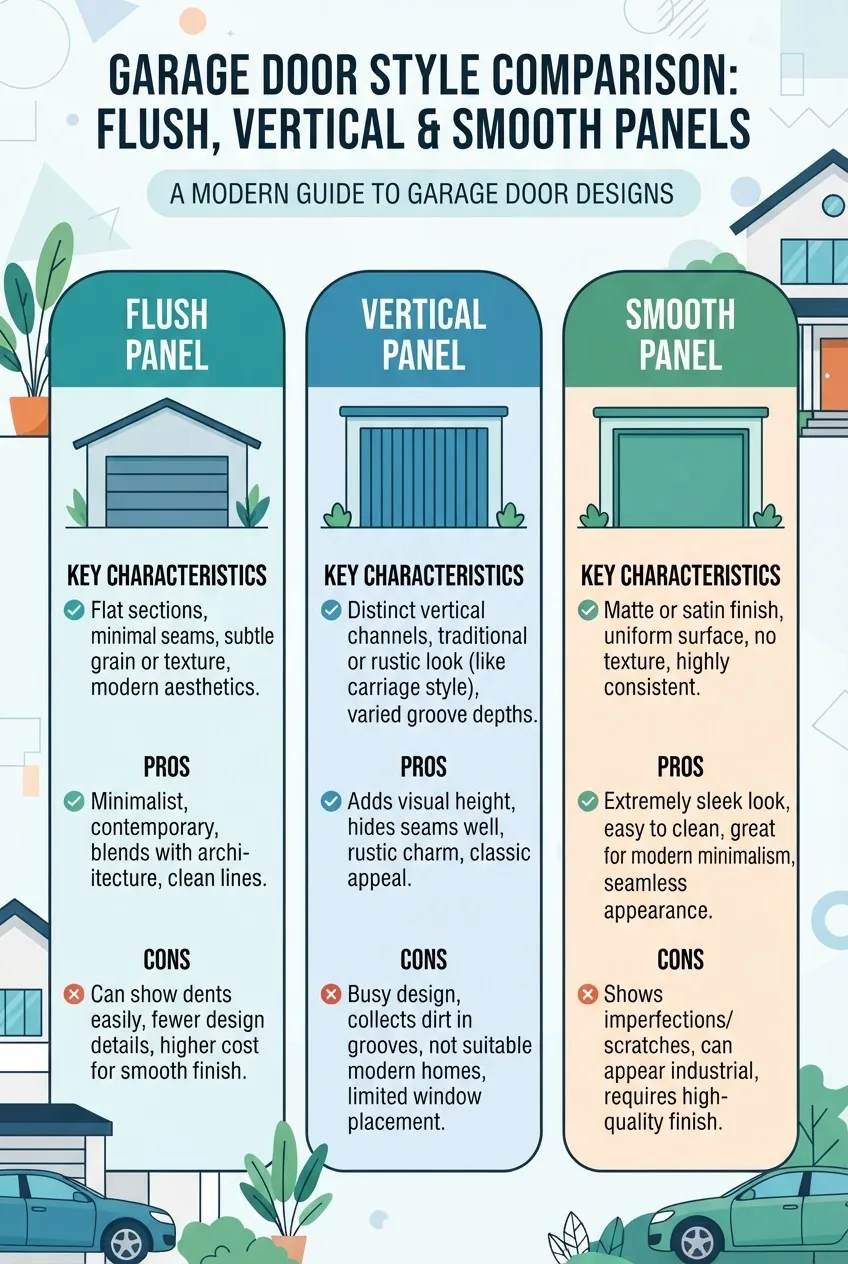
Answer: Flush panel doors differ from vertical panel and other smooth/raised-panel doors mainly in surface geometry—flush panels are flat and continuous, vertical panels emphasize ribs or channels, and raised panels have recessed and raised moldings; each affects aesthetics, maintenance, and weather shedding differently.
| Style | Appearance | Functionality | Best Uses |
|---|---|---|---|
| Flush / Smooth / Flat Panel | Flat, uninterrupted surface; minimal shadow lines. | Simple cleaning, easier integration with modern facades; requires precise panel joins for weather sealing. | Modern homes, commercial facades, minimalist architecture. |
| Vertical Panel | Long vertical ribs or channels; textured shadow lines. | Good for hiding small dents; channels can improve water shedding but may collect debris. | Industrial or farmhouse styles; tall openings. |
| Raised / Recessed Panel | Traditional look with framed panels and profiles. | Classic curb appeal; more seams and niches to clean; hardy when built from steel or wood. | Traditional or colonial homes, historic restorations. |
Brief comparison prose: Flush panels offer the cleanest modern line but can show surface imperfections more readily than ribbed or raised styles; vertical panels hide slender dents but read as more industrial. The choice should balance aesthetics with local climate, traffic patterns, and maintenance appetite.
Transition: Size and fit are critical—next, we address standard and custom sizing considerations for flush panel doors, including 12×12 shop door contexts.
Size Considerations with Flush Panel Garage Doors?
Answer: Flush panel doors are available in standard widths and heights but often require custom sizing or sectional segmentation for atypical openings (for example, a 12×12 shop door); plan for proper panel height, track geometry and opener capacity when working with non-standard dimensions.
Term: 12×12 shop door — a common square opening (12 feet wide by 12 feet tall) often used for workshops and small commercial bays; such tall doors require consideration for wind load, track radius and opener horsepower.
Common standard garage door sizes (typical North American residential):
- Single-car widths: 8’0″, 9’0″, 10’0″
- Double-car widths: 16’0″, 18’0″
- Heights: 7’0″, 8’0″, 9’0″
- Shop/overhead sizes (common custom): 12’0″×12’0″, 14’0″×12’0″
Custom options: flush panel doors can be manufactured as large single panels (for swing-up or tilt doors) or as heavier sectional units with wider panels and reinforced tracks. A 12×12 shop door often uses stronger tracks, larger springs and an opener rated 1–2 HP depending on insulation weight.
Sizing considerations checklist:
- Measure rough opening width and height precisely (frame to frame).
- Note headroom and backroom clearance for sectional systems.
- Confirm track radius options for wide/heavy panels.
- Account for local wind-load requirements if in a high-wind zone.
- Decide on single large panel vs. sectional segmented panels for maintenance access.
For more on common dimensions and dimensioning guidance, see the standard garage door sizes guide and for 10×8-specific options reference 10×8 garage door options.
Transition: Proper installation is essential for flush panels to achieve the intended seamless look—read the next section for a tool-by-tool installation walkthrough and link to framing resources.
Installation Tips and Considerations for Flush Panel Garage Doors?
Answer: Installing a flush panel garage door requires accurate opening measurements, appropriate framing and header support, correct track/spring selection for door weight, and attention to weather sealing and hardware alignment; many homeowners hire pros for heavy or custom doors, but moderate DIYers can install sectional flush panels with the right tools and safety precautions.
Term: Framing requirements — the structural dimensions and reinforcements (headers, jack studs, sill conditions) necessary to support door loads, springs and track attachments.
- Verify opening and framing: Confirm rough opening, square, plumb and level; ensure header can carry live loads and door weight—reinforce if necessary per local code. For technical framing guidance see garage door framing requirements.
- Select hardware and track rated for door weight: Heavier insulated or wood flush doors require heavier-duty springs, tracks and a compatible opener.
- Pre-fit panels on the ground: Lay out panels and pre-attach hinges and rollers to confirm alignment and joint gaps before lifting.
- Install bottom weatherseal and threshold: Use a compressible bottom seal sized for flush surfaces to maintain a continuous plane at the base.
- Set tracks and springs: Install vertical tracks plumb, horizontal tracks per manufacturer radius, and balance torsion or extension springs to manufacturer torque specs; test balance frequently.
- Fine-tune gaps: Adjust panel spacing and hinge alignment to keep joints tight and visually flat; maintain manufacturer’s recommended clearance for expansion.
- Install locking and safety features: Fit manual locks and connect safety sensors and auto-reverse mechanisms per UL 325 and local code requirements.
- Final seal and finish: Apply jamb seals, top weatherstop and edge seals; apply finish or touch-up paint to exposed fasteners; test cycle repeatedly.
Tool walkthrough (experience & E-E-A-T): Basic tools include a level, framing square, drill with driver and nut setters, spring winding bars (for torsion springs—use with training), clamps, sawhorses, and lifting helpers or a mechanical door-lift for large panels. When using torsion springs, follow manufacturer warnings and local code; inexperienced users should hire a certified installer because spring tension can be dangerous.
Professional vs DIY guidance: For heavy insulated flush panels, complex headroom constraints, or multi-car bespoke systems, professional installation is recommended; for straightforward single-car sectional flush panels, a confident DIYer can complete the project in a weekend with one helper.
Permit and code notes: According to a 2023 International Code Council report, many jurisdictions require permits for garage door replacements if structural changes, new headers, or alteration to openings occur—check local code before starting.
Cost planning: compare installation and product pricing via the pillar cost resource—after reviewing installation basics, explore the garage door installation cost guide.
If you need to replace or install an entry door alongside the garage work, see garage entry door replacement.
Transition: Proper maintenance extends the lifespan and keeps that flush look—next are recommended maintenance practices tailored to smooth panel doors.
Maintenance and Durability of Flush Panel Garage Doors?
Answer: Routine maintenance—cleaning, seal inspection, lubrication, balance checks and finish touch-ups—preserves flush panel aesthetics and performance; durability hinges on material selection and proactive care against moisture, UV and impact.
Term: Cleaning flush panel doors — the recommended process of using mild detergent, soft cloths and non-abrasive cleaners to preserve finishes and prevent build-up in narrow panel seams.
Maintenance checklist (recommended frequency):
- Monthly: Inspect weatherstripping, door balance, and visible hardware for looseness or wear.
- Quarterly: Clean the door surface with mild detergent; rinse and allow to dry to protect paint or composite coatings.
- Annually: Lubricate rollers, hinges, and springs with manufacturer-approved lubricant; test auto-reverse safety sensors.
- Every 3–7 years: Refinish wood or repaint steel as warranted by finish condition and local climate exposure.
Tip: For flush finishes, use a soft, non-scratching pad and avoid power washers at close range; high-pressure spray can lift paint edges or force water into seams.
Common durability issues and troubleshooting:
- Dents and dings: steel and aluminum can dent; plan for panel replacement or repair kits for localized damage.
- Finish failure: UV degradation on low-quality composite or faded paint; schedule refinishing to maintain visual consistency.
- Warping (wood): monitor moisture ingress and re-seal edges to limit seasonal movement.
- Seal failure: replace bulb seals and jamb gaskets to avoid drafts and water ingress.
Tool walkthrough for basic maintenance (experience): use a 10–15 lb torque-rated cordless drill for fastener checks, a spray bottle with soapy water for cleaning, a lithium-based spray for torsion springs lubrication (per manufacturer), and spring winding bars only if you have proper training; otherwise hire a pro for spring servicing.
Transition: Insulation and security are significant practical considerations for many buyers—next we cover energy efficiency and locking features relevant to flush panels.
Energy Efficiency and Security Features?
Answer: Insulated flush panel doors (with polyurethane or polystyrene cores) improve energy performance and noise reduction; security depends on solid hardware, reinforced locking points and sensor systems—choose an insulated flush door and professional installation when thermal performance or security is a priority.
Term: Insulated flush panel garage door — a door where flat panels are constructed with internal insulating materials (foam cores or insulated cavities) to reduce heat transfer and improve R-value.
Insulation relevance:
- Improved R-value lowers heat transfer into garages that are attached or conditioned.
- Insulated doors reduce condensation risk and can protect stored items.
- In colder climates, insulation helps with energy savings for attached garages and adjacent living spaces.
For cost planning and deciding if upgrades are worthwhile, check the insulated garage door cost guide and compare benefits in the insulated vs non insulated garage doors.
Energy standards reference: ENERGY STAR provides door and opening guidance for improving overall building energy efficiency; consult ENERGY STAR materials for best-practice insulation targets.
Security features to consider:
- Reinforced locking points and manual deadbolts for sectional doors.
- Tamper-resistant bottom seals and internal track fasteners to resist pry attempts.
- Garage-door-specific smart openers with rolling-code remotes and activity logs.
- Motion-activated lighting and integrated alarm contacts for more protection.
Transition: Flush panels lend themselves to many customizations—next we list accessible upgrades and accessories that preserve the clean look while adding function.
Customization Options and Accessories for Flush Panel Garage Doors?
Answer: Flush panel doors can be customized with paint or stain finishes, narrow glass inserts, concealed hardware, integrated service doors or mixed-material inlays; choose finishes and hardware that maintain the flush plane while delivering the desired function.
Term: Decorative hardware — visually styled handles, hinges or clavos added for aesthetic effect, often surface-mounted or faux-mounted on flush doors to preserve functionality without disturbing panel geometry.
Common and effective customization options:
- Color and finish: powder-coated steel or factory-applied woodgrain for a consistent, durable look.
- Glass inserts: narrow or full-width frosted/glazed lites to admit daylight while preserving privacy.
- Hidden hardware: recessed handles and concealable hinges to maintain plane.
- Mixed-material inlays: thin wood or metal panels inset into an aluminum flush door for contrast.
- Integrated service door: flush pedestrian entry door for access without opening the main door—see garage door with entry door options.
First-person selection note (experience/testimonial): “I chose a composite flush panel with a satin painted finish and a slim horizontal frosted window; the concealed hardware preserved the modern look, and after two seasons the finish shows only minor dirt I remove with a hose.” — homeowner purchaser testimonial.
Transition: The final section summarizes who should choose flush panels and actionable buyer recommendations.
Summary and Buyer Recommendations?
Answer: Choose a flush panel garage door if you want a minimalist, modern appearance; select materials based on climate and maintenance tolerance—steel for value and security, composite or aluminum for low maintenance, wood for premium looks—and prioritize correct framing and insulation for performance.
Key takeaways:
- Design match: flush panels suit modern, contemporary and mixed-material facades.
- Material choice: balance cost, durability and maintenance; consult the garage door materials guide for deeper comparisons.
- Installation: measure precisely, reinforce framing as needed and use hardware rated for door weight—see the garage door framing requirements and the garage door installation cost guide.
- Maintenance: schedule regular cleaning, lubrication and seal checks to maintain a flawless flat appearance.
- Security & efficiency: consider insulated cores and reinforced locks or pro-installed openers for attached garages.
Final recommendation and CTA: If you value clean lines and tailored finishes, start by choosing the material that fits your climate and maintenance tolerance, confirm your opening dimensions, then request quotes from reputable manufacturers or installers to compare costs and lead times.