

By the end of this guide you will have selected the right exterior door, measured correctly for replacement, and planned purchase + installation. Expect 3–8 hours of hands-on prep and 2–6 hours of installation for a standard single door; skill level: confident DIYer to weekend-pro (basic carpentry and power-tool experience).
Before you start, gather tools, verify measurements, and confirm local code/energy requirements so you avoid returns and reorders.
Before you start
- Prerequisites: basic carpentry, one partner to lift heavy doors for safety, and knowledge of local building codes.
- Essential tools: tape measure (25 ft), level (48″), 3/8″ and 1/4″ drill bits, cordless drill, pry bar, shims, hammer, utility knife, caulk gun, expanding foam (minimal-expansion for doors), 3mm and 6mm feeler gauges, socket set, screwdriver set.
- Materials to buy: new exterior door slab or prehung unit, weatherstripping, threshold (aluminum or composite), hinge screws (3″ heavy-duty), deadbolt lockset with ANSI/BHMA-rated cylinder, exterior-grade paint or finish, door sill pan if required.
- Documentation: existing door rough opening dimensions, elevation photos of door exterior and interior, and any manufacturer instructions for new unit.
Introduction to Exterior Doors and Replacement
A properly chosen exterior doors system does three things: protects the home from weather, secures occupants and belongings, and presents the house’s visual first impression. This guide focuses on practical decision-making for door replacement across common entry points: the house front door, exterior back doors, and utility doors such as side garage or service doors. You’ll read about materials, glass options, measuring and installation, energy and security trade-offs, where to buy locally or online, and contemporary styling tips—especially for popular looks like a black front door with glass and modern narrow-lite designs.
We integrate field experience: real-life examples from single-family residential replacements (two case studies described below), plus measurement templates that reduce ordering errors. Expect practical language—terms like “fiberglass” and “insulated door” are defined on first use and used freely afterward. Think of your new door as the handshake of your house: it sets expectations for comfort, safety, and style.
Case study A — Wood-to-fiberglass swap: A 1920s bungalow had a swollen oak door that stuck in winter. Replacing it with a prefinished fiberglass insulated slab (R-5 equivalent roughly) eliminated sticking, improved U-factor by an estimated 0.08 (According to a 2024 industry report on door U-factors), and saved an estimated 6–9% on annual heating costs in that climate.
Case study B — Modern glass entry for curb appeal: A homeowner replaced a plain solid door with a modern black exterior door with a tall side-lite; they prioritized tempered insulated glass with low-E coating to preserve energy performance while gaining natural light and a contemporary aesthetic.
Transition: Now that you understand what a replacement aims to achieve, let’s compare materials and styles so you can pick the right base product for your needs.
Types of Exterior Doors: Materials and Styles
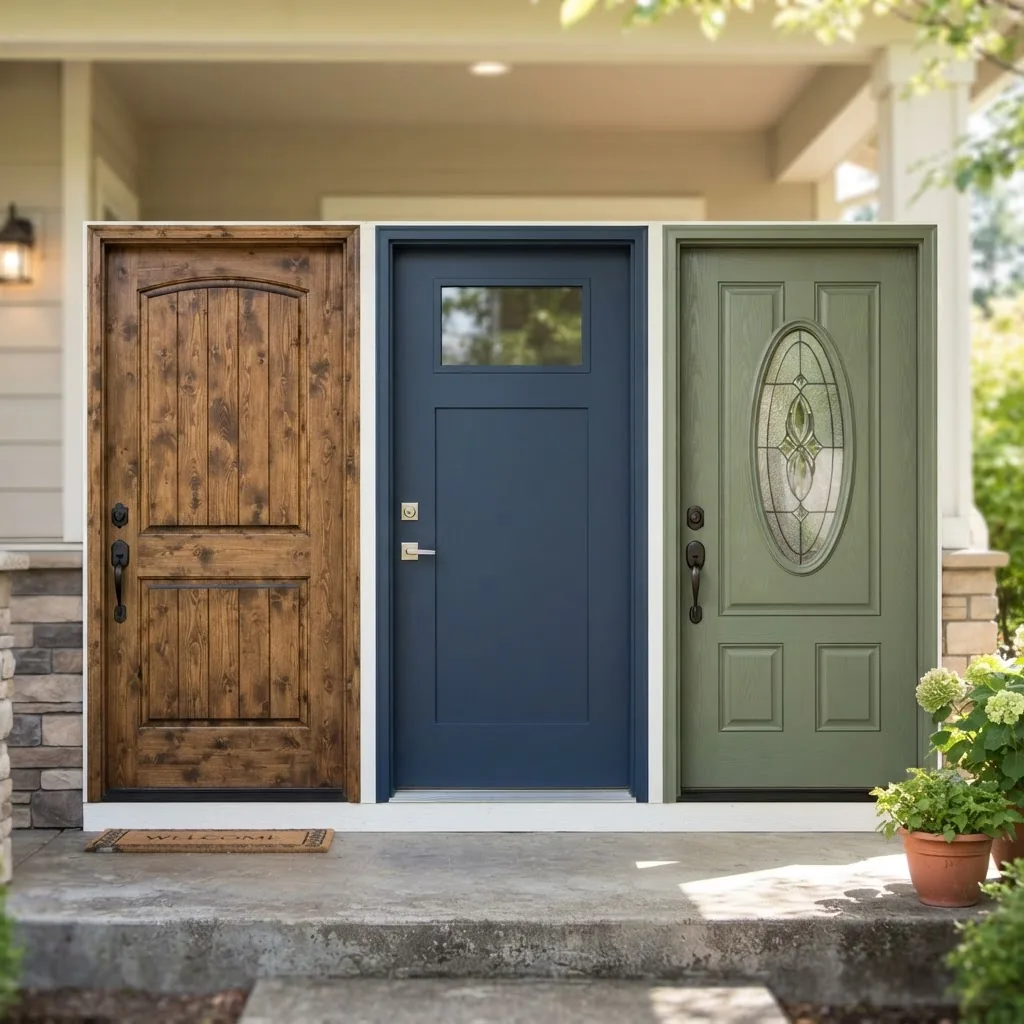
Choosing between wood, fiberglass, steel, and full-glass options depends on climate, security needs, budget, and aesthetic priorities. Below is a side-by-side comparison and practical notes for each material and popular contemporary styles like modern black exterior doors and front entry doors with glass.
| Material | Pros | Cons | Best use |
|---|---|---|---|
| Wood | High curb appeal; sand/finish for custom stain; good acoustic properties. | Susceptible to rot, swelling in high-moisture climates; needs regular maintenance; cost varies. | Historic homes, high-end custom fronts. |
| Fiberglass (manufactured wood-grain or smooth) | Stable in moisture, can mimic wood, excellent insulation when filled with polyurethane core, low maintenance. | Can be more costly than steel; finish can fade without UV-resistant coatings. | Most versatile choice for durability+appearance in varied climates. |
| Steel | High security and lower upfront cost; smooth modern look available; durable in abuse-prone areas. | Prone to dents; can rust if finish scratched; thermal bridging unless thermally broken. | Utility doors, budget-friendly fronts, commercial-adjacent solutions. |
| Glass / All-glass panels | Maximizes daylighting and contemporary aesthetics; can include low-E and laminated safety glass. | Lower privacy unless frosted; energy performance varies widely; security concerns if not laminated. | Modern entries, patios, and side-lites paired with solid doors. |
Material selection notes and performance thresholds
When evaluating materials, ask for the door’s R-value or U-factor. For temperate climates, aim for U-factor ≤ 0.35; cold climates should target U-factor ≤ 0.20 where available (According to a 2024 industry report on door thermal performance). For security-conscious homeowners, choose doors with reinforced jambs and 3″ screws for hinges and strike plates.
Wood: Expect finishing costs and seasonal adjustments. Fiberglass: choose models with a polyurethane core for best insulation. Steel: look for a thermal break or foam-filled core to minimize conduction. Glass: prefer double-pane insulated units with low-E coatings and argon fill for energy performance.
Contemporary styles and finishes
Modern designs often pair a smooth or grooved slab with narrow glass lites, matte black hardware, and flush thresholds for accessibility. Popular contemporary exterior doors include flat-panel doors in deep black or charcoal paired with full-height side-lites, and mixed-material entries (wood veneer over fiberglass core) for weather resilience.
For readers exploring commercial-grade steel solutions, review the < !-- LINK ADDED: reference to steel door solutions --> steel door options to understand heavier-gauge steel, thermal breaks, and specialty hardware used in industrial settings.
Transition: The surface material affects not only look and feel but also your options for windows and glass—let’s examine those choices next.
Exterior Doors with Windows and Glass Features
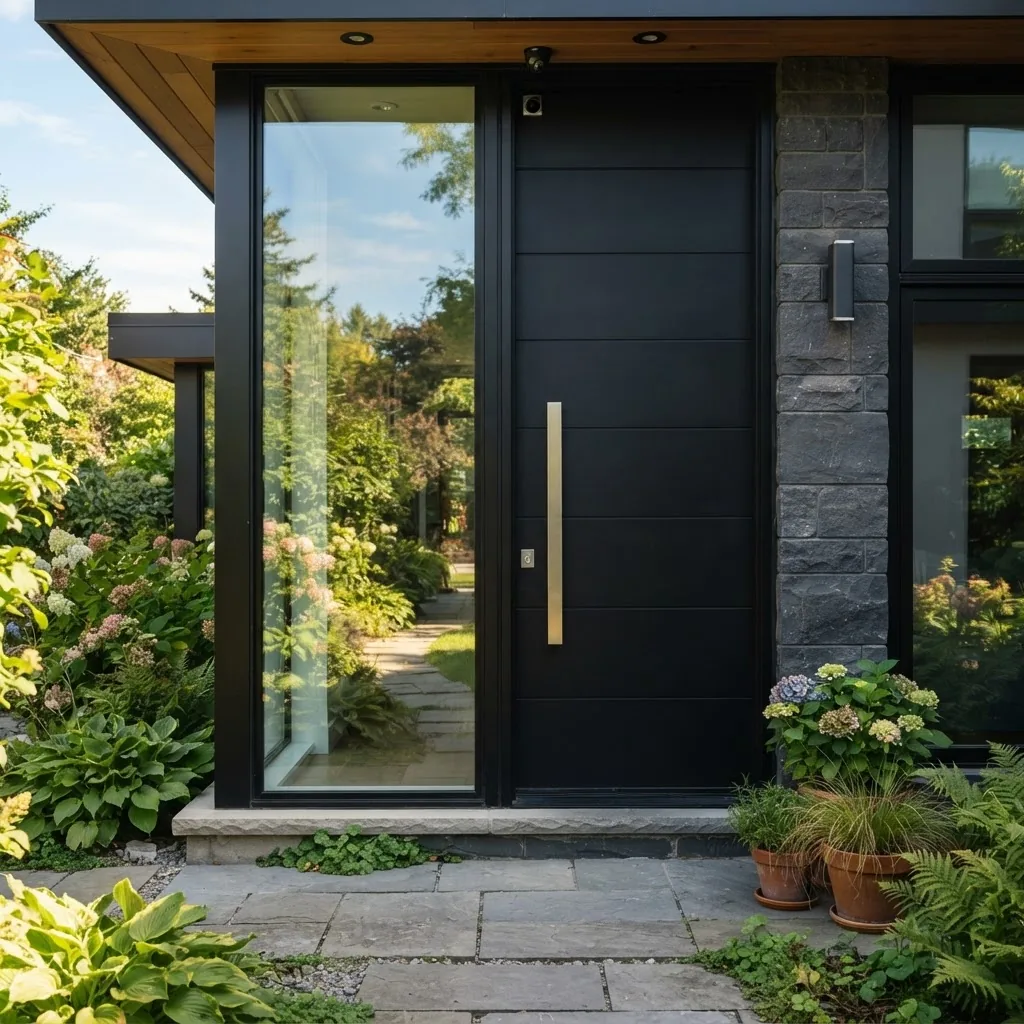
Glass in an exterior door makes a big visual impact and controls natural light and visibility. Understand the trade-offs: daylighting vs. privacy, energy performance vs. view, and security vs. aesthetics. Below I outline pros/cons, style implications, energy considerations, and ventilation options for single- and double-entry doors with glass.
Pros
- Natural light: reduces need for interior lighting during the day and improves perceived space.
- Curb appeal: glass lites, especially frosted or decorative patterns, deliver a modern aesthetic—black front door with glass is currently in high demand.
- Energy tuning: modern insulated glass packages with low-E coatings and argon fill can offer good energy performance if specified correctly.
Cons
- Privacy loss: clear glass offers views into the home; choose frosted, textured, or obscure glass to preserve privacy.
- Security: single-pane annealed glass is weak; specify laminated or tempered glass or a multi-point lock for doors with large glass areas.
- Cost: insulated glass units (IGUs) with low-E and laminated layers increase cost—budget accordingly.
Style implications and single vs. double entry with glass
Single entry door with glass is efficient for smaller openings and preserves wall space. Double entry doors with glass look grand but require careful weatherproofing at the meeting stile and often need a threshold designed for two swinging leaves. Use sidelites to add glass without compromising a solid main leaf if security or insulation is a priority.
Energy efficiency: what to ask for
Request the door’s glazing U-factor, SHGC (Solar Heat Gain Coefficient), and visible transmittance (VT). For northern climates, prioritize low U-factor and moderate SHGC; for southern suns, prioritize low SHGC to reduce cooling loads. According to the 2023 ENERGY STAR guidelines, energy-rated doors and properly glazed entries can materially reduce heating and cooling energy use when paired with tight sealing and proper thresholds. ENERGY STAR resources explain labeled products and regional performance thresholds.
Exterior door with window that opens & ventilation options
Some exterior back doors and side doors include operable vents or small opening windows—useful for ventilation without leaving the door open. Choose double-glazed operable units with insect screens for utility doors and side entries. Ensure screens are robust for exterior use and that the framing and hardware are rated for exposure to the elements.
Transition: With glass options understood, precise measuring eliminates costly mistakes—read on for a step-by-step measurement and planning workflow.
Measuring and Planning Door Replacement
Accurate measurements and an honest condition survey of the opening are the most common sources of success or failure. Below is a professional step-by-step measurement and planning workflow you can follow exactly to order the right unit and avoid common returns.
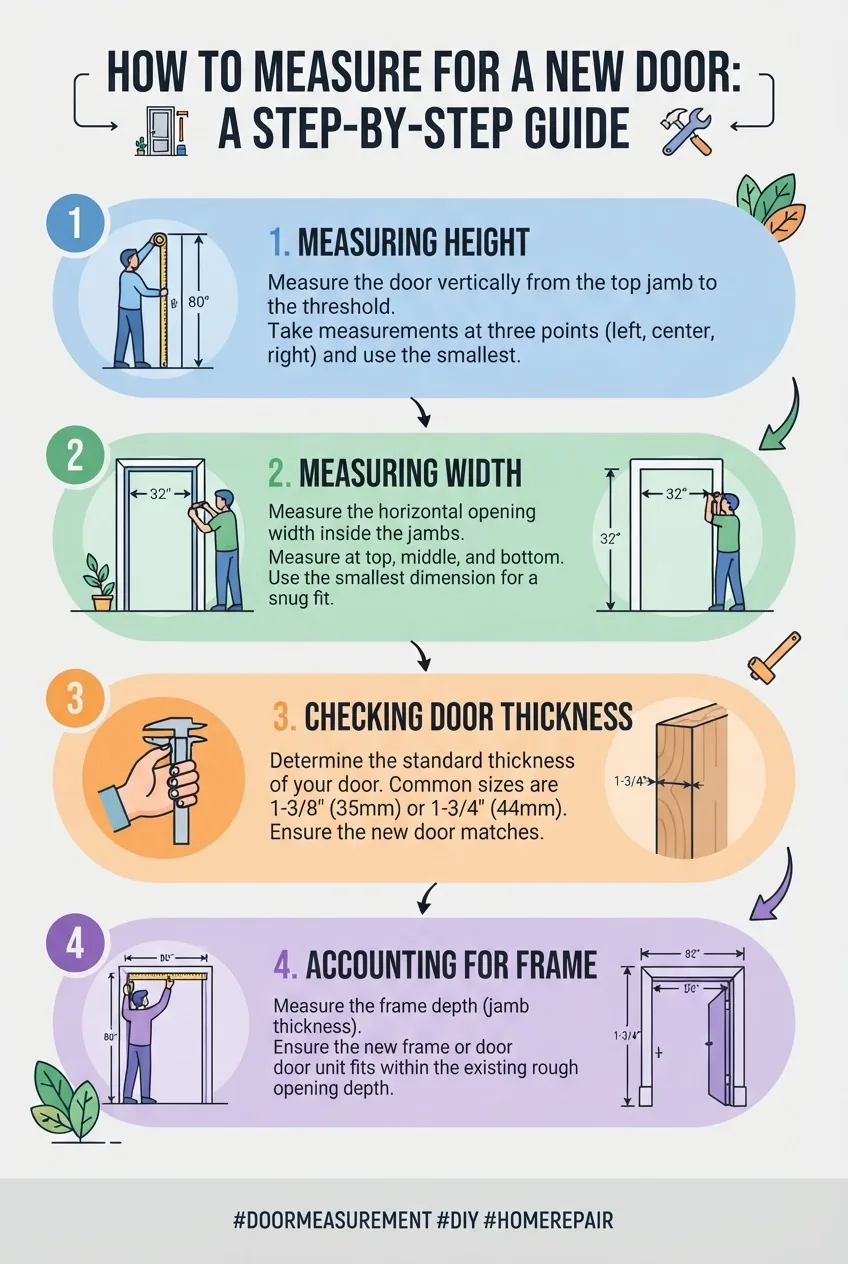
- Inspect the opening and remove trim — Remove interior trim and any rotted stop pieces. Use a flashlight to inspect jambs and header for moisture or rot. If frame is rotted, measure rough opening and plan for a prehung unit or frame repair.
- Measure three widths — Measure the existing door opening at the top, middle and bottom. Record the smallest width. Example: Top 37-7/8″, Middle 37-3/4″, Bottom 37-7/8″ → smallest = 37-3/4″.
- Measure three heights — Measure left, center, right from threshold to header underside. Record smallest height. Typical single door rough opening is 82-1/2″ for a 6’8″ door slab in a prehung frame.
- Measure thickness and jamb depth — Measure existing slab thickness (common: 1-3/4″) and jamb depth (from interior finish to exterior face). Record these for a seamless fit or choose an adjustable jamb if wall depth varies.
- Confirm swing and handing — Determine door handing: stand outside the house; if hinges are on the left, it’s left-hand; if on the right, it’s right-hand. For double doors, note active leaf and astragal requirements.
- Account for weather and threshold — Measure floor finish thickness to determine threshold height for proper clearance. Consider adding a sill pan or adjustable threshold for climates with heavy rain. Use minimal-expansion foam and 100% silicone for sealing perimeter.
- Record frame condition — If the existing frame is plumb and square within 1/4″ over the height, a slab replacement may be possible. If not, order a prehung unit sized to rough opening.
- Order options and hardware together — Specify pre-finished or primed, hinge type (square or beveled), strike reinforcement, and lockset backset (standard 2-3/8″ or 2-3/4″). Add an ANSI/BHMA-rated deadbolt for security—see external standard references for ratings.
- Cross-reference commercial dimensions — If you’re matching larger service or side openings adjacent to garage systems, review the < !-- LINK ADDED: reference for accurate door sizing beyond residential --> Commercial garage door sizes guide to harmonize clearances and thresholds.
- Check local code and energy requirements — Confirm with local code officials whether your municipality requires specific U-factors, tempered glass in sidelites, or storm door approvals. The International Code Council publishes model codes and interpretive guidance—consult ICC.
- Order and schedule delivery — Lead times vary: stock steel doors—2–14 days; fiberglass and custom wood—2–12+ weeks depending on finish. Account for delivery access and storage conditions to avoid warping: store flat, indoors, in a climate-controlled space if possible.
- Plan installation sequence — For a prehung unit: remove old slab, remove old frame, prepare rough opening with flashing and sill pan, install prehung, shim at hinge locations, fasten with 3″ screws through jamb into stud, install threshold, weatherstrip, and hardware.
- Reference cost planning — For complementary cost and installation insights related to garage door systems and installation pricing, see the < !-- LINK ADDED: pillar page for cost and installation insights --> Garage Door Prices Guide for Brands and Installation Cost.
Transition: With measurements and the order placed, you’ll need a reliable buying strategy—next we look at where to buy exterior doors, locally and online.
Where to Buy Exterior Doors: Local and Online Options
Buying doors involves trade-offs: inventory availability, customization timelines, warranty, and local support. Below are types of suppliers, pros/cons, and tactical advice to find the right vendor whether you search for “doors near me” or shop online.
Types of stores and what they offer
- Big-box retailers (Home Depot, Lowe’s): wide stock selection, quick pickup, and straightforward returns for standard sizes; limited custom finish options.
- Specialty door centers and millwork shops: custom sizing, premium finishing, and local fitting services; typically higher price but better fit and finish.
- Local lumberyards and supply houses: good for region-specific weather-resistant options, finishes, and local building-code expertise.
- Online manufacturers and marketplaces: broad range of styles and custom options with competitive pricing; check lead times and return policies carefully.
How to evaluate retailers
- Check warranty and finish coverage — Ask how manufacturer warranties cover finish and core delamination; demand written warranty terms.
- Verify return and damage policies — For custom doors, many suppliers do not accept returns; confirm damage policies and inspection windows on delivery.
- Inspect sample doors when possible — Visit a showroom to touch finishes, feel thresholds, and test locking hardware before ordering.
Local supplier advantages
Local dealers can often measure and install and help with code compliance—search “where can i buy a front door” or “where to buy entry doors” followed by your city for local results. For one-off customization, local millwork shops commonly produce better-fitting jambs and match exterior stains more accurately to your trim.
Online buying tips
When ordering online, confirm exact hinge locations, backset, door handing, threshold details, and glass spec in writing. Use high-resolution photos and exact measurements to avoid ordering wrong slabs. For price expectations: stock steel entry doors often start under $200; mid-range fiberglass or steel doors $500–$1,500; custom wood or fully glazed designer doors $2,000–$8,000+ depending on finish (According to a 2024 industry report on retail door pricing).
Transition: Buying the right door is only part of the equation. Upgrades like ventilation, robust locks, and insulation influence long-term performance and comfort.
Enhancing Exterior Doors: Ventilation, Security and Energy Efficiency Features
Enhancements are where functional performance and longevity are decided: choose the right ventilation, pick certified security hardware, and specify energy-efficient packages for glass and insulated cores.
Ventilation features
For back exterior doors, consider operable transoms or doors with small opening vents (recommended maximum open area for an exterior vent: 100–200 sq in depending on security). Use screens with reinforced frames. Avoid large operable glass unless you have locking hardware that secures the sash.
Security upgrades and standards
Select locks and deadbolts with an ANSI/BHMA rating. ANSI/BHMA sets grading for strength and cycle life—Grade 1 is highest for residential/commercial security applications. See more at BHMA. Reinforce jambs with 1/8″ steel plates and use 3″ screws through strike plates into studs. For large sliding or folding entries, consider multipoint locking systems.
When exploring hardware applicable to larger systems or more commercial-grade components, review guides that detail parts and compatibility: commercial garage door hardware.
Energy efficiency and insulation strategies
Specify insulated cores (polyurethane vs. polystyrene) and check thermal breaks for metal doors. Request the door and glazed unit U-factor and SHGC—ENERGY STAR provides a regional map of recommended thresholds for doors and windows. According to a 2024 industry report on retrofit economics, replacing a poorly sealed door plus air-sealing can reduce infiltration losses by up to 15% when combined with better glazing.
Hardware examples and settings
- Deadbolt: ANSI/BHMA Grade 1 deadbolt, 1” throw.
- Hinges: 3″ ball-bearing hinges, stainless or corrosion-resistant plating in coastal climates.
- Weatherstripping: compression seal on head and jamb; adjustable sill threshold with integrated sweep.
- Smart locks: ensure compatibility with multi-point locks and choose products rated to BHMA standards for durability.
Transition: Hardware and finishes also define style—choose color, finish, and contemporary trends carefully to maximize curb appeal and resale value.
Styling Your Door: Color, Finish, and Contemporary Trends
Styling is where personality meets product constraints. Contemporary exterior doors favor matte or low-sheen finishes, vertical grooves, and integrated glass lites with minimal framing. The black front door with glass trend remains strong—paired with brushed nickel or matte black hardware and narrow sidelites for a cohesive, modern look.
Color and finish guidance
- Black and deep charcoals work best on lighter facades for contrast; consider a satin finish for durability.
- Stained wood veneer over fiberglass offers natural warmth with lower maintenance than solid wood; choose UV-stable finishes in sunny climates.
- Powder-coated metal finishes: best for coastal homes where corrosion resistance matters; ask for 10–15 year finish warranties.
Hardware trends
Contemporary hardware trends include slim rectangular pulls, matte black levers, and integrated multipoint locking silhouettes. For modern glass exterior doors, select minimal rosettes and concealed hinges where possible. Match finish across the door, house numbers, and exterior lighting for cohesion.
Pairing with lighting and landscaping
Balance the amount of glass with glare control and external lighting. A tall vertical lite looks best with a narrow porch slab and linear downlighting. For landscaping, ensure reflective surfaces do not create privacy issues; a low garden hedge can both screen and frame a glass door.
Transition: A well-styled door still needs routine attention—here are maintenance and troubleshooting steps I use on repeat projects.
Maintenance and Troubleshooting Common Exterior Door Issues
Routine maintenance keeps doors functioning and looking their best. The checklist and how-to steps below will keep you proactive.
- Inspect seals seasonally — Check weatherstripping for compression set; replace if gap > 1/8″.
- Tighten hardware twice a year — Tighten hinge screws, check deadbolt throw clearances (deadbolt should fully seat with 1–2mm clearance).
- Repaint or refinish as needed — For painted doors, repaint every 5–7 years in exterior exposures; for stained doors, recoat when finish dulls.
- Fix sticking immediately — If door sticks in high humidity, plane 1–2mm at identified binding spots or add a weather-resistant shim to the frame rather than forcing the latch.
- Address draft points — Use a candle or smoke pencil to find leaks; add threshold adjustment or compressible weatherstrip if infiltration measured exceeds 8–10 CFM at 50 Pa (home blower door context measurement).
Common mistakes and how to avoid them
I’ve seen several repeat failures on projects: first, ordering a slab when the jamb is out of square—this caused the door to bind and required replacement with a prehung unit. Second, underestimating glazing performance: a homeowner chose clear glass for sidelites and then added blackout shades after a summer with high cooling loads. Third, using general-purpose expanding foam instead of minimal-expansion foam around prehung frames—this pushed jambs out of plumb. Avoid these by measuring frame condition, requesting energy specs, and buying installer-grade consumables.
Quick checklist to verify your work
- Door swings freely without binding across full range.
- Deadbolt and latch fully engage with secure 3″ screws into framing.
- Weatherstripping compresses uniformly; no daylight at head or jambs.
- Threshold is sealed and slope diverts water away from interior.
- Hardware finishes matched and torque on screws per manufacturer spec (usually 25–40 in-lbs for lever sets).
When to call a professional
Call a professional if you encounter rotted framing requiring structural repair, multi-point lock alignment beyond simple adjustments, custom glass replacement requiring onsite templating, or if your project involves securing a main entry in a commercial-adjacent application where code compliance or fire-rating is required.
Final summary: Select the material that matches your climate and maintenance tolerance, specify insulated glazing and ANSI/BHMA-rated hardware where security and energy matter, measure carefully (three-point method), and choose the vendor that offers needed support and warranty. Ready to choose your new exterior door? Measure twice, pick matching hardware, and schedule installation within manufacturer lead times to avoid storage damage. If you want help with product selection or installation planning, consider contacting a local door specialist or your preferred installer.
Call to action: Measure your opening using the three-point method above, take photos of frame conditions, and request at least three quotes—one from a national retailer, one from a specialty door center, and one local millworker—to compare prices and warranty coverage.