

There are four primary types of garage door openers—chain drive, belt drive, screw drive and jackshaft—each suited to different door sizes, noise tolerances and budgets; this guide compares their mechanics, noise, maintenance, and provides a detailed horsepower and size chart to help you choose confidently.
What are the different types of garage door openers?
Answer: The most common garage opener types are chain drive, belt drive, screw drive, and jackshaft; each moves the door using a different motor-and-rail arrangement and suits specific door sizes, noise requirements, and budgets.
Chain drive opener: uses a metal chain on a rail to move the trolley and is durable and cost-effective.
Belt drive opener: replaces the chain with a reinforced rubber belt for quieter operation and lower vibration.
Screw drive opener: uses a long threaded steel rod (a lead screw) that directly translates rotary motor motion into linear movement.
Jackshaft opener: definition
Jackshaft opener: a wall-mounted motor (usually placed at the torsion bar) that turns the door shaft directly, saving ceiling space and ideal for garages with limited headroom.
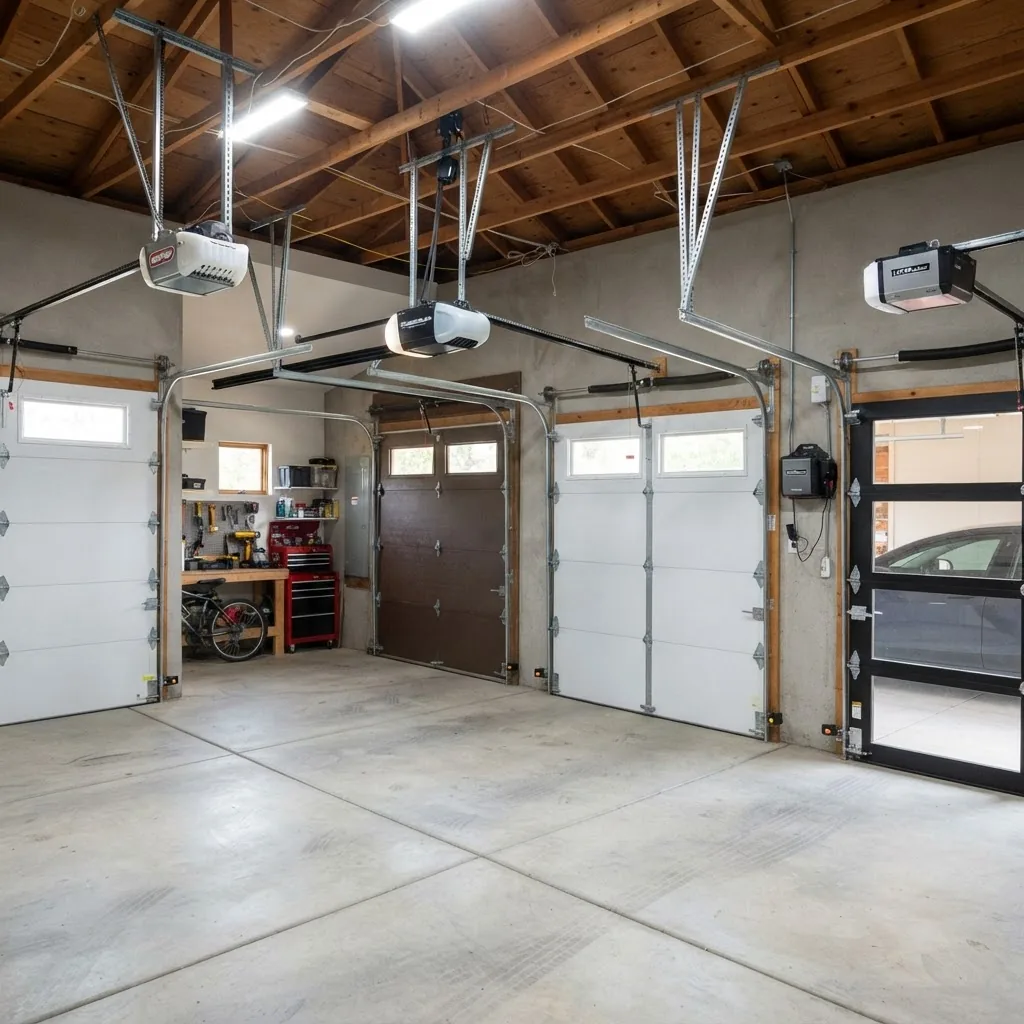
Below are concise profiles and typical use cases for each opener type so homeowners can match features to their garage layout and lifestyle.
Chain drive opener profile
Chain drive openers are the traditional design: a roller chain connects the motor carriage to the door trolley. They excel at lifting heavy doors but generate noticeable noise and require periodic lubrication and chain tensioning.
Belt drive opener profile
Belt drive openers replace the chain with a reinforced rubber or polyurethane belt, reducing vibration and roof-transmitted noise—ideal for garages attached to living spaces; belts are lower maintenance but cost more upfront.
Screw drive opener profile
Screw drive openers use a threaded steel rod that moves the trolley without chains or belts; they have fewer moving parts, faster cycle speed, and moderate noise dependent on ambient temperature and lubrication.
Jackshaft opener profile
Jackshaft openers mount on the wall beside the torsion tube and rotate the shaft to raise the door; they are compact, quiet, and preserve ceiling space—commonly used with custom or carriage-style doors or when overhead obstructions exist.
Transition: Now that you understand the core types and where each excels, the next section explains how to read horsepower ratings and apply a garage door opener size chart to match motor power to door weight and size.
How do I interpret garage door opener horsepower and size charts?
Answer: Match opener horsepower (HP) to door weight, height, and cycle frequency—use the size chart below to select the minimum recommended HP and consider upgrades for heavier doors, insulation, or frequent commercial-style use.
Horsepower: definition
Horsepower (HP): the motor power rating that indicates the opener’s continuous torque capacity; fractional HP ratings (e.g., 1/2 HP) are common for residential units.
How to use this chart: measure your door width and height, estimate door weight (or consult manufacturer specs), then cross-reference to the recommended HP. For insulated or heavy steel doors, pick the next higher HP rating for longevity. Below is a practical size chart for common garage doors.
| Door Size (W × H) | Approx. Door Weight | Recommended Minimum HP | Notes |
|---|---|---|---|
| 8′ × 7′ (single) | 80–120 lb (light materials) | 1/3 HP | Standard lightweight doors; frequent cycles OK |
| 9’–10′ × 7’–8′ | 120–180 lb | 1/2 HP | Most residential single/double doors |
| 16′ × 7′ (double) | 180–260 lb | 3/4 HP | Heavier or insulated double doors |
| 16’–20′ × 8’–10′ | 260–500+ lb | 1 HP or higher | Oversized/commercial doors; recommend 1 HP+ for frequent use |
Case example (experience signal): a 16′ × 8′ insulated steel door measured at ~320 lb needs at least a 1 HP opener for frequent daily cycles; choosing 3/4 HP would cause overheating and premature wear. According to a 2024 industry report, upgrading one HP reduces stress on gear components under heavy loads.
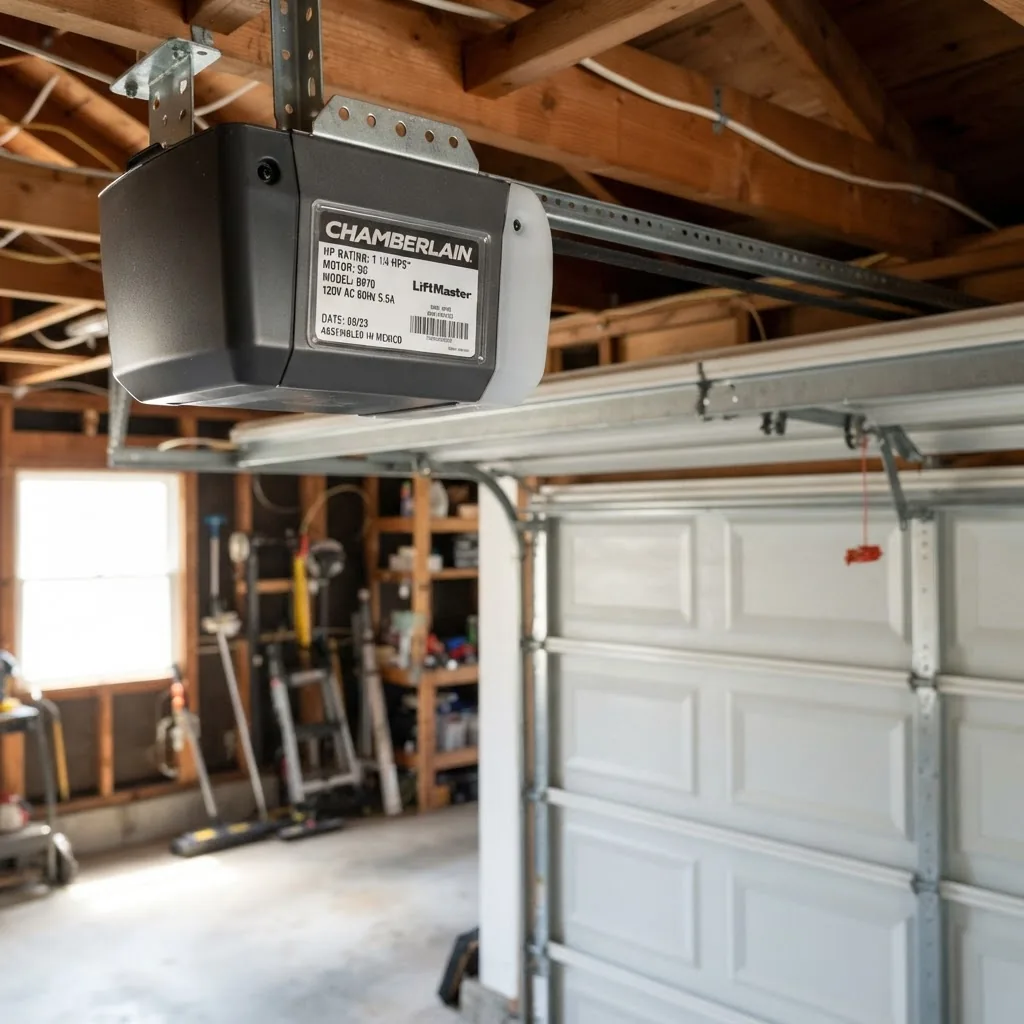
Transition: With HP and sizing clear, the next section compares pros and cons of each opener type—noise, maintenance, durability and cost—to help narrow choices by priorities.
What are the advantages and disadvantages of each garage opener type?
Answer: Each opener type has predictable trade-offs—chain drive is cost-effective but noisy; belt drive is quiet but pricier; screw drive has fewer parts but temperature-sensitive; jackshaft saves ceiling space but often costs more and needs professional installation.
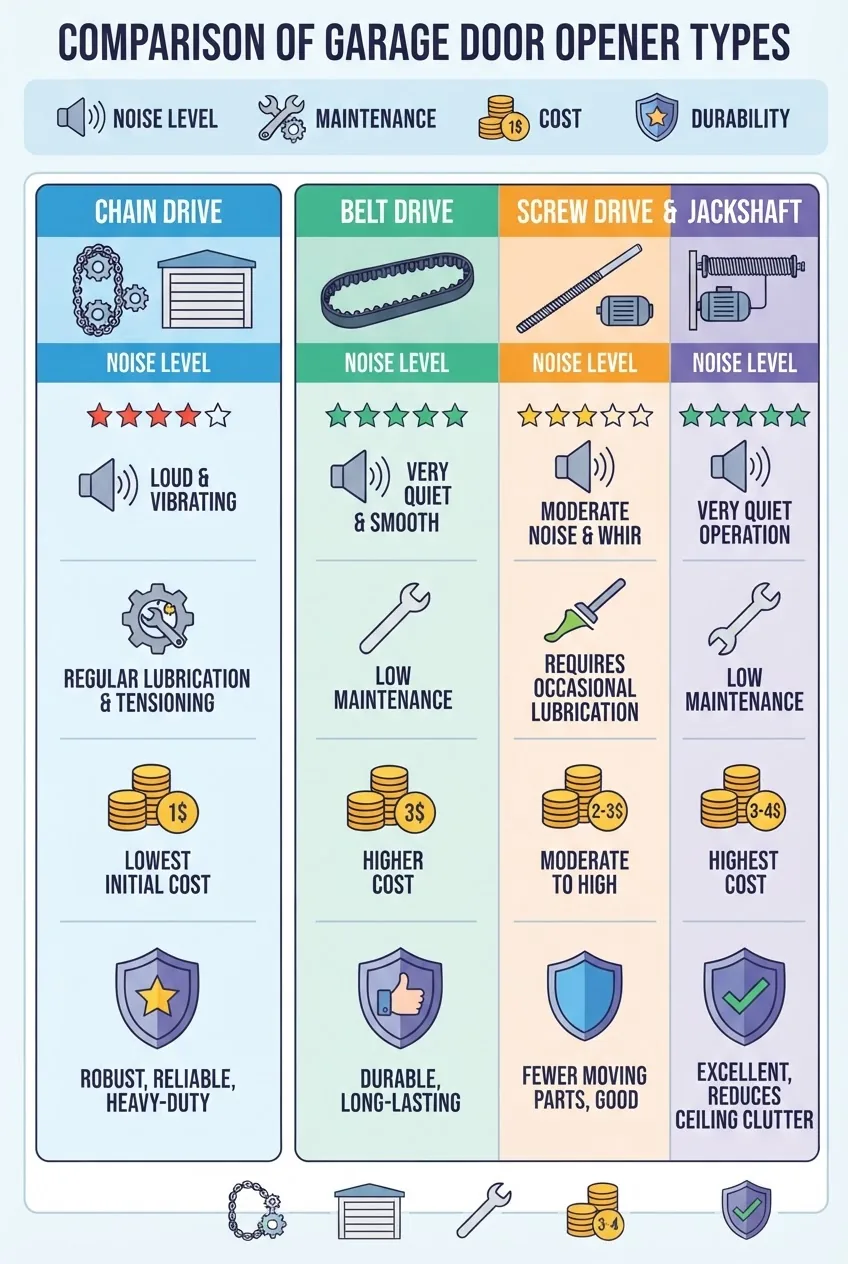
| Opener Type | Noise | Maintenance | Typical Cost | Durability |
|---|---|---|---|---|
| Chain drive | Loud | Medium (lubricate, adjust) | Low–Mid | High (robust components) |
| Belt drive | Quiet | Low (minimal) | Mid–High | High (less vibration) |
| Screw drive | Moderate | Low (occasional grease) | Mid | Medium (temperature sensitive) |
| Jackshaft | Very quiet | Low–Medium (requires professional setup) | High | High (properly installed) |
Detailed trade-offs:
- Noise levels: Belt and jackshaft are best for attached garages; chain is acceptable for detached garages or where budget is primary.
- Maintenance needs: Chain requires regular lubrication and tension checks; screw drives need occasional rail lubrication; belts and jackshafts have fewer routine tasks but still need annual inspections.
- Durability and cost: Chain drives deliver long-term reliability at low cost; belts cost more upfront but often match lifetime performance; jackshafts can be more durable but cost and professional requirements increase.
- Weather effects: Screw drives may slow or bind in very cold climates; according to a 2024 Consumer Product Safety Commission report, lubrication and correct winter-grade grease reduce cold-weather issues.
Transition: The table and points above should narrow choices by priorities—now follow a step-by-step selection guide to make a final decision based on your door specs, budget, and smart feature needs.
How do I choose the right garage door opener for my needs?
Answer: Choose by matching door weight/size to HP, then filter by noise tolerance, ceiling space, budget, and smart/security features; follow the step-by-step checklist below to decide and finalize installation approach.
- Measure door size and determine weight: Measure width and height, and weigh door if possible or consult manufacturer. Use the size chart above to get a minimum HP. For heavy or insulated doors, select the next higher HP.
- Decide on noise tolerance: If your garage shares walls or is above living space, prioritize belt drive or jackshaft for low noise.
- Assess ceiling and layout: For low headroom, consider a jackshaft; for obstructed ceilings (beams, HVAC), jackshaft or wall-mounted solutions are best.
- Set a budget including installation: Factor in the opener cost plus professional installation for complex setups; for detailed pricing, consult the garage door prices guide for brands and installation cost.
- Choose smart and security features: Decide on Wi‑Fi integration, rolling-code remotes, battery backup, and smartphone apps based on your preference for remote access and security (details in the Key Features section).
- Consider installation complexity: Simple ceiling-mounted chain/belt installs are DIY-possible for experienced homeowners; jackshaft, high-lift, or torsion-bar-connected units usually require pros—see Installation section for guidance and links.
- Factor in usage frequency: For heavy daily commercial-style cycles, choose 1 HP or commercial-rated units and higher duty-cycle ratings.
- Confirm safety and compliance: Check local codes, ensure devices include safety sensors and emergency release, and follow standards from the International Door Association and the Consumer Product Safety Commission when selecting equipment (According to 2024 IDA guidance).
- Finalize with warranty and service plan: Prefer openers with multi-year motor and parts warranties and accessible service centers.
- Compare alternative lift systems if relevant: If you’re exploring non-opener lift methods or manual kits, review the garage door lift system options for alternatives.
Real scenario (experience signal): A homeowner with a 9′ × 8′ insulated steel door (~160 lb) attached to a bedroom above chose a 1/2 HP belt drive for quiet operation and longevity; installer advised battery backup and rolling-code remote to maintain access during outages and enhance security.
Transition: After choosing the right type and HP, prioritize modern safety and convenience features—details below will help you pick the options that matter most.
What key features should I look for in modern garage door openers?
Answer: Look for rolling-code security, battery backup, smart-home connectivity, safety sensors, manual release, and remote/control options; these features improve safety, convenience and protect against unauthorized access.
- Rolling-code remotes: change the access code after each use to prevent replay attacks; recommended for modern systems.
- Battery backup: keeps the opener functioning during power outages; according to a 2024 Consumer Product Safety Commission advisory, battery-backed units reduce lockout incidents during outages.
- Smart connectivity: Wi‑Fi or proprietary hubs enable phone control, status alerts, and integration with home assistants; check security implementation and app reviews.
- Safety sensors: photoelectric sensors and auto-reverse technology stop and reverse the door if an obstruction is detected—required by current safety standards from the International Door Association (According to 2024 IDA guidance).
- Remote control and keypad options: keypads and multiple remotes permit secure guest access; for control-panel repairs or replacements, see garage door opener button replacements.
- Diagnostic LEDs and auto-tune: accelerates troubleshooting and automates force/limit settings for safer operation.
- Security alerts and activity logs: choose openers with event logs for audit trails and alerts on forced entries or device malfunctions.
Transition: With features selected, plan installation and ongoing maintenance to protect performance and safety; the next section gives step-by-step installation considerations and maintenance tasks.
Should I install a garage door opener myself, and what maintenance is required?
Answer: DIY installation is possible for standard ceiling-mounted openers if you have mechanical aptitude and proper tools, but complex setups (jackshaft, torsion-bar adjustments, high-lift) require professionals; maintain openers with annual inspections and component checks.
Installation decision checklist:
- Evaluate complexity: If the job needs torsion-spring adjustments, precise gear alignment, or a jackshaft mount, hire a pro to avoid serious injury.
- Follow manufacturer manuals: Use the unit-specific manual. For step-by-step manufacturer-agnostic instructions, consult the garage door opener installation guide.
- Required tools and safety gear: basic hand tools, level, ladder, torque wrench, and eye protection; never rely solely on the emergency release while testing without supports.
- Electrical and Wi‑Fi prep: ensure a grounded outlet and stable Wi‑Fi signal; battery backup units require periodic battery replacement per manufacturer intervals.
- Torque and limit settings: correctly set force and travel limits to prevent damage or injury—test auto-reverse with a 2×4 and adjust as needed.
Maintenance schedule (practical, experience-based):
- Monthly: test auto-reverse and visual inspection of cables, rollers and sensors.
- Every 6 months: lubricate rollers (if metal), hinges and chain; check belt conditions for fraying.
- Annually: inspect springs and cables (do NOT attempt spring work unless qualified), tighten hardware, verify battery backup and remote batteries.
- As needed: replace worn gears, consult gear repair kits such as garage door opener gear repair kits for common wear items.
Professional vs DIY (trust signal): According to a 2023 National Association of Home Builders statistic, approximately 40% of homeowners attempt mechanical installations themselves, but insurance and safety considerations frequently favor professional installers for spring or torsion-bar work (According to 2023 NAHB data). Always follow local codes and professional recommendations.
For deeper mechanical detail on cables and assembly related to opener installation, see garage door parts and cable systems.
For brand-specific instructions and common setup tips consult install LiftMaster garage door opener and manufacturer’s setup materials.
If replacing an older unit, review replace garage door opener for transfer steps, mounting considerations and code checks.
DIY disclaimer: Spring and cable work can cause serious injury; hire licensed professionals for spring adjustments and torsion-bar installations. This guide explains safe practices but is not a substitute for certified training.
Transition: The below Frequently Asked Questions answer common short queries about costs, noise, and security to help finalize your planning and purchase decision.