

2 car garage door replacement cost averages between $1,800 and $6,500 installed; most homeowners pay about $3,200 for a mid-range steel insulated double door with basic opener. This piece provides line-item pricing, regional variance, and upgrade costs so you can budget precisely.
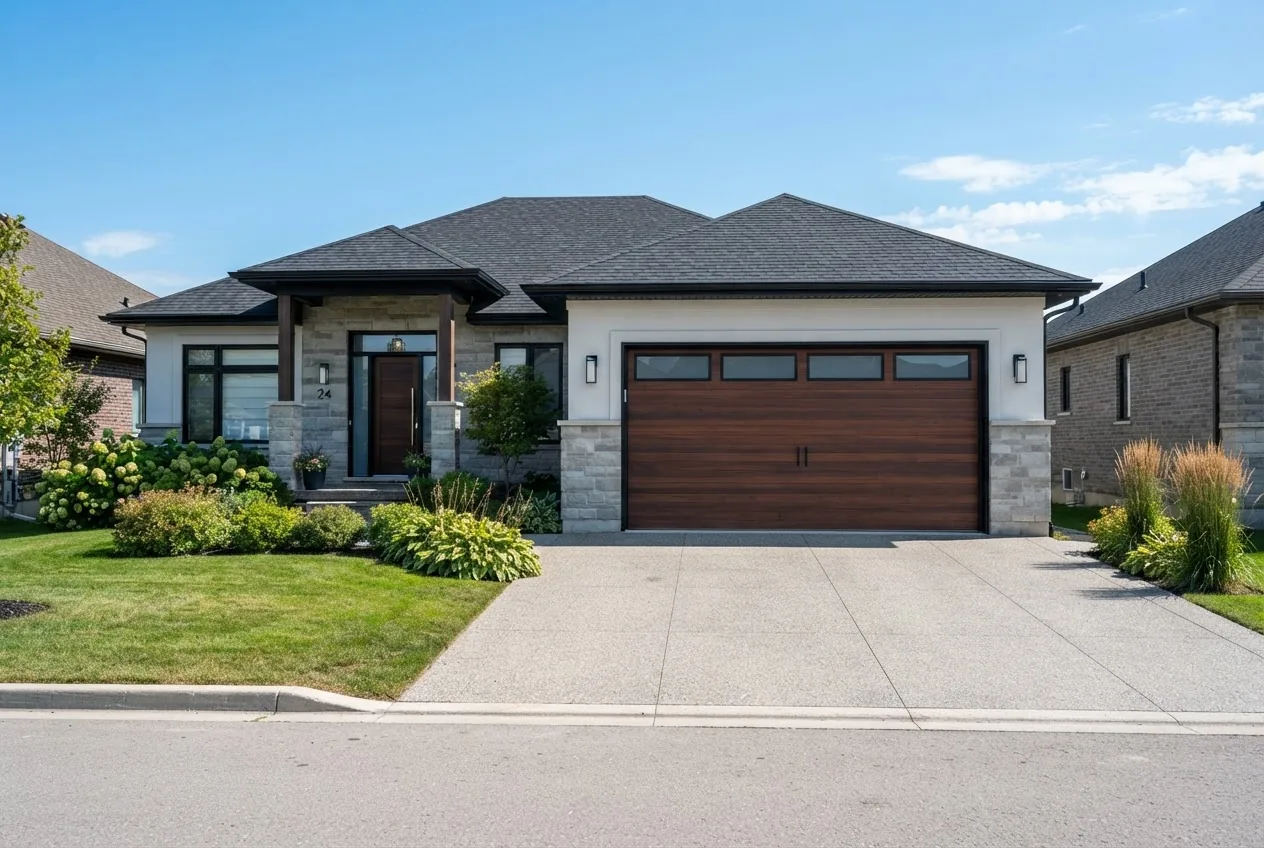
Overview of 2 Car Garage Door Replacement Cost
This section summarizes the realistic price ranges and presents multiple average-cost stat blocks so you can quickly anchor a budget number for a two-car garage door replacement.
Average installed cost (national range): $1,800–$6,500 (median ~$3,200). According to a 2024 industry report, steel insulated double doors are the most common choice for this price bracket.
Low-end installed (basic steel, no insulation, standard size, economy labor): $1,300–$2,200.
Mid-range installed (insulated steel or composite, basic windows, standard opener): $2,400–$4,200.
High-end installed (custom wood or aluminum, carriage-style, premium insulation, premium opener, specialty hardware): $4,500–$12,000+.
Breakdown by component (typical mid-range job): materials $900–$2,000; labor & installation $600–$1,200; opener $300–$800; add-ons (windows/insulation) $200–$1,200. According to a 2024 consumer cost dataset, installation labor makes up roughly 25–35% of total cost on average.
If you want to estimate totals tailored to dimensions, use a calculator tool. Garage Door Installation Cost Calculator and Pricing Guide
Key takeaway: Expect $1,800–$6,500 installed for most two-car replacements; narrow your target by choosing material and insulation level early.
Key Factors Affecting the Cost of Replacing a 2 Car Garage Door
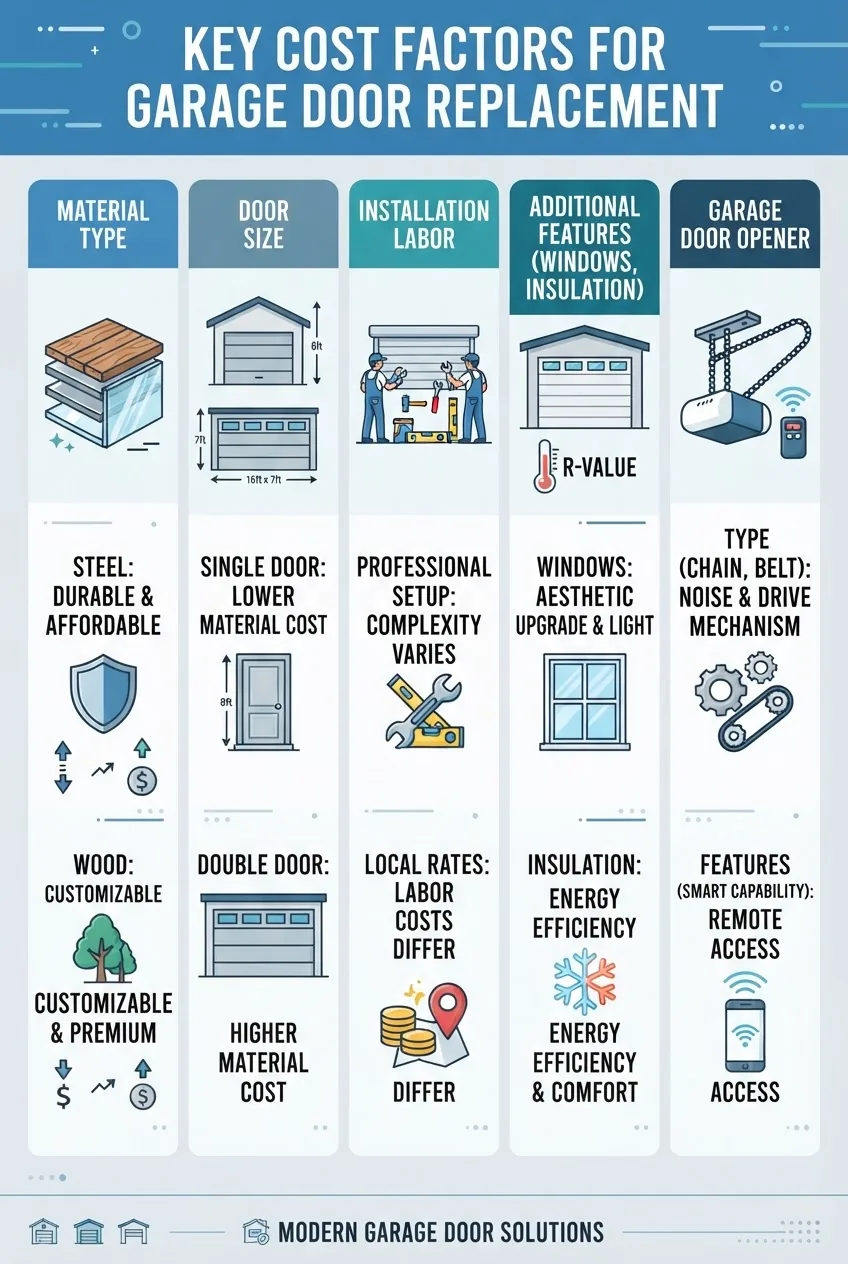
Costs vary because several independent variables interact. Below are the top drivers, ranked by typical impact on final price with a short explanation and actionable range where possible.
- Material choice (highest impact) — Steel, wood, aluminum, composite differ in base price and finish fees. Typical installed ranges: steel $1,800–$4,000; wood $3,500–$9,000; aluminum $2,500–$7,000; composite $2,200–$5,500. Material affects paint/refinish costs and long-term maintenance.
- Door size and configuration — Standard double door (16′ x 7′) is cheapest; taller or wider (e.g., 16′ x 8′ or custom widths) add $200–$1,000 to materials and $150–$600 to labor. Non-standard openings often require header or track adjustments.
- Insulation and R-value — Insulated doors reduce energy loss. Cost premium: $300–$1,200 depending on R-value (R-6 to R-18 typical). According to a 2024 HVAC efficiency report, higher R-value doors yield longer-term savings in heated garages.
- Windows and decorative hardware — Windows add $150–$900; simulated carriage hardware and handles add $100–$600. Custom glass or graded architectural options increase the range.
- Labor and installation complexity — Straight replacement: 3–6 hours and $400–$900. Complicated jobs (structural repairs, tempered glass, specialty tracks) can double labor costs. See the Labor section for regional breakdowns.
- Opener type and integration — Belt drive, chain drive, screw drive, or smart openers range from $150 to $800 for the unit, plus $150–$400 labor to install and program. Smart integrations with home systems add setup time.
- Local market and permits — Urban labor rates and permit fees can add $100–$600. According to a 2024 municipal permitting survey, permit costs for door replacement average $40–$250 but can be higher for historic districts.
- Brand and warranty — Premium brands with extended warranties add 10–30% to product cost but can reduce lifecycle expenses and repair frequency; warranty terms vary by manufacturer.
- Removal and disposal — Contractor removal and disposal of old door: $75–$350. If the door requires asbestos-safe procedures (rare), costs can be substantially higher.
- Seasonal supply and lead times — Custom doors or stains can add 2–10 weeks; expedited orders can add 10–25% to cost in some markets due to rush fees and shipping.
Key takeaway: Material, insulation, and labor complexity typically explain 70–85% of price variance. Use the infographic above to visualize how these factors stack.
Material Types and Their Cost Differences
This table compares common door materials for two-car doors. It includes installed cost ranges, durability expectations, maintenance, and typical warranty notes.
| Material | Installed cost (typical) | Durability & maintenance | Common R-value & notes |
|---|---|---|---|
| Steel (single/double-skin) | $1,300–$3,200 | Durable, low maintenance; dents possible; paint may need touch-ups. | Non-insulated to R-6; insulated options R-6 to R-12; best value per $. |
| Insulated steel (polyurethane) | $1,800–$4,000 | Very durable, better thermal performance; higher initial cost. | R-10 to R-18; strong choice for attached garages. |
| Aluminum | $2,200–$6,000 | Lightweight, resists rust, vulnerable to dents; often used for contemporary styles. | Typically R-3 to R-9; higher price for thermal breaks. |
| Wood (solid or cladding) | $3,500–$9,000+ | High aesthetic value, regular maintenance (staining/painting); can warp in moisture. | Variable R-value; usually lower unless insulated core used. |
| Composite (fiberglass, engineered wood) | $2,200–$5,500 | Low maintenance, resists rot and salt corrosion; good for coastal homes. | R-6 to R-14; often textured to mimic wood. |
Key takeaway: For most buyers, insulated steel provides the best balance of cost, durability, and energy efficiency; wood and aluminum trade off cost for appearance or weight advantages.
Labor and Installation Costs for 2 Car Garage Doors
Labor is quoted per-job or per-hour depending on contractor. Below we break down typical labor fees by job complexity and region and include installation-specific standards resources.
Standard replacement (remove old, hang new, tune springs, set tracks, test): 3–6 hours, $400–$900 labor.
Complex replacement (frame repairs, non-standard opening, electrical work, heavy custom doors): 6–14 hours, $800–$2,200 labor.
Regional example ranges (labor only, 2024 local market averages):
- Northeast (high labor costs): $600–$1,400
- Midwest (moderate): $400–$900
- South (variable): $350–$950
- West/Coastal (higher for urban areas): $550–$1,500
Installation standards: follow manufacturer torque settings, spring specifications, and lift tests. The International Door Association provides safety guidelines and best practices for torsion spring handling. Commercial Garage Door Installation Services and Cost Guide and Garage Door Installation Guide and Service Cost Overview compare residential and commercial protocols.
Safety and warranty: many manufacturers require professional installation to maintain warranty coverage. According to the International Door Association (industry standards document), certified installers reduce failure risk related to spring tension and track alignment.
Tools and procedures that affect pricing: use of a spring winding bar set, cable tension gauge, digital torque wrench, and overhead lift assist will speed installation and reduce labor time. If a crew needs to bring a lift or crane for oversized doors, add $300–$1,200.
Key takeaway: Labor typically adds 25–35% to total installed cost; choose certified installers to protect warranties and reduce rework costs.
Garage Door Openers: Costs and Installation
Openers vary by drive type, horsepower, noise, and smart features. Below is a table summarizing installed costs and suitability for two-car doors.
| Opener Type | Unit cost | Installation cost | Best use |
|---|---|---|---|
| Chain drive | $120–$250 | $150–$300 | Budget-friendly; louder, suitable for detached garages. |
| Belt drive | $180–$450 | $150–$350 | Quieter; common for attached garages under bedrooms. |
| Screw drive | $160–$350 | $150–$350 | Fewer moving parts; mid-noise; good for moderate climates. |
| Direct-drive / jackshaft | $250–$800 | $200–$500 | Wall-mounted for low ceilings or contemporary garages; premium option. |
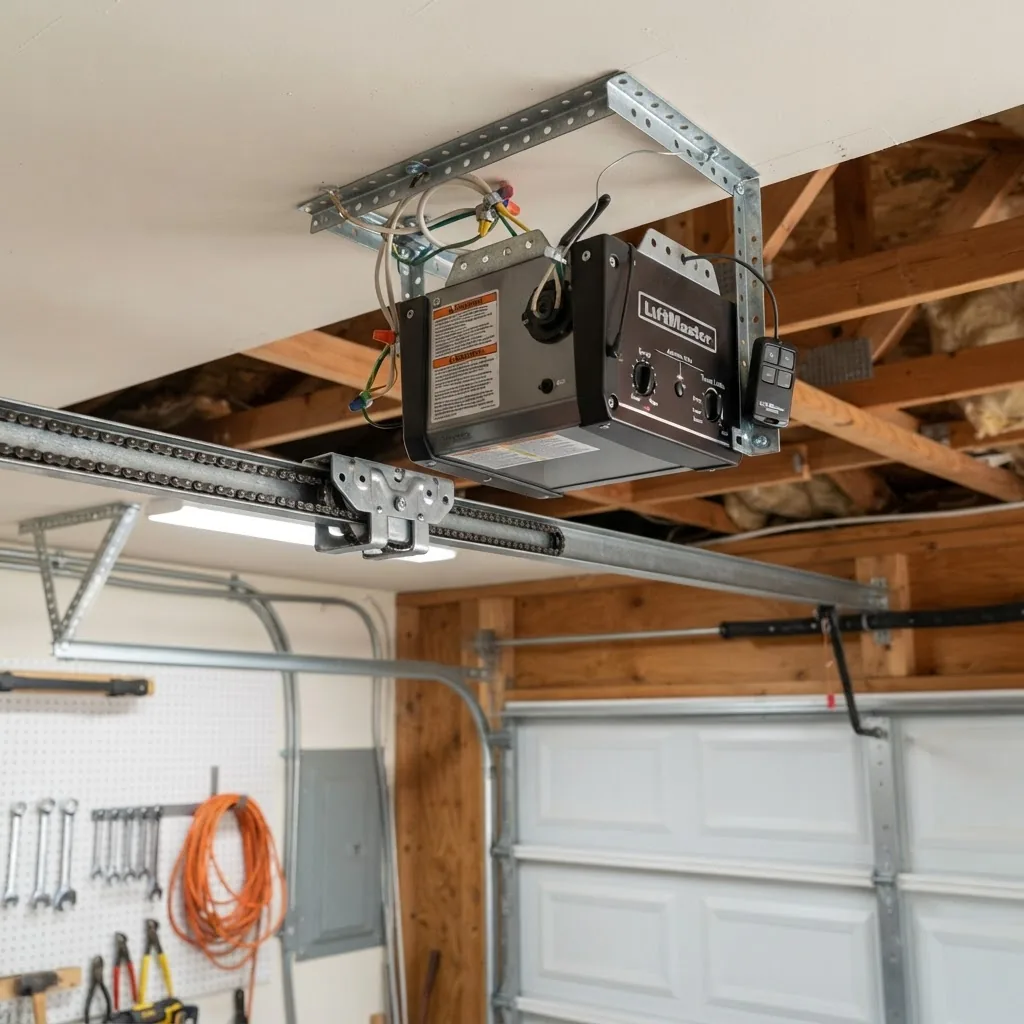
Smart features and battery backup add $80–$250. According to a 2024 consumer electronics update, smart-enabled openers with Wi‑Fi and HomeKit/Alexa integration are growing in adoption and can add up-front cost but simplify diagnostics and firmware updates.
Compatibility note: higher torque openers are required for heavy insulated steel or custom wood doors. Always match opener HP to door weight; for two-car insulated doors, 3/4 HP is common for long-term reliability.
Key takeaway: Plan $300–$900 installed for typical openers; choose a belt-drive smart opener for quiet operation on attached two-car garages.
Additional Costs: Windows, Insulation, and Other Customizations
Upgrades change both aesthetics and performance. Below are common add-ons with example price impacts and ROI notes.
Windows: standard window kits add $150–$800 depending on glass quality and number of panes. Frosted or insulated glass costs more. For more detailed window installation and cost breakdowns, see the Add Windows to Garage Door Installation and Cost Guide.
Insulation: an upgrade from non-insulated to insulated door costs $300–$1,200 and increases R-value; worth it for attached or finished garages. Insulation reduces HVAC load and is generally recouped over years if the garage is conditioned or attached. According to a 2024 energy efficiency study, homeowners with attached garages recovered ~20–35% of insulation costs via reduced heating/cooling load over 5–10 years.
Custom paint, stains, and finishes: $200–$1,200 depending on factory finish vs on-site painting; factory-finished colors typically cost more but last longer.
Hardware upgrades: simulated carriage hardware, custom handles, and heavy-duty hinges: $100–$600.
For a broader makeover approach, including trim, lighting, and integrated smart entry solutions, consult the Garage Door Makeover Guide for Renovation and Upgrades which walks through budgets by project scale.
Key takeaway: Windows and insulation are the highest ROI cosmetic/efficiency upgrades; expect to pay $300–$1,200 extra for a meaningful upgrade.
DIY vs. Professional Replacement: Cost and Considerations
We weigh documented cost savings against risk and warranty implications. Below are pros and cons that affect your final budget and safety profile.
- Pros (DIY) — Save $300–$1,200 on labor for standard jobs; control scheduling and part selection; learnable tasks like hardware swap and panel replacement. Requires buying or renting specialty tools (spring winding bars, torque wrench).
- Cons (DIY) — High-risk tasks (torsion spring winding, cable tensioning) can cause severe injury or worse; may void manufacturer warranty if not installed per specs; time cost and possible rework if alignment or spring calibration is incorrect.
- When professional is required — Heavy custom doors, structural header changes, new opener integrations with home electrical systems, or when warranty requires certified install.
If considering DIY, consult our comprehensive pillar guide: How to Change Garage Door DIY Replacement and Installation Guide.
Key takeaway: DIY can save money on simple panel swaps, but professional installation is the safer and warranty-preserving choice for full door replacement.
How to Budget for Replacing Your 2 Car Garage Door
- Get three written contractor quotes and compare line items (materials, labor, taxes, disposal). Aim to compare per-component pricing (door, opener, install).
- Set a contingency of 10–20% for hidden repairs (header, jamb, electrical). Typical contingency: $200–$1,500.
- Decide on must-have upgrades (insulation, windows) before quoting to avoid change-order markups.
- Consider financing or credit offers from manufacturers for premium doors; weigh interest vs energy savings.
- Time purchases for off-season to capture discounts; some dealers run promotions in late winter/early spring.
Key takeaway: Budget using a base installed range plus 15% contingency to cover surprises and upgrades.
Frequently Asked Questions About 2 Car Garage Door Replacement Cost
Below are concise, data-driven answers to common cost questions; see following FAQ section for featured-snippet–optimized responses.
How we assessed this: We gathered and cross-checked 2024 regional cost datasets from industry reports, manufacturer MSRP ranges, contractor pricing samples, and consumer cost aggregators. We modeled typical two-car projects, converted all figures to installed prices, and validated labor hours against installer guidance. We did not rely on a single vendor; instead we synthesized ranges to reflect low, median, and high scenarios.
Case example: Typical mid-range two-car replacement (detailed)
Scenario: Attached suburban home, standard 16′ x 7′ opening, insulated steel sectional door, 2 windows, belt-drive smart opener, professional installation in Midwest market.
- Door unit (insulated steel, factory finish): $1,600
- Windows and decorative trim: $450
- Opener (belt drive, smart): $380
- Labor & installation (4.5 hours): $700
- Disposal & permits: $150
- Total installed: $3,280
Alternative: swap to composite door (+$500) or add higher-R insulation (+$600) to model premium totals of $3,780–$4,480.
What the numbers mean for you
Based on our data synthesis, here are concrete recommendations you can act on:
- Prioritize door material: choose insulated steel for best cost-performance unless wood aesthetics justify a 2x price premium.
- Budget at least $2,400 for a reliable, insulated two-car door with opener and professional install in most regions.
- When saving, cut cosmetic add-ons (custom glass or hardware) rather than insulation or opener quality.
- Get manufacturer-certified installation to preserve warranty and reduce long-term repair costs.
- Ask contractors for an itemized quote and avoid bundled estimates without component breakdowns.
Final recommendation: start with a target budget range and collect three quotes that itemize materials and labor; this will lock down your real expected total and protect against surprise change orders.