

The parts of a garage door frame include side jambs, the header (top jamb), threshold (bottom frame), stop molding, weatherstripping, mounting and fastener points, tracks attachment areas and reinforcement elements; each component supports door operation, seals the opening, and ties the door assembly to the garage structure for safety and alignment.
Garage door frame: the surrounding structural assembly that creates and supports the opening for a garage door, including vertical and horizontal members and the bottom threshold.
Introduction to Parts of a Garage Door Frame?
Answer: A garage door frame is the structural border around the door opening made of vertical jambs, a header/top jamb, and a threshold, plus attached seals, stops and mounting points that interface with tracks and hardware to control movement and weather protection.
Purpose: The garage door frame’s primary role is to provide rigid, accurately sized support for the door system so the door can open and close freely while transferring loads (both static and dynamic) into the surrounding garage structure. That means the frame must be straight, plumb and securely anchored.
Term: jamb — a vertical framing member on either side of the door opening that supports the header and provides mounting for weatherstripping and stop molding.
This introduction gives the anatomy and functional context before we examine each part in detail. Read on for labeling, material trade-offs, how parts connect, and inspection steps to identify issues during a routine check.
Main Structural Components of a Garage Door Frame?
Answer: The main structural components are the side jambs, header/top jamb, threshold/bottom frame and the material system (wood, steel, aluminum) used to build them; these create the opening and transfer forces to the building.
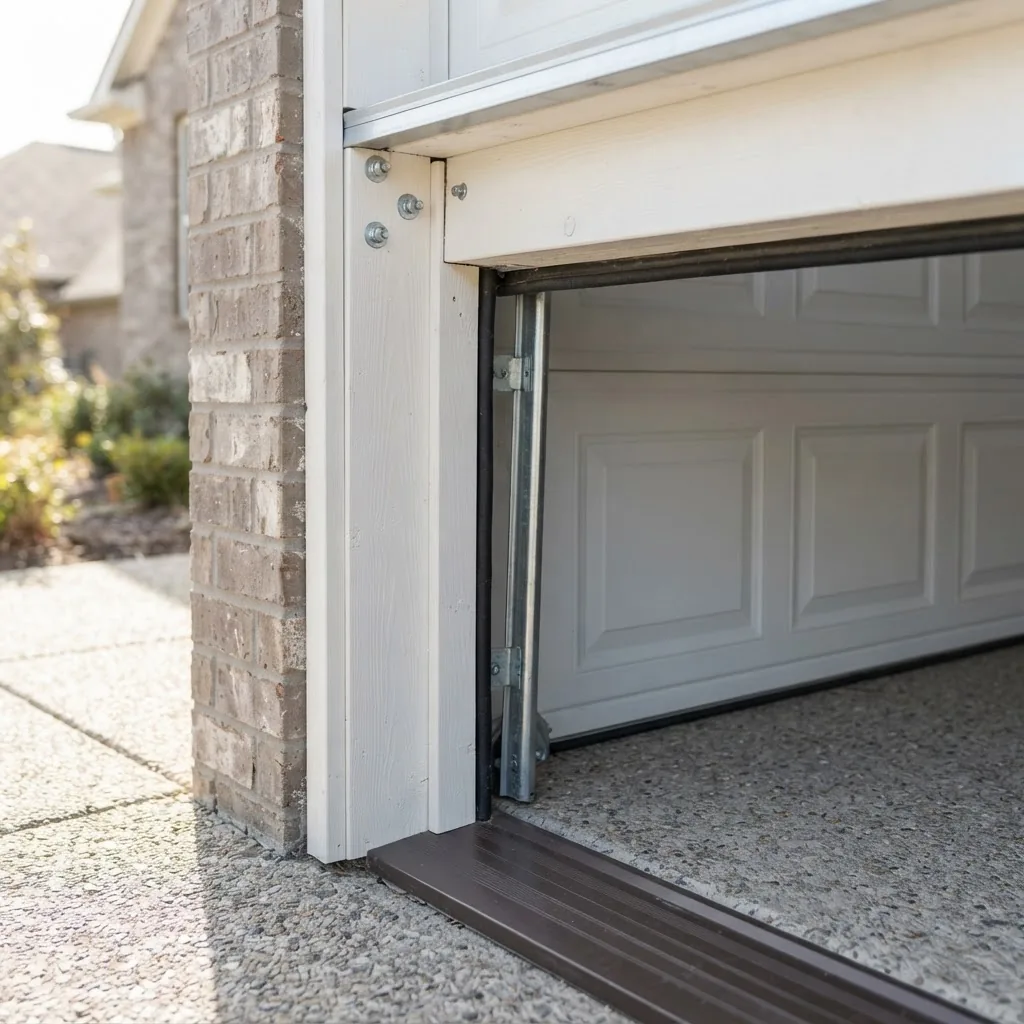
-
Side Jambs
Answer: Side jambs are the vertical members on each side of the opening that carry the header load, provide the primary mounting surface for stop molding and weatherstripping, and anchor hardware attachment points.
Term: side jambs — vertical frame posts forming the left and right sides of the garage door opening.
Function and anatomy:
- Primary structural role: Side jambs carry lateral loads from the header and deliver reaction forces into the garage wall framing.
- Mounting surfaces: They provide the face for attaching stop molding, weather seals and the stationary side of any hinge or bracket that seats the door when closed.
- Attachment details: Commonly a 2×6 or 2×8 nominal wood member in wood-framed garages, or a formed steel jamb with insulating filler in steel/aluminum systems. Fasteners typically include lag bolts, structural screws and anchors depending on substrate.
- Inspection cues: Look for rot, splits, gaps at the reveal, or loose fasteners that allow the jamb to move when the door touches the stop molding.
garage door jamb trim and casing replacement cost guide
Case example from experience: I once re-anchored a side jamb where sheathing had pulled away from studs after water intrusion; replacing the damaged jamb section and reinstalling to new steel anchors restored plumb and eliminated scraping under a sectional door.
Inspection step-by-step for side jambs:
- Close the door and note any gap between the bottom edge and threshold along each jamb face.
- Check reveal with a 4-foot level to detect twist or bow.
- Probe wood for soft spots; document backing or shims showing compression or missing fasteners.
-
Header / Top Jamb
Answer: The header (top jamb) is the horizontal member across the top of the opening that spans between side jambs, supports vertical loads from above, and provides mounting for track brackets and spring hardware connections.
Term: header (top jamb) — the horizontal top member that bridges the opening and resists loads from the structure above and from door movement.
Function and anatomy:
- Structural role: Headers resist bending and must be sized for span and load — in wood framing this is often laminated or built-up beams; in steel systems a formed channel or boxed header is used.
- Hardware attachment: Tracks, torsion spring brackets or center-bearing plates often mount directly to the header; accurate location and solid backing are essential to maintain door alignment.
- Common failures: Header crush (compression), rot at sheathing junctions, or insufficient backing for fasteners which leads to movement and misalignment.
Installation note: Confirm header backing for spring anchoring per manufacturer’s spec and local code; inadequate backing leads to dangerous failure. For code guidance see International Code Council.
-
Threshold / Bottom Frame
Answer: The threshold (bottom frame) is the sill or bottom member that seals and supports the door’s lower edge, resists water entry, and works with weatherstripping to provide a final seal to the ground.
Term: threshold — the lower horizontal element forming the base of the frame, often including or supporting the bottom seal.
Types and roles:
- Concrete recessed sill: Many garages have no separate threshold; the bottom seal compresses against concrete.
- Metal threshold plates: Surface-mounted steel or aluminum plates used to bridge uneven floors and support seals; useful where a recessed sill isn’t available.
- Rubber or PVC base seals mount to the door bottom and press against the threshold to stop drafts and water.
Inspection notes: Check for gaps at corners where threshold meets jambs, erosion or settled concrete, and whether threshold anchors are intact. Water intrusion at this joint can cause jamb and header rot.
-
Frame Materials (wood, steel, aluminum comparison)
Answer: Garage door frames are primarily built with wood, steel or aluminum; wood is easy to modify and inexpensive but needs maintenance, steel is strong and cost-effective but can corrode, aluminum resists corrosion and is lightweight but is less rigid.
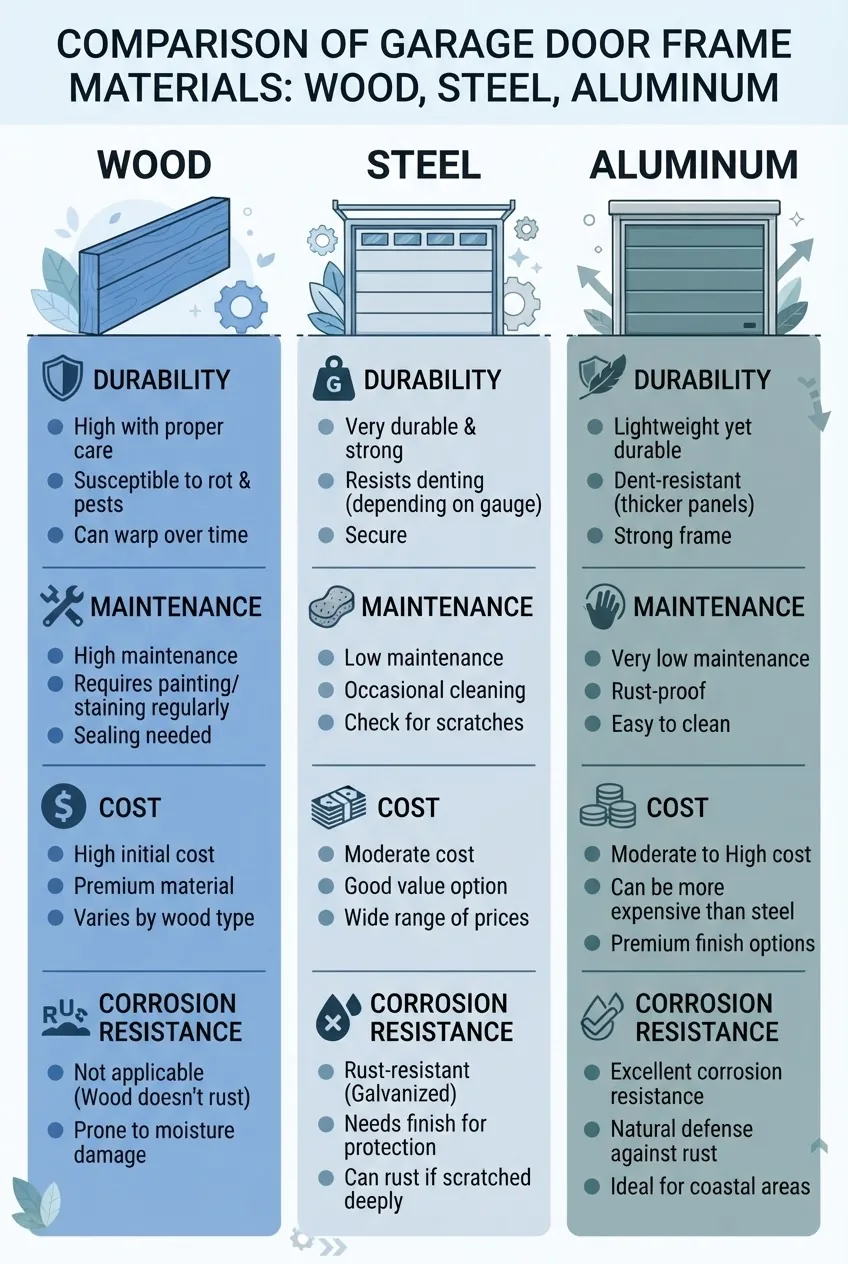
Comparison summary (detailed matrix below): choose the material that balances durability, cost and maintenance for your climate and performance needs. Installer perspective: fastening strategies differ by material — wood accepts lag screws well, steel needs self-tapping or through-bolting to structural backing, and aluminum requires larger contact areas for shear loads.
Material Durability Maintenance Typical Cost Wood High structural stiffness; vulnerable to rot if exposed Periodic painting/sealing; inspect for rot annually Low–Moderate Steel Very strong; risk of corrosion if finishes fail Touch-up paint; check for rust and sacrificial fasteners Moderate Aluminum Lightweight but less stiff; excellent corrosion resistance Minimal; check for dents and ensure seal compression Moderate–High Trade-offs from installer perspective:
- Wood allows easy field modification when adjusting jamb reveals or adding backing for hardware.
- Steel requires precise drilling and backing; weld repairs are possible but need a qualified tradesperson.
- Aluminum resists rust but can flex under load; reinforce where hardware mounts or use boxed sections.
garage door panel replacement cost and where to buy panels
Transition: With the main frame parts identified, next we’ll cover the additional functional elements attached to the frame that control sealing and hardware mounting.
Additional Functional Parts and Attachments on the Frame?
Answer: Additional functional parts include weatherstripping/seals, stop molding, tracks attachment areas, hardware mounting points and fasteners; these components control sealing, door seating and the interface between the door and mechanical hardware.
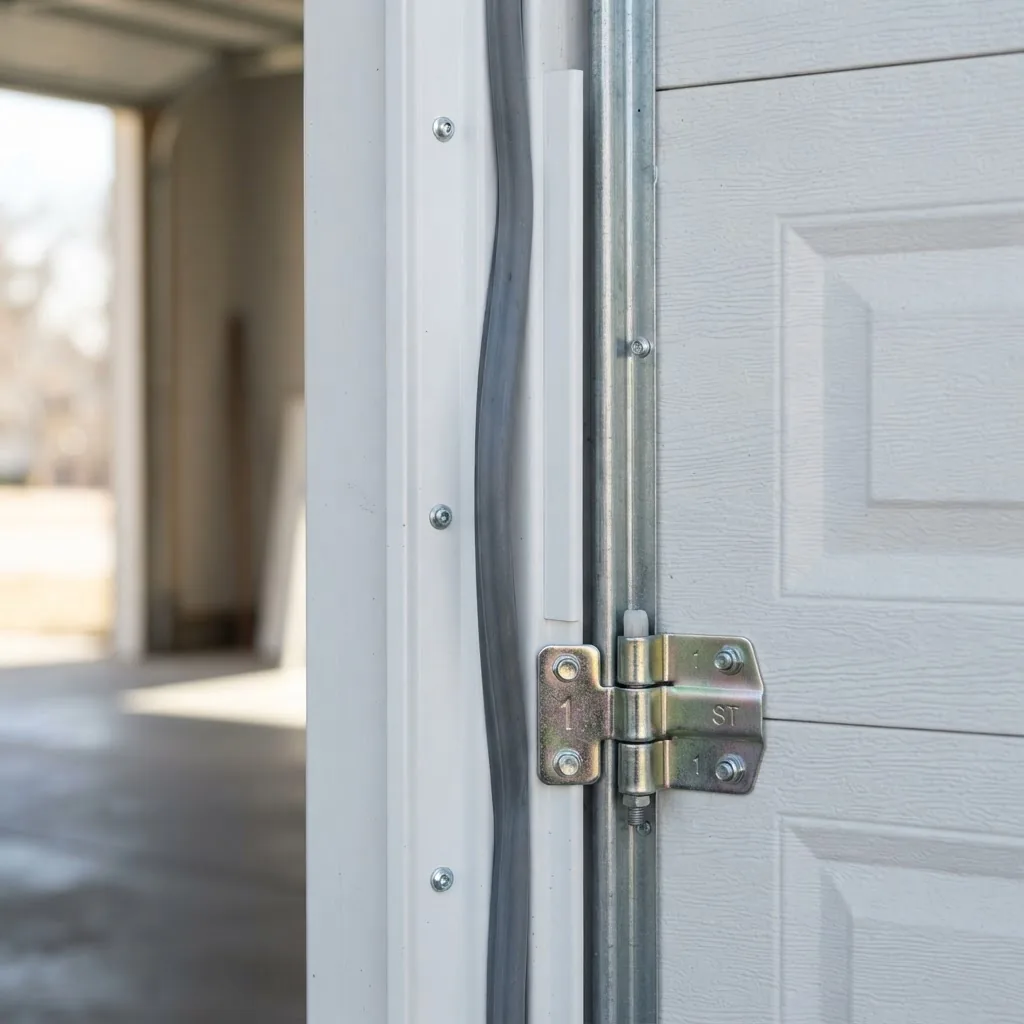
These attachments are often omitted in high-level guides but are crucial to performance. Below are the common pieces with inspection and functional notes.
Weatherstripping and Seals
Answer: Weatherstripping is the flexible material attached to jambs, header and threshold that prevents air, water and pests from entering; proper compression and material selection preserve energy efficiency and prevent damage to frame materials.
Term: weatherstripping — seals made of rubber, vinyl or brush that compress between the door and frame to block weather and light.
- Locations: Vertical on jambs, horizontal on header, and bottom seals on the door edge that meet the threshold.
- Materials: EPDM rubber, PVC, or pile/brush seals. EPDM resists UV and compression set better in exterior exposures.
- Installation details: Weatherstripping is typically nailed, screwed, or clipped to the frame; adhesion-only strips are less durable on exterior jambs.
- Maintenance tips: Inspect for hardening, tears, or compression set; replace worn seals to prevent water damage to jambs and headers.
Installer note: Replace seals in pairs (header + jambs) to preserve uniform compression across the perimeter.
Stop Molding
Answer: Stop molding is a narrow trim piece fixed to jambs and header that physically limits door travel when closed and provides an attachment face for weatherstripping; it also hides gaps and can be decorative.
Term: stop molding — trim fastened to the edge of jambs and header that the door compresses against when closed.
- Function: Stops the door, ensures consistent reveal, and offers a place to mount weatherstripping.
- Materials: Wood, PVC, or steel; choose a stiff material to avoid deformation from door impact.
- Common issues: Loose stop molding allows door rattle and can produce uneven contact that forces the door out of alignment.
Hardware Mounting Points and Fasteners
Answer: Hardware mounting points are the reinforced locations on the frame where track brackets, spring brackets, hinges and opener brackets attach; proper fasteners and backing ensure these points resist shear and pullout forces.
Term: fasteners and anchors — screws, bolts, lag bolts and masonry anchors used to attach frame members and hardware to structure.
Details and best practices:
- Backing: Always ensure hardware mounts to structural backing or studs; pocket blocks or solid blocking behind jambs and headers provide secure anchor points.
- Fastener selection: Use grade-appropriate lag bolts or through-bolts for high-load connections; masonry anchoring is required when fastening into concrete or CMU.
- Torque and embedment: Follow manufacturer embedment depth; under-driven lag bolts are a frequent cause of loosening while over-tightening can split wood backing.
- Connection to fasteners: Corrosion-resistant fasteners (hot-dip galvanized or stainless) are recommended in coastal or high-humidity climates.
- garage door parts supplier guide
- tilt up garage door hardware parts and installation guide
Common installer experience: When re-attaching track brackets to an old frame, I’ve often added a plywood backing block behind the jamb to distribute load and prevent localized crushing from repeated bracket torque loads.
Transition: Now that you know the parts and attachments, here’s how they combine mechanically to make the door operate safely and smoothly.
How Garage Door Frame Parts Work Together?
Answer: Frame parts work together by maintaining alignment (plumb/level), transferring loads (via jambs and header), and creating sealed contact points (stop molding and weatherstripping) so tracks and lifting hardware can move the door without binding or leakage.
Direct mechanics:
- Load distribution: The header carries vertical loads and anchors spring hardware, transferring those forces into the side jambs and then into the structure through anchors.
- Alignment: Jambs must be plumb and square; slight misalignment changes track geometry and increases wear on rollers and hinges.
- Sealing: Stop molding and weatherstripping create surface contact that prevents drafts and water while guiding the door into a consistent closed position.
Suggested simple diagram (place near door assembly when publishing): label the jambs, header, threshold, stop molding, weatherstripping and track attachment points showing force arrows for gravity, spring tension and lateral wind load.
Suggested diagram: front view of framed opening with arrows: vertical load through header, lateral load to jambs, threshold bearing for bottom seal.
Industry and code alignment: Frame-to-structure connections and spring anchoring must meet accepted installation guidance; consult trade guidelines such as DASMA (Door and Access Systems Manufacturers Association) for installation standards and load tables.
Example interaction issues and fixes from experience:
- Problem: Door scrapes along one jamb when closing. Diagnosis: jamb out-of-plumb by 3/8″ causing track misalignment. Fix: loosen track bracket, shim and re-level jamb, torque fasteners to manufacturer spec.
- Problem: Soft header backing led to torsion spring anchor pull-through. Diagnosis: inadequate blocking behind header. Fix: install laminated header with proper backing and through-bolted spring plate.
Practical checklist for a frame-and-door interaction inspection:
- Check jamb plumb with a level at 0, midpoint and top; record any offset over 1/8″.
- Measure header deflection under static load (no door operation); look for sagging or cracking.
- Observe door travel and listen for binding or unusual noises; inspect hardware attachment points for movement during operation.
Transition: Choosing frame materials affects these interactions and the long-term maintenance profile — below is a focused comparison with practical guidance.
Materials Used for Garage Door Frames and Their Benefits?
Answer: Wood, steel and aluminum each offer trade-offs — wood is easy to repair and modify but requires maintenance, steel provides strength and economy but needs corrosion protection, and aluminum resists corrosion and is lightweight but is less stiff and may need reinforcement for heavy hardware.
Material selection factors include durability, corrosion resistance, maintenance burden and cost. For authoritative framing and fastening requirements, reference applicable building codes; for example, header sizing and anchorage requirements are covered by national codes — see International Code Council.
| Material | Durability | Corrosion Resistance | Maintenance | Best Use |
|---|---|---|---|---|
| Wood | High stiffness; long lasting if properly sealed | Low — vulnerable where paint fails | Annual inspection; repaint or reseal every 3–7 years depending on exposure | Residential builds where on-site adjustments are common |
| Steel | Very durable under compression and tension | Moderate — protected by coatings; repair rust early | Inspect coatings and touch-up; check for galvanic contact at fasteners | Garages needing strong hardware anchorage and minimal deflection |
| Aluminum | Lower stiffness; excellent corrosion resistance | High — does not rust; susceptible to galvanic corrosion with dissimilar metals | Low; check seal compression and dents | Coastal or high-humidity areas where rust is a concern |
Cost and lifecycle perspective: According to a 2023 building materials cost report, installed frame material costs vary by region, but wood frames generally start lower while aluminum frames lean higher due to extrusion costs; factor in lifecycle maintenance when evaluating total cost of ownership.
fiberglass garage door panels guide
garage door panel replacement cost and where to buy panels
Transition: Material selection impacts maintenance and common failure modes; next are practical maintenance steps and a checklist to keep a frame serviceable for years.
Common Frame Issues and Maintenance Tips?
Answer: Common issues include frame warping, rot, corrosion, misaligned or loose fasteners and settling at the threshold; regular inspection, tightening/replacing fasteners, sealing exposed wood, and timely reinforcement fixes prevent progressive failures.
Here are field-tested how-to steps and a checklist for homeowners and technicians to inspect, maintain and perform basic repairs safely.
How-to: Inspecting the Frame (step-by-step)
- Visual scan: From outside and inside, look for cracks, gaps, rust streaks, missing seal material, and paint failure.
- Plumb and level check: Use a 4-foot level on jambs and across the header to detect out-of-plumb or sagging conditions.
- Fastener check: Probe anchor points and hardware mounting plates for movement; tighten to manufacturer torque or replace with appropriate through-bolts if suspect.
- Seal integrity: Press along weatherstripping to check compression; look for hardening, tears, or uneven sealing.
- Threshold assessment: Inspect for settled concrete, erosion beneath threshold plates and gaps at corner junctions.
Maintenance checklist
- Annually: Tighten visible fasteners, lubricate moving parts on tracks and hinges, and inspect seals.
- Every 3–5 years: Repaint or reseal wood jambs and stop molding; touch-up steel coatings to arrest corrosion.
- After storms or impacts: Immediately check for frame twist, loose anchors, and misaligned tracks.
- Recordkeeping: Photograph and log condition at each inspection to track progressive movement or corrosion.
Repair tips and when to use DIY vs pro
Simple fixes: Replacing weatherstripping, tightening loose screws, adding threshold plates and shimming jambs for small plumb corrections are manageable for a competent DIYer with standard tools.
When to call a professional: Major header repairs, torsion spring anchor rework, full jamb replacement, or any work that affects spring anchorage or structural load paths should be performed by a trained technician due to safety risks.
repair garage door panel tips and available repair kits
how to change a garage door panel installation and repair guide
Case study (experience): A homeowner found one jamb bowed after repeated impact from a vehicle; we installed a sistered 2×8 jamb, shimmed to plumb, used epoxy-set through-bolts to tie to the original stud and installed a metal kick plate to resist future impacts. The door ran true after recalibrating track brackets.
Safety reference: For safety best practices during inspection and maintenance, consult the National Safety Council guidance on home repair safety and tool usage National Safety Council.
Transition: Finally, a short summary and clear guidance for when to get professional help.
Summary and When to Consult a Professional?
Answer: Regular inspection and basic maintenance keep a garage door frame functioning, but consult a professional for major structural damage, header or spring-anchor issues, and if you observe significant frame movement or safety concerns.
- Inspect yearly for rot, corrosion and loose anchors.
- Perform routine seal and fastener maintenance yourself; replace seals and tighten hardware as needed.
- Hire a pro when loads or spring anchorage are involved, or when replacing major frame members.
Key takeaways: Keep jambs plumb, ensure header backing is solid for hardware, maintain weatherstripping, and choose materials matched to your climate and use-case. If uncertain, get a licensed installer to evaluate structural integrity and safety.
Call to action: If your frame shows signs of damage, document the condition and consult a qualified technician to assess header anchorage and spring safety before proceeding with repairs.