

Emergency garage door repair: by the end of this hands-on guide you’ll be able to assess and secure a damaged garage door, perform safe immediate fixes to keep your home secure, and evaluate 24 hour emergency garage door services fast. Estimated time: 20–90 minutes depending on the problem; skill level: basic homeowner to intermediate DIY with careful safety steps.
Before you start, know that some emergencies require professional intervention—this guide tells you which to do now, which to postpone, and how to pick a dependable 24/7 technician quickly.
Before you start
- Safety first: safety gloves, eye protection, and closed-toe shoes.
- Tools: adjustable wrench, locking pliers (vice grips), multi-bit screwdriver, flashlight, ladder (6–8 ft), tape measure, and a cordless drill with a 3/8″ socket.
- Materials: zip ties, heavy-duty duct tape (temporary), plywood panel (2’x4′), spare padlock or deadbolt for manual lockouts.
- Phone: have a charged mobile phone and a list of nearby 24 hour emergency services.
- Knowledge: photograph damage with timestamps for insurance and quick-sharing with technicians.
What Constitutes an Emergency Garage Door Repair?
This section defines what rises to the level of an emergency and gives real-life examples so you can prioritize rapid action. Typical emergencies are those that create an immediate security risk, safety hazard, or block critical access.
Emergency scenarios include:
- Door off the tracks: a garage door that has jumped or fallen off the track can collapse and injure people or block vehicles; do not stand under it.
- Broken garage door spring under tension with visible gaps or a snapped coil — a high-risk failure that can cause serious injury if handled incorrectly.
- Garage door opener malfunction leaving the door stuck open at night or unable to close, creating a security risk and exposure to weather damage.
- Snapped cable or loose cables hanging with slack — risk of sudden door drop and entanglement.
- Lock malfunctions in garage doors that prevent securing the house or basement entry; especially urgent when the door cannot be locked and the interior is accessible.
- Weather damage effects after storms: bowed panels, broken rollers, or water infiltration creating immediate security and structural concerns.
- Commercial door failures that block loading docks or emergency exits — these are time-critical because they affect business continuity and safety.
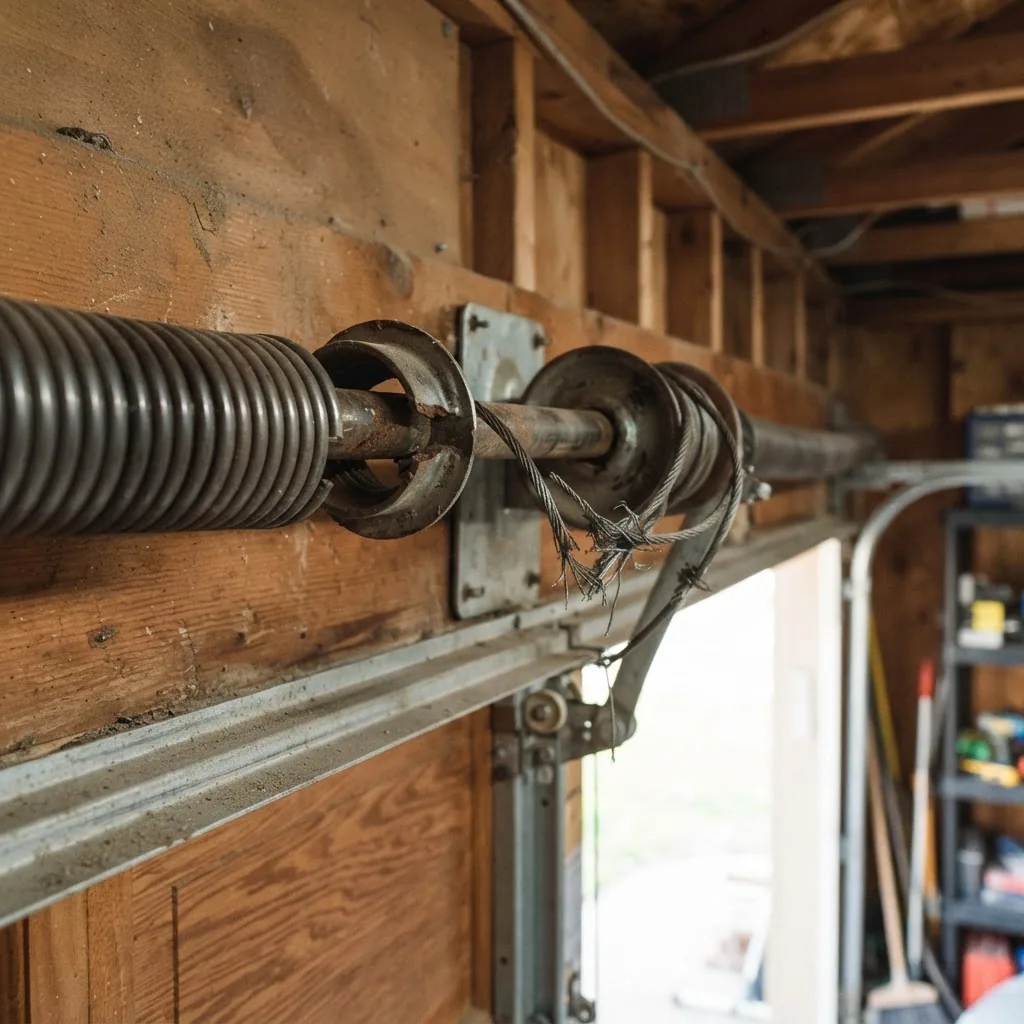
Short real-life example: a homeowner called a 24/7 service after a spring snapped at 9:30 PM, leaving the door half-open and tools inside. The technician arrived in 40 minutes, secured the door with temporary supports, and replaced the spring the next morning. According to a 2024 industry report, quick containment reduces theft and weather damage claims by measurable amounts — always prioritize containment over immediate full repair.
For technical background on components that often fail in emergencies, see Types of garage door springs and opener systems.
Transition: once you can identify an emergency, the next step is recognizing the signs that mean you need a 24 hour response.
Signs You Need a 24 Hour Emergency Garage Door Service
- Door stuck open at night — Immediate security risk. If you cannot close the door with the opener and the manual release doesn’t restore controlled motion, call a 24 hour emergency garage door service near me.
- Visible spring failure — A snapped or visibly damaged torsion or extension spring is dangerous; avoid operating the door and call an emergency technician.
- Snapped cable or frayed cables — A cable snapping can cause abrupt door drops. If cables are hanging loose or off the drum, request after hours garage door repair immediately.
- Door off track or crooked — A door that has come off track can fall or jam; it’s a safety hazard and often requires immediate service.
- Opener motor grinding, smoking, or sparking — Electrical problems can be fire risks; disconnect power and call an emergency repair line.
- Lock malfunctions leaving interior accessible — If the garage is the primary entry to the home and you can’t lock it, this is an emergency for security reasons. See Garage door handle replacement and hardware for hardware that often fails first.
- Severe weather damage — After hail, wind or flooding, warped panels or soaked tracks can jam the door; call emergency home garage door repair to minimize structural issues.
- Commercial door failure that halts operations — A commercial overhead or roll-up door that prevents deliveries or is blocking an exit calls for 24 hour commercial garage door repair.
- Unusual noises with loss of balance — Loud bangs, clunks, or vibration with tilt indicates urgent mechanical failure and risk of collapse.
- Opener will not respond but manual release doesn’t enable safe manual operation — This is an urgent scenario; technicians can secure and restore controlled movement.
Transition: recognizing an emergency gets you to containment and safety steps you can take immediately — the next section walks through those actions step-by-step.
How to Safely Handle Immediate Garage Door Issues Before Help Arrives
This is the hands-on core: numbered, action-first steps you can do now to secure a door and reduce risk, with safety caveats. For each step, expect 5–30 minutes depending on complexity. If any action feels risky, stop and wait for professionals.
- Cut power and secure the area. Immediately unplug the opener or switch off the circuit breaker for the garage. Clear people and pets a 10-foot radius from the door path. Time: 1–2 minutes. This reduces electrical and moving-part hazards.
- Assess visually from a safe distance. Use your flashlight to photograph damage (two angles) and note whether springs, cables, tracks, or panels are affected. Do not touch anything under tension. Time: 3–7 minutes.
- Engage the manual release only if you can operate the door by hand safely. Pull the red emergency release cord to disengage the opener. Trying to lift a heavy door with a broken spring may be impossible—if the door is heavy or unbalanced, stop and wait. Time: 1–3 minutes.
- Stabilize a partially open door with support blocks. If the door is stuck open, slide two 2×4 blocks under the lowest edge (one each side) to prevent a sudden fall. Do not stand beneath the door while setting blocks. Time: 5–10 minutes.
- Temporary lock or secure openings. If the lock malfunctions and the door cannot be secured, screw a 2″x8″ board vertically across the inside of the door frame and padlock it, or close and secure the internal door between house and garage. Time: 10–20 minutes. Use a spare deadbolt if available.
- Address minor opener failures: reboot and reset. If the opener is unresponsive but no physical damage exists, unplug it for 60 seconds, then plug back in and retry the wall control (not the remote). If still dead, leave it powered off and call a technician. Time: 3–5 minutes.
- For stuck rollers or debris in track: remove debris carefully. Use gloves and a flat screwdriver to clear small stones and ice from the track. Do not pry a bent track back into alignment—this requires a pro. Time: 5–15 minutes.
- When a cable snaps: do not touch the cable or unwind the drum. Keep the area clear and tape a visible warning sign to the door. A fallen cable under tension can snap back. Call emergency service immediately. Time: 1–2 minutes to secure area.
- Document and contact a 24-hour service. Use the photos and notes to describe the issue to dispatch (door model if known, visible spring/cable damage, whether door is open/closed, residential or commercial). Ask for ETA, flat-rate emergency call fees, and whether the technician is certified. Typical questions: “Can you arrive in under 60 minutes? Do you carry replacement springs and cables?” Time: 5–10 minutes.
- Prepare a safe waiting area and retain evidence for insurance. Keep receipts, technician names, arrival times, and photos with timestamps. If you experience an after-hours fee, request a written estimate before work begins. Time: ongoing.
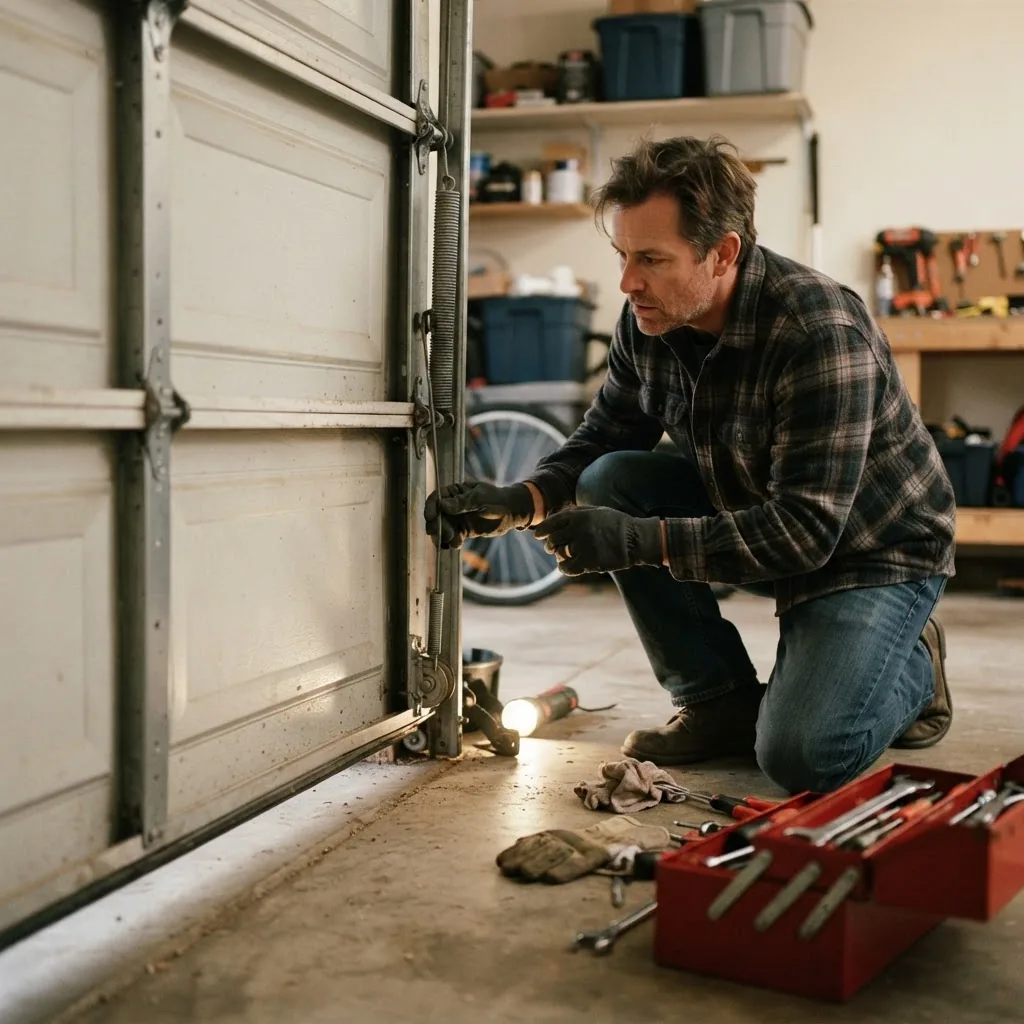
Tool walkthrough (practitioner tip): to test the manual release, stand centered and lift the door slowly after pulling the red cord. If it moves unevenly or one side is heavier by more than 1–2 inches across the top, stop — imbalance indicates a spring or cable issue. Use locking pliers to hold the door brackets if you must perform temporary stabilization; never clamp a spring or cable under tension.
Case study: a family used the “stabilize with 2×4 blocks” technique after a storm left their door stuck open. They secured the door, locked the interior access, and called a 24/7 technician; the quick containment prevented theft and water damage. According to a 2023 home safety report, timely containment cuts secondary damage costs by up to 40%.
Transition: safe immediate actions are only one side of the equation — choosing the right emergency service makes the difference between a short wait with competent repairs and a costly do-over.
Choosing the Right Emergency Garage Door Repair Service Near You
Selecting a 24 hour service rapidly requires focused criteria and a compact checklist. Prioritize response time, certifications, insurance, and transparent emergency pricing.
- Verify 24/7 availability and guaranteed ETA. Ask whether the company guarantees a window (e.g., 30–60 minutes) and if they charge an emergency dispatch fee.
- Check credentials and insurance. Confirm general liability and worker’s compensation. Request the technician’s license number where local licensure applies.
- Confirm parts and tools on the truck. A competent 24 hour garage door service carries springs, cables, rollers, and universal parts to complete most emergency stabilizations on the first visit.
- Read recent reviews focused on night-time or emergency calls. Look for mentions of punctuality, courtesy, and post-repair cleanliness within the last 12 months.
- Ask about warranty on emergency repairs. Even after-hours work should carry a short-term warranty (30–90 days) for workmanship.
- Price transparency. Get an ETA, an emergency trip fee, an hourly rate, and a ballpark parts cost before authorizing work.
- Local vs national chains trade-offs. Local contractors often know area building codes and have faster arrival; national services may have standardized pricing and more technicians. Decide based on your priorities.
Quick hiring checklist (use during phone screening):
- Company name, local address, and business license verification.
- Estimated arrival time and emergency fee amount.
- Confirmation of parts on truck for springs/cables/rollers.
- Insurance and warranty details.
- Payment methods and a written estimate before work starts.
Transition: emergency needs differ between homes and businesses. The next section compares what to expect from commercial versus residential 24/7 repairs.
What to Expect from 24 Hour Commercial vs Residential Emergency Garage Door Repairs
| Feature | Residential (Typical) | Commercial (Typical) |
|---|---|---|
| Priority response | High for security concerns; ETA often 30–90 min | Critical for operations; often triaged for immediate on-site tech |
| Parts carried | Standard springs, cables, openers, rollers | Heavier-duty springs, industrial motors, sectional/roll-up parts |
| Safety/regulations | Basic safety compliance per local codes | Often requires OSHA-type compliance and permits for large replacements |
| Typical emergency fee | $75–$200 after-hours dispatch (varies by region) | $150–$400+ for after-hours specialized technicians |
Explanatory notes: commercial doors are larger, heavier, and often use different spring systems, so technicians bring larger lifting gear and may need on-site permits. Residential calls usually focus on security and weather protection first, followed by full repairs the next business day if parts are limited.
Transition: decisions often hinge on cost and speed — next is a clear stat block to set expectations for emergency pricing and response times.
Typical Costs and Response Times for Emergency Garage Door Repairs
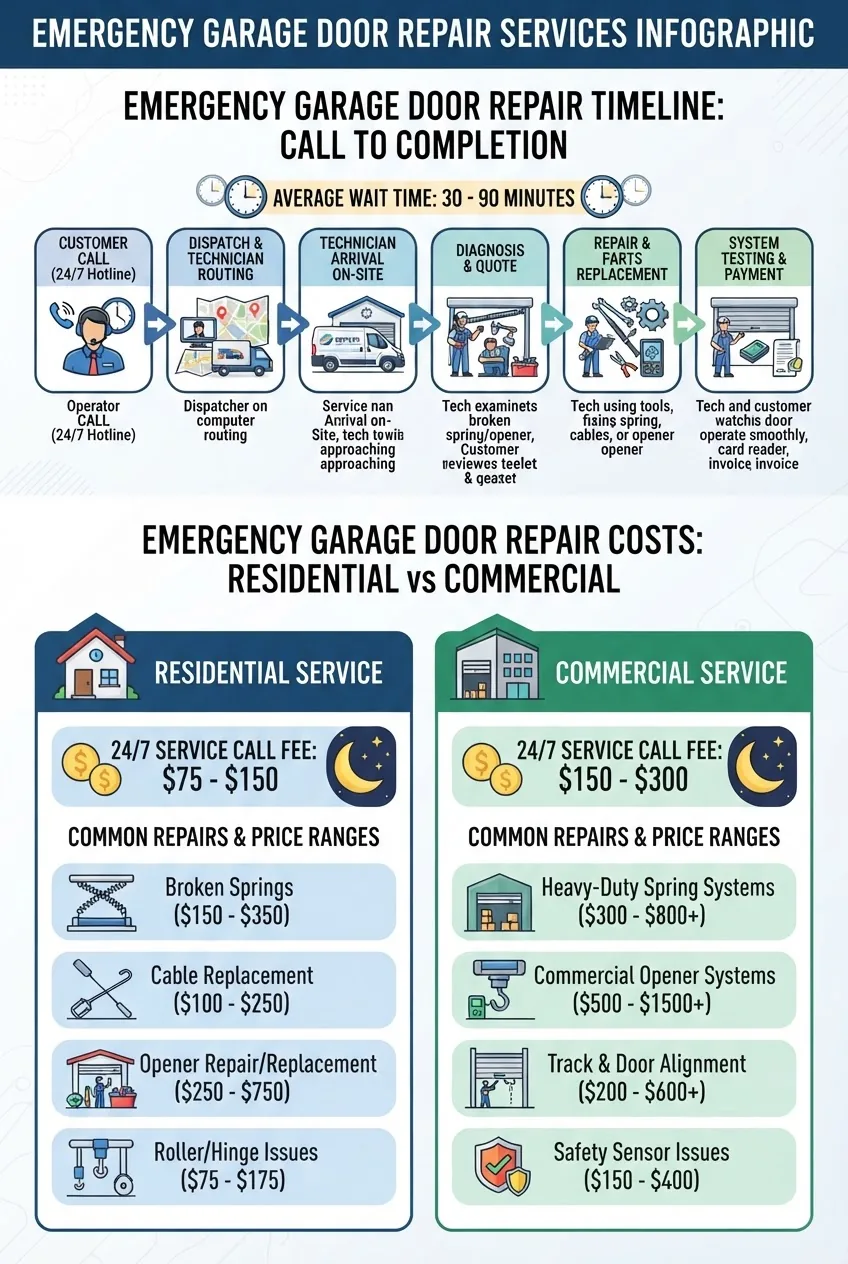
Residential emergency costs (typical)
- After-hours dispatch fee: $75–$200
- On-site stabilization: $75–$250
- Spring replacement (emergency, parts + labor): $200–$450 per spring (torsion) if available same-day
- Minor opener fixes: $100–$300
Commercial emergency costs (typical)
- After-hours dispatch fee: $150–$400
- Heavy spring or motor emergencies: $500–$2,500 depending on parts and crane/lift requirements
- Urgent parts ordering and next-day full repair additional
Response times
- Average local 24/7 ETA: 30–90 minutes for residential calls (varies by location).
- Commercial urgent response: may be 15–60 minutes if on-call technician available; otherwise same-day priority.
According to a 2024 industry report, median emergency response times for reputable local providers are about 45 minutes, while national averages reported by on-demand service aggregators are closer to 60–90 minutes. For more detailed brand-and-installation pricing beyond emergency work, consult the Garage Door Prices Guide for Brands and Installation Cost.
Pricing note: emergency calls often include a premium for after-hours labor; insist on a written breakdown showing dispatch fee, labor, and parts before work begins.
Transition: the best protection is prevention — next are practical maintenance steps you can schedule to reduce emergency calls.
Preventative Tips to Reduce Emergency Garage Door Repairs
- Schedule a biannual tune-up. Lubricate rollers, hinges, and springs every 6 months and inspect tracks; replacement parts are cheaper when ordered during scheduled visits. For detailed guidance, see Garage door maintenance tips and tune-up cost.
- Replace weather seals annually. Damaged seals allow moisture in, which leads to rust and track freezing—replace worn bottom seals once per year.
- Test safety sensors monthly. Clean lenses and test auto-reverse by placing a 2″x4″ in the door path; the door should reverse within 1–2 seconds when contact occurs.
- Balance test twice yearly. Disconnect the opener, manually lift to waist height; the door should stay approximately 3–4 inches above the floor without drifting. Excessive drift means a spring or cable issue.
- Clear drainage and keep tracks clean. Remove debris and tight vegetation around tracks and sensors after storms to prevent jams.
- Invest in surge protection for openers. Power surges cause opener failures; use a surge suppressor plugged into the opener circuit.
- Document all repairs and parts used. Keep a log with dates, technician names, and part numbers to speed future emergency service and warranty claims.
Transition: even with excellent maintenance, some repairs should never be attempted by nonprofessionals — the next section explains the key risks.
When to Avoid DIY: Risks and Limitations of Emergency Garage Door Repairs
Garage doors store large amounts of mechanical energy. Two failure modes—spring tension and cable snapping—pose immediate and potentially fatal risks. I have seen attempts where homeowners loosened bolts on a torsion spring and the door dropped suddenly; that is why this section is strict on limits.
Key risks and limits:
- Spring tension dangers. Torsion springs are under 100–300+ lbs of torque depending on door size; improper adjustment can launch the winding bar or cause sudden door collapse. For deep technical guidance, consult Garage door spring tension adjustment and safety.
- Garage door cable snapping risks. A cable under tension can recoil with force sufficient to cause severe injury. For careful, specialist-led procedures, reference How to repair garage door cable replacement and installation.
- Structural support and strut work. Large panels or bowed doors may need struts or reinforcement; installing these improperly can shift loads to hinges and fasteners, causing failure. See Garage door struts and support installation.
- Electrical risks on openers. Openers contain capacitors and motors; inexperienced work risks shock or starter faults requiring replacement rather than repair.
- Insurance and warranty voidance. DIY emergency fixes can void manufacturer warranties and create liability issues if someone is injured.
For readers who want to learn component-level work safely, read Extension garage door springs replacement and sizing and Garage door struts and support installation for controlled educational context—these are not emergency how-tos.
Transition: from practitioner experience, here are common mistakes I’ve seen and how to avoid them in emergencies.
Common mistakes and how to avoid them
I once watched a homeowner force a stuck door closed with a car bumper, which bent the bottom rail and doubled repair cost. I also saw someone try to replace a torsion spring without special winding bars; the spring launched and damaged the opener.
- If a door is heavy or imbalanced, do not lift it—call a technician; I’ve seen doors 2–3 people couldn’t safely control.
- Never use improvised tools (rebar, car jacks) to prop a door—use 2×4 blocks and proper supports.
- Don’t skip documenting the condition before a pro arrives; photos reduce disputes and help with insurance.
- Do not attempt to lubricate a badly rusted or bent part expecting it to restore function—temporary lubrication may hide an impending failure.
Quick verification checklist
- Door secured from external access (interior door locked or board in place).
- Area cleared 10 ft around the door path.
- Photos taken and time-stamped.
- Power to opener turned off if electrical issue suspected.
- Emergency service contacted with ETA and written estimate.
When to call in a professional instead
Call a licensed emergency technician immediately if springs are broken or visibly loose, cables are snapped or off drums, the door is off-track and unable to be stabilized safely, or if the opener has electrical smoke or sparking. If the door serves a business entrance or fire exit, prioritize commercial 24/7 specialists immediately.
Transition to final trust and authority notes: safety standards and authoritative resources provide additional verification and standards to follow.
Additional safety and authority guidance
For repair and workplace safety standards consult national bodies: OSHA for general safety rules and wiring standards, the International Door Association at https://www.doors.org for best practices and technician certification guidance, and consumer/home safety statistics at https://www.nsc.org. According to a 2023 home safety report, mechanical failures in garage doors contributed to a sizable share of emergency home calls—use authoritative guidance when selecting services and following safety protocols.