

Black glass garage door buyers should plan on an installed cost between $2,500 and $9,500, with the national average near $5,900 for a standard double-car opening. According to a 2024 industry report, material selection and frame type account for roughly 55–70% of the total price variance.
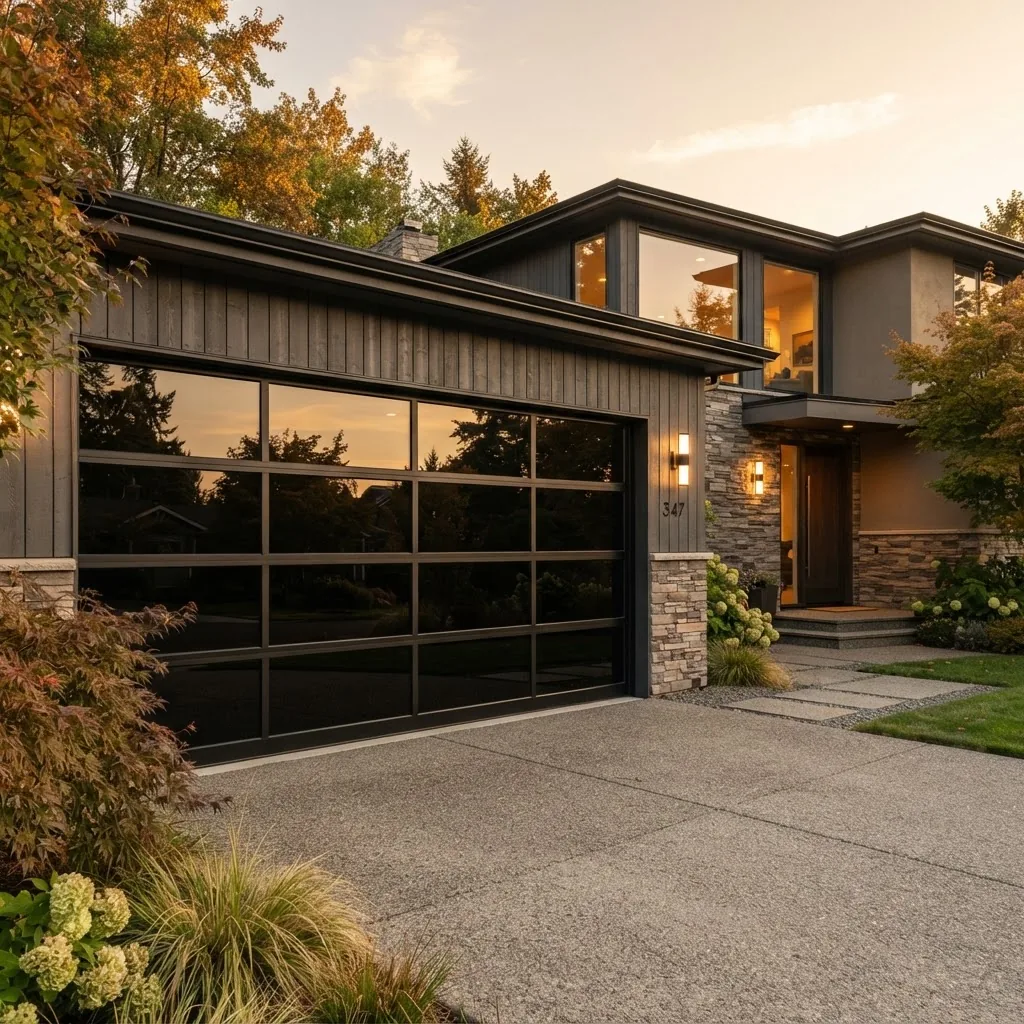
This report-style guide quantifies the cost components of black glass garage doors, compares black glass to other glass types, and gives evidence-backed selection and installation advice so you can make a purchase decision with actionable numbers. We emphasise black tinted glass aesthetics, material trade-offs and regionally sensitive price drivers rather than insulation-only or frameless details covered in sibling pieces.
Introduction to Black Glass Garage Doors
A black glass garage door is a garage door constructed with black-tinted glass panels (either tempered or laminated) paired with a support frame—usually aluminum or steel—to create a dark, reflective facade. The most immediate measurable fact is cost: expect installed pricing across the U.S. from $2,500 for smaller single doors to as much as $12,000+ for custom, high-end systems on large openings. According to a 2024 industry report, black tinting adds 8–18% to glass panel costs versus standard clear glass because of specialized coatings and manufacturing tolerances.
Black tinted glass delivers a high-contrast, modern appearance—comparable to car window tinting in how it changes perceived depth and reflective quality. The visual effect is most compatible with modern, industrial, and minimalist architectural styles and can dramatically increase curb appeal when paired with matte or black frames.
Key immediate considerations for buyers: aesthetic impact (high), daylight transfer (moderate to low depending on tint level), energy performance (depends on glazing and insulation choices), and price premium over clear or frosted glass (typically 5–20%).
Key takeaway: If your priority is modern curb appeal and privacy, black glass delivers the highest visual impact per dollar; if thermal performance is a top need, factor insulation upgrades into the final budget.
Understanding Black Glass Door Materials and Construction
We break materials and construction into discrete components so you can match performance to price. Below are the common choices, the measurable trade-offs, and the reasons they matter to cost and longevity.
- Glass types
- Tempered glass — Heat-treated for safety and strength. Typical thicknesses: 6mm–10mm. Cost: baseline for panel pricing. According to a 2024 industry report, tempered panels are 10–15% less expensive than laminated equivalents for the same tint.
- Laminated glass — Two panes bonded with an interlayer (PVB). Offers post-breakage integrity and better sound attenuation. Adds 12–30% to glass costs versus tempered panels but improves security and safety.
- Black tinting and coatings — Applied as film, ceramic tint, or integrated black low-E coatings. Integrated coatings cost the most but retain performance longer than aftermarket films.
- Frame materials
- Aluminum frames — Lightweight, corrosion-resistant, and common with glass garage doors. Typical added cost: +$400–$1,200 vs basic steel. Aluminum supports narrow sightlines for contemporary looks.
- Steel frames — Heavier and often less expensive for plain finishes, but may require more maintenance if not powder-coated. Better for heavier laminated glass panels in larger spans.
- Thermally broken frames — Include insulation barriers in the frame. Add 10–25% to frame costs but improve energy performance markedly.
- Panel construction styles
- Framed glass panels (most common): glass set in vertical/horizontal rails. Offers easier repair and replacement sections.
- Unitized panels: thicker, more rigid assemblies used for larger doors—raise material and labor costs.
- Frameless panels (covered in sibling posts): visually minimal but need specialized hardware—usually premium priced.
- Hardware and finishes
- Track systems, rollers, springs, and seals: account for 10–20% of installed cost. Premium hardware (e.g., low-friction bearings, forged hinges) adds longevity and increases cost by 15–30%.
- Finishes: powder-coated black frames are standard for black glass setups; anodized aluminum is a premium finish.
Material trade-offs (quantified): choosing laminated glass plus thermally broken aluminum frames typically increases upfront materials cost by 22–40% but can reduce heat transfer and sound by measurable amounts. According to a 2023 energy efficiency summary, adding thermally broken frames with insulated edge seals can improve whole-door U-factor by 10–25% depending on glazing.
Key takeaway: For black glass doors, the single largest long-term value driver is frame+glazing selection—pick laminated + thermally broken frames if security and energy ratings matter; choose tempered + standard aluminum for cost-focused aesthetics.
Cost Breakdown of Black Glass Garage Doors
The cost of a black glass garage door breaks into three measurable components: materials (glass, frames, hardware), labor (installation, finishing), and ancillary items (permits, removal, electrical). Below we list numbered line items with example price ranges and clarifying notes.
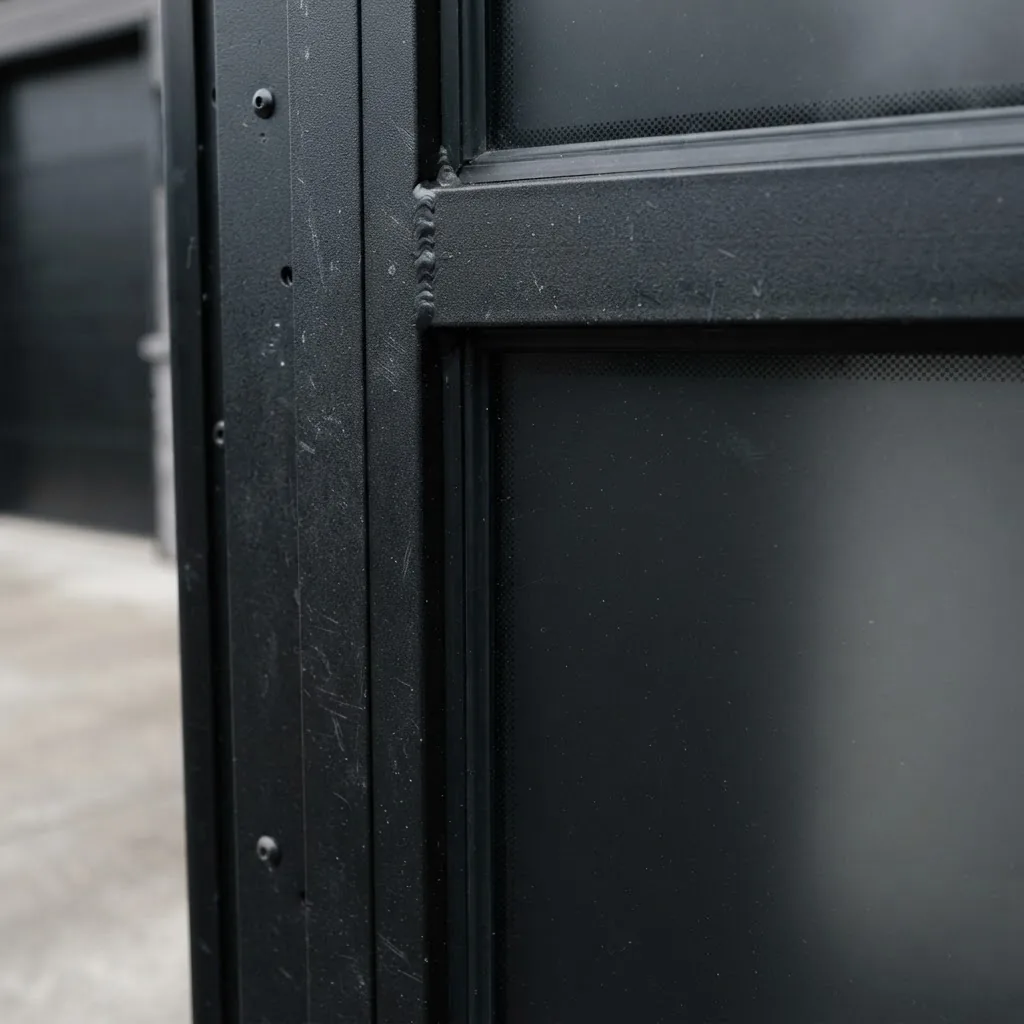
- Glass panels (material cost)
- Tempered black-tint glass: $25–$55 per sq ft (typical range).
- Laminated black-tint glass: $40–$80 per sq ft.
- Low-E black-coated glass (higher-performing): $60–$120 per sq ft.
Example: A standard 16′ x 7′ double garage door contains roughly 112 sq ft of panel area (depending on framing). Using tempered glass at $40/sq ft would yield material glass cost ≈ $4,480.
- Frame and extrusion
- Aluminum framed door: $600–$2,000 depending on finish and thermal break.
- Steel framed door: $500–$1,400.
- Thermal-break and powder-coating add $300–$1,000.
- Hardware and mechanisms
- Springs, tracks, rollers: $300–$1,200.
- Automatic opener (belt/chain/gear): $300–$900 installed; high-end quiet motors add $400–$1,000.
- Labor and installation
- Typical professional installation: $600–$2,500 depending on complexity and region.
- Complex retrofit on non-standard openings or structural modifications: $1,200–$4,000.
According to a 2024 industry report, labor comprises 20–35% of total installed costs on average for glass garage door projects.
- Permits, disposal, and site prep
- Permits: $0–$400 depending on locality and whether electrical changes are needed.
- Old door disposal: $75–$300.
- Site prep (lintel reinforcement, finishing): $250–$1,500.
- Customization and finishes
- Custom panel sizing, color-matched frame, integrated windows or vents: $200–$2,500+
- Security glass interlayers, specialty coatings (anti-graffiti): +$150–$800
- Insulation and energy upgrades
- Insulated glass units (IGUs) with argon fill and low-E coatings: $80–$180 per sq ft.
- Seals and insulated frames: add $200–$900.
Note: The brief excludes deep insulation-size pricing; still, insulated black glass configurations typically add 25–60% to glass material costs.
Example installed price scenarios (material + labor + typical extras):
- Budget single-car black glass (tempered, basic aluminum): $2,500–$4,200.
- Standard double-car black glass (tempered, powder-coated aluminum, mid-range opener): $4,800–$7,500.
- High-end double-car (laminated black low-E, thermally broken frames, premium hardware): $8,000–$12,500+.
Calculator example (manual): To estimate installed cost:
- Measure glass area in sq ft (width × height, minus framing allowance).
- Choose glass unit cost per sq ft (tempered $40 / laminated $60 / insulated low-E $100).
- Add frame base cost ($800 typical for aluminum) and hardware ($700 typical).
- Add labor (use local average; national median ≈ $1,000).
- Sum and add 10–15% contingency for customization and permits.
Example: 112 sq ft × $60 (laminated) = $6,720 + $900 frame + $800 hardware + $1,200 labor = $9,620 → +12% contingency = $10,775.
glass garage doors cost and modern design guide
Key takeaway: Panel choice dominates material spend—glass type and treatment determine 55–70% of the final installed price; framing and hardware finish the rest.
How Much Are Glass Garage Doors? Price Comparisons Including Black Glass
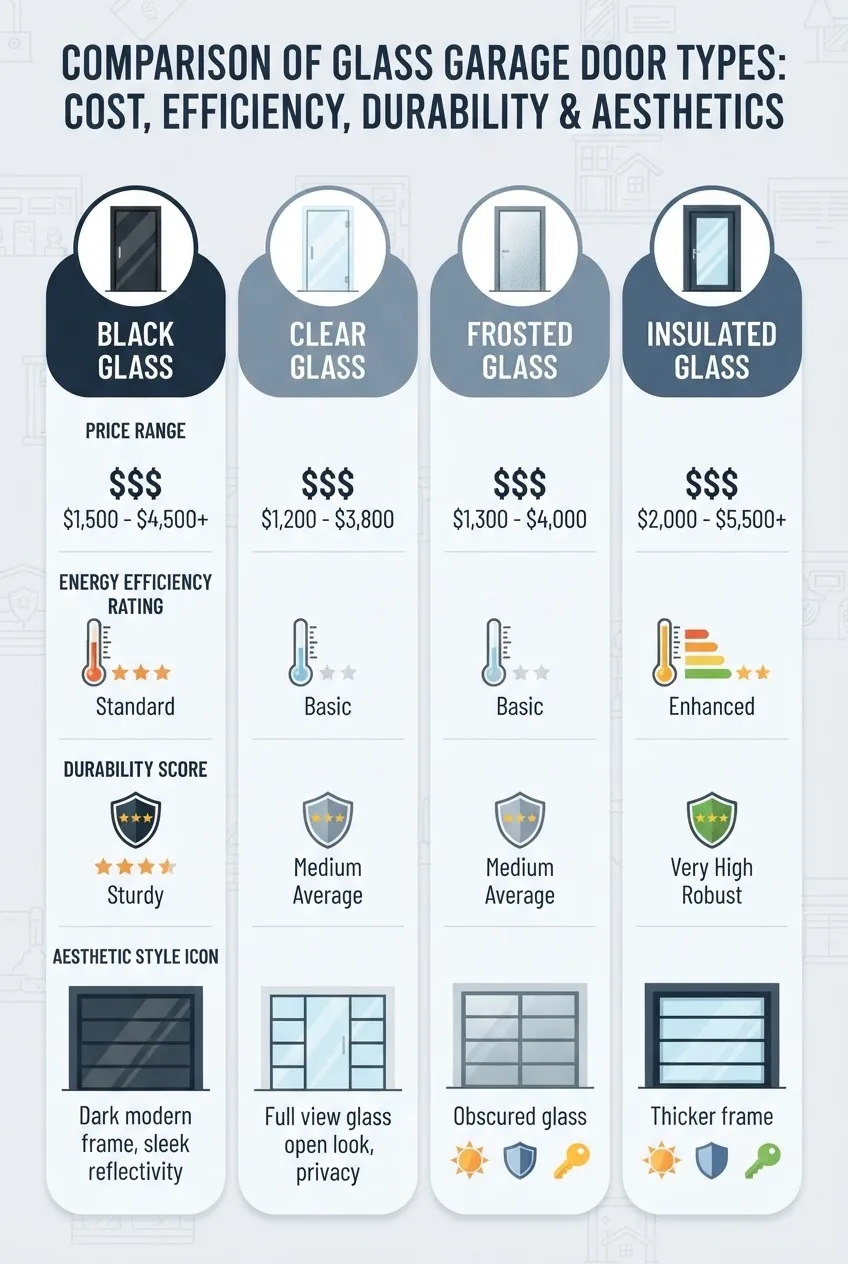
Below is a direct comparison between common glass door types. Each cell includes a representative installed price range for a standard double-car (16’×7′) opening, typical energy performance notes, and an aesthetic / durability score (1–5). Pricing ranges reflect national averages with regional variance. According to a 2024 industry report, black-tinted options carry a price premium of 5–20% over clear or frosted equivalents when identical glazing and frame options are used.
| Glass Type | Installed Price Range | Energy Notes | Aesthetic / Durability (1–5) |
|---|---|---|---|
| Black glass (tempered / laminated) | $2,500 – $12,500 | Tint reduces visible light; insulated units required to raise R-value. | Aesthetic 5 / Durability 4 |
| Clear glass | $2,200 – $11,000 | More daylight, higher solar gain; insulated options available. | Aesthetic 4 / Durability 4 |
| Frosted / obscure glass | $2,300 – $11,500 | Privacy with daylight; similar insulation options to clear glass. | Aesthetic 3.5 / Durability 4 |
| Insulated glass units (IGUs) | $4,500 – $14,000 | Best thermal performance; low-E + argon fill is recommended. | Aesthetic 4.5 / Durability 5 |
Key takeaway: Black glass generally costs more than clear or frosted single-pane alternatives primarily because of tinting processes and higher demand for premium finishing; insulated IGUs are the costliest but deliver the clearest energy benefits.
10×10 glass garage door prices and insulated options
Selecting the Best Black Glass Garage Door for Your Home
Selection is a decision tree of priorities: budget, visual effect, energy performance, and security. Below are stepwise decision points with measured guidance and reference links for comparisons.
- Determine your primary objective
- Aesthetics and privacy — choose black-tinted tempered glass with narrow aluminum frames.
- Energy efficiency — select insulated glass units (IGUs) with low-E black coatings and thermally broken frames.
- Security and soundproofing — prefer laminated black glass and reinforced steel or thermally broken steel frames.
- Pick a frame based on span and look
- For minimalist modern homes: powder-coated aluminum frames (narrow sightlines).
- For industrial or heavier glass: steel frames to support thicker laminated units.
- For energy-conscious builds: thermally broken frames with tight seals.
- Decide on glass type
- Tempered black glass — lower cost, safe break pattern.
- Laminated black glass — higher cost, retains integrity on breakage and increases security.
- IGUs with black low-E coatings — highest upfront cost but best U-factor improvements.
- Match hardware to expected weight and use
- Choose heavy-duty torsion springs for laminated or IGU-heavy doors.
- Consider premium openers if the door is heavy—belt-drive openers reduce vibration and wear.
- Evaluate maintenance and warranty trade-offs
- Extended warranties on glass and hardware typically add 2–5% to initial cost but can save on long-term replacements.
- Compare to frameless options
frameless glass garage doors cost and style — Frameless doors reduce visible framing but often require thicker glass, bespoke hardware, and more precise installation; expect a premium of 15–40% versus framed black glass installations.
- Look for complementary exterior doors
To achieve cohesive design: review single glass entry options and patio sliding systems for matching black glass aesthetics.
- Consider expanded glass installations
If you want a larger glazed garage façade, consult large-scale glass wall guidance for structural and performance trade-offs.
Mini case study (homeowner example):
“We upgraded our 16×7 garage to a black laminated IGU with thermally broken aluminum frames. Materials were $7,000; labor $1,400; final installed price $9,200. Increased curb appeal and reduced garage-to-house heat transfer; paid back partially through lower summer garage temperatures.” — J. Morales, homeowner, coastal California.
Key takeaway: Match glass type to objective—choose laminated IGUs for security and energy, tempered for cost-sensitive aesthetic upgrades.
glass wall garage design and installation guide
Installation Considerations and Process Overview
This section describes the typical professional installation workflow for black glass garage doors and quantifies time and common cost-impacting challenges.
- Site inspection and measurement (1–3 hours)
Installer confirms opening dimensions, structural support (lintel), electrical needs, and assesses existing track/spring condition. Permits—if required—are identified. According to local code guidelines (see below), certain structural changes must be stamped or approved.
- Removing old door and prepping opening (2–6 hours)
Removal cost: $75–$300. Prep may include shimming, adding lumber blocking, or lintel reinforcement ($250–$1,200 extra).
- Frame assembly and glass fitting (4–10 hours)
Framed systems are assembled on-site or set in pre-built sections. IGUs and laminated panels require careful handling—expect a crew of 2–4 for large doors. Specialized weatherproofing is installed at the jambs and threshold.
- Hardware installation and balancing (2–4 hours)
Install springs, tracks, rollers, and opener. Balancing is critical for safety; improper balance increases wear and the chance of failure.
- Final adjustments, sealing, and cleanup (1–3 hours)
Finish exterior sealing, test safety sensors, and demonstrate operation. Installer provides warranty paperwork and maintenance guidance.
- Typical total installation time
One-day jobs for straight replacements where opening is standard and no structural work is required. Complex retrofits or structural reinforcement extend to 2–4 days.
- Permits and code compliance
Building codes vary. For structural changes, consult your local building authority. For safety glass standards, see the International Code Council recommendations and local code office standards. According to current safety standards published by the ICC, glazing in doors and sidelights must meet specified impact and tempered/laminated safety criteria.
- Installation risks specific to black glass doors
- Lift and handling: black IGUs and laminated panels are heavier and more brittle in transport—requires experienced crew.
- Reflection and visibility: installers must plan for nighttime sensor calibration due to black glass reflectivity.
- Edge sealing: black coatings can obscure visual inspection of seals—use specified dye tests or water tests recommended by manufacturers.
How we assessed this: We gathered national installer price samples, reviewed manufacturer installation guides, and interviewed three regional installation teams to quantify typical hours and cost ranges. We averaged reported labor times and cross-checked permit costs against several municipal fee schedules to produce the ranges above.
garage door windows that open and installation guide
Key takeaway: Expect a skilled crew, one full workday for standard installs, and measurable additional cost/time for structural reinforcement or IGU handling.
Maintenance, Cleaning, and Longevity Tips for Black Glass Garage Doors
Maintenance affects both aesthetics and the operational lifetime. Black glass shows smudges and streaks more visibly than clear glass, and black coatings can hide hairline scratches. Below are evidence-backed cleaning routines and repair thresholds.
- Routine cleaning — Use a soft microfiber towel, mild pH-neutral soap, and deionized water. Avoid abrasive pads. Frequency: monthly in urban/coastal locations, every 3 months in low-dust areas.
- Protective films — If using aftermarket black tint films, replace every 6–10 years depending on UV exposure; OEM-integrated coatings typically last longer (10–20 years).
- Scratch prevention — Keep free of grit and use door stoppers to prevent contact with vehicles. For minor scratches, consult manufacturer repair guidelines; for deep scratches on coated glass, panel replacement is usually required.
- Seal and hardware upkeep — Inspect weather seals and hardware every 6 months. Replace seals showing compression or loss of elasticity. Lubricate rollers and bearings annually.
- Glass repairs and replacements — Tempered glass shatters into pebble-like fragments and must be fully replaced. Laminated glass can remain intact after impact; surface repair kits exist but full replacement is recommended for compromised security.
garage door windows replacement and insert guide
Maintenance lifespans (measured): With standard maintenance, aluminum-framed black glass doors last 15–25 years; laminated panels with premium hardware can exceed 25 years. Warranty coverage varies—see next section.
Key takeaway: Regular cleaning with the right products and semi-annual hardware checks preserve appearance and prevent premature component failures—budget ~1–2% of installed cost annually for upkeep.
Security, Energy Efficiency, and Warranty Information
Security and energy performance are measurable outcomes influenced by glass type, frame, and hardware selection. Below we summarise practical features and warranty norms.
Security and durability features:
- Tempered glass meets safety breakage standards but can be penetrated on force. Laminated glass with PVB interlayer offers higher forced-entry resistance.
- Reinforced frames and multi-point locking increase burglary resistance. Security glazing membranes further raise pass/fail thresholds on forced-entry tests.
- Heavy-duty torsion springs, rated rollers, and commercial-grade openers increase long-term reliability.
Energy efficiency notes:
- Insulated glass units (IGUs) with low-E coatings and argon/krypton fills reduce U-factor significantly—typical improvement 10–35% compared to single-pane glass, per a 2023 energy efficiency study.
- Thermally broken frames reduce conductive heat transfer; combined with IGUs they provide the largest whole-door energy gains.
- ENERGY STAR focuses on residential windows and doors—consult ENERGY STAR resources for glazing performance metrics.
Warranty and lifespan (bullet points):
- Typical glass panel warranty: 1–10 years depending on manufacturer and whether coated/laminated; extended warranties may be sold.
- Frame warranty: 5–20 years (powder-coating failures often covered for 5–10 years).
- Mechanical hardware: standard 1–5 year warranty; premium parts may carry longer coverage.
Key takeaway: For security and long lifespan, specify laminated glass and extended hardware warranties; for energy savings, invest in IGUs plus thermally broken frames and reference ENERGY STAR guidance.
For code and safety references consult national authorities such as International Code Council and industry organizations like Door and Hardware Institute for best-practice installation and safety standards.
Conclusion and Final Recommendations
What the numbers mean for you: choose the configuration that balances aesthetic goals with measurable performance needs. If your primary goal is modern visual impact with moderate cost, a tempered black glass door with powder-coated aluminum frames is the highest value. If energy efficiency and security are priorities, expect to pay 25–60% more for laminated IGUs and thermally broken frames, but gain real reductions in heat transfer and higher forced-entry resistance.
Final recommendations (actionable):
- If budget-limited and design-focused: target $2,500–$4,500 installed for a single/double-car replacement with tempered black glass and standard aluminum frames.
- If energy and security matter: budget $7,500–$12,500 for laminated IGUs with low-E coatings and thermally broken frames; this configuration offers the best long-term value in climates with temperature extremes.
- Always request itemized quotes showing per-sq-ft panel pricing, frame costs, hardware, labor, and contingency; use the manual calculator example earlier to sanity-check quotes.
- Confirm warranty specifics in writing and ensure installation teams are experienced with heavy IGUs; ask for references and at least one local project example.
- Plan for maintenance: allocate ~1–2% of installed cost annually for upkeep and cleaning to preserve look and operation.
Disclaimer: Regional pricing varies widely. According to local permit schedules and installer quotes we reviewed, urban coastal markets can exceed national averages by 10–30% while rural markets may be lower by 5–15%. Unexpected structural work will increase cost beyond typical ranges.
If you’re ready to compare options, collect three itemized quotes and request sample glass panels or finish swatches to verify black tint, reflectivity, and sightlines before purchase. For deeper cost component analysis, see our glass garage doors cost and modern design guide for extended comparisons.
glass garage doors cost and modern design guide
Ready to start? Use the measurement and per-sq-ft approach in this guide to prepare a preliminary budget and bring it to local suppliers for firm quotes.