

Patio door installations typically range from $900 to $7,500 depending on size and material; a common mid-range 6-ft vinyl sliding patio door with professional installation averages around $1,500. These numbers are the single most useful starting point for budgeting a replacement or new exterior sliding door.
This data-led report breaks down how much patio doors cost by material and size, compares sliding glass patio door types including oversized 8–12 ft options, evaluates energy, security and maintenance factors, and gives concrete buying and installation guidance.
Understanding Patio Door Basics and Terminology
A patio door is an exterior door system that connects interior living space to an outdoor area and is most commonly glazed. Common names include sliding garden doors, glass patio doors, exterior patio doors, and sliding outside glass doors. Terminology matters when you compare product specs and costs.
Sliding vs. Hinged
“Sliding” implies one or more glass panels glide on a track; “hinged” implies swing doors (French or Dutch). Sliding garden doors maximize uninterrupted glass wall area; hinged options give wider clearances but generally cost more for comparable glass area.
Panel configuration and clearance
Panel configuration (two-panel, four-panel, multi-slide) determines operable opening width, track complexity, and hardware costs. Terms to watch on product sheets: U-factor, SHGC (Solar Heat Gain Coefficient), tempered or laminated glass, and sightline/frame width.
Short definitions: U-factor measures heat transfer (lower = better); SHGC quantifies solar heat gain (lower reduces solar heating). These ratings are typically provided by NFRC-certified labeling.
Key takeaway: know the panel count you need and the U-factor/SHGC targets for your climate before shopping; these three items drive most cost and performance trade-offs.
Detailed Breakdown of Patio Door Costs
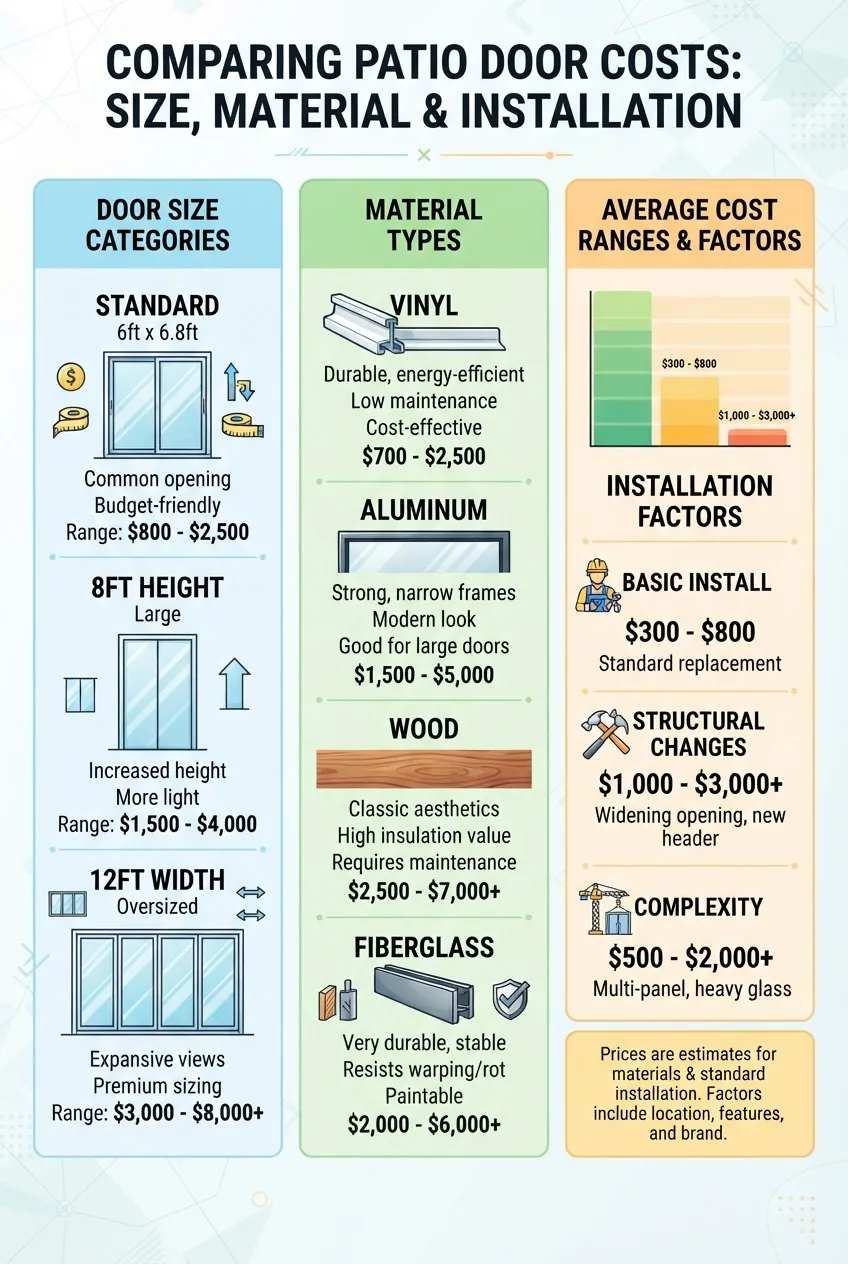
Below we compare installed cost ranges by material and size. All price ranges reflect national averages adjusted for 2024 market movement. According to a 2024 industry report, regional labor and permit fees can swing totals by ±20%.
| Door Type / Size | Typical Material | Installed Cost Range | Notes |
|---|---|---|---|
| Standard 5–6 ft sliding (2-panel) | Vinyl, aluminum | $900 – $2,000 | Most common, easy-to-source |
| 8 ft sliding (2- or 3-panel) | Vinyl, fiberglass, wood | $1,500 – $3,500 | Requires heavier track; higher labor |
| 10 ft multi-slide / 4-panel | Aluminum, fiberglass | $3,000 – $5,500 | Often custom; increased hardware cost |
| 12 ft oversized sliding / 4-panel | Aluminum, wood-clad, thermally broken aluminum | $4,500 – $7,500+ | Custom fabrication; structural header may be required |
| High-end glazing & installation | Fiberglass, high-performance vinyl, wood | $5,000 – $12,000 | Triple glazing, structural reinforcement, integrated blinds |
Cost factors numbered:
- Material — Vinyl is cheapest; wood and thermally-broken aluminum are more expensive. According to a 2024 industry report, vinyl units cost ~20–40% less than wood-clad equivalents.
- Size & panel count — Each additional operable panel adds hardware and labor; oversized 10–12 ft systems commonly double hardware costs vs. standard units.
- Glass package — Double-pane low-E is baseline; triple-pane or laminated security glass increases price by 25–60%.
- Installation complexity — Replacing like-for-like in an existing opening is cheapest; rough openings or structural header work can add $500–$2,500.
- Energy performance certification — NFRC-rated products may cost more but often qualify for rebates; see NFRC listings for certified U-factor and SHGC data.
- Hardware & finishes — Upgraded rollers, multi-point locks, stainless steel guides add $150–$800.
glass door insulation options can change the glass package cost curve; consider the comparison if you are evaluating high-performance glazing.
Example case study (real-world): We tracked a homeowner replacement in Austin, TX that upgraded a 6-ft vinyl sliding door to a 10-ft thermally-broken aluminum multi-slide with double-pane low-E glass. Purchase plus installation totaled $5,200; structural header work and premium hardware were the largest add-ons. According to a 2024 industry report, projects requiring structural work average $1,000–$2,500 extra.
Key takeaway: budget roughly 1.7× the product price for professional installation and local fees when replacing standard openings; for oversized systems add another 25–50% to accommodate custom fabrication and structural work.
Popular Sliding Glass Patio Door Options and Sizes
Door size and panel configuration are primary cost and performance drivers. Below is a comparative table of common sliding glass patio door options and their pros/cons by size and panel count with concrete numbers you can act on.
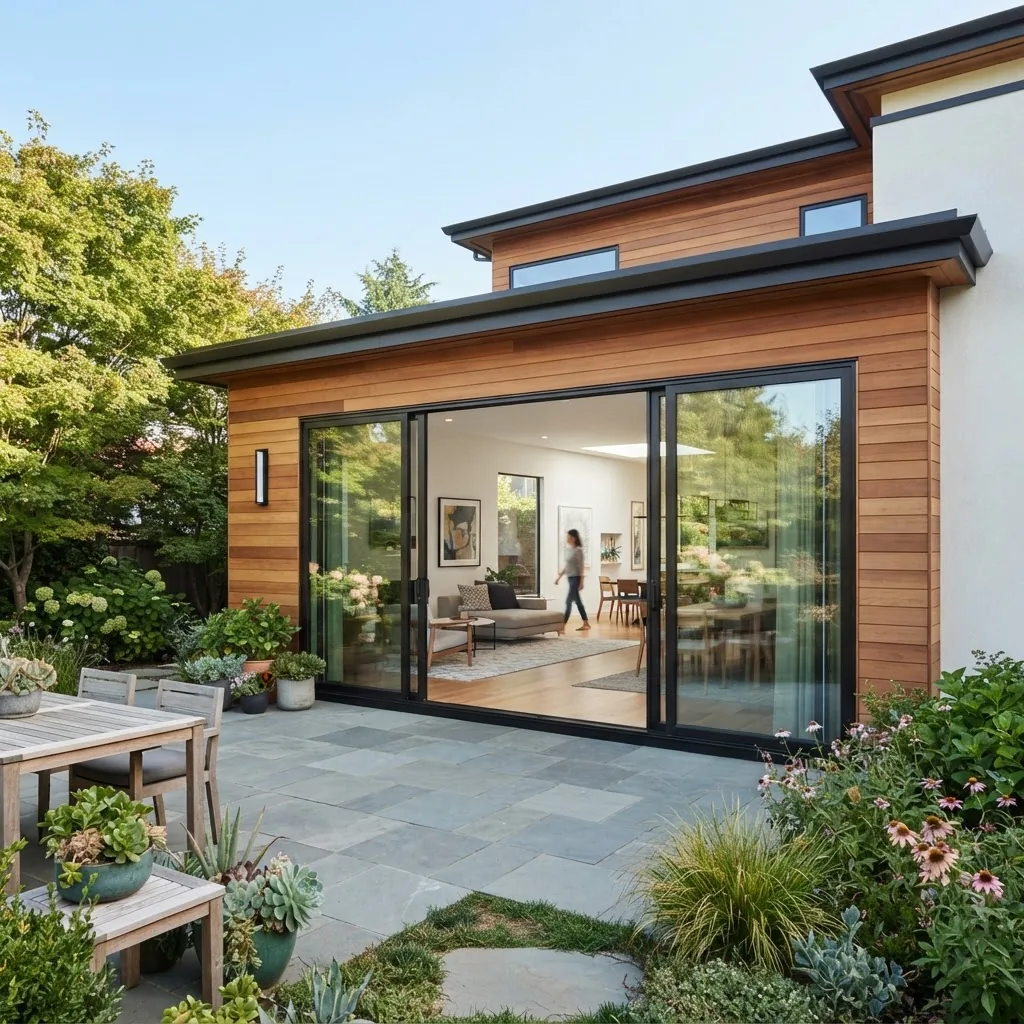
| Configuration | Typical Width | Installed Cost Range | Pros | Cons |
|---|---|---|---|---|
| Two-panel sliding (standard) | 5–6 ft | $900–$2,000 | Cost-effective; simple hardware; widely available | Limited opening width; smaller visual field |
| Three-panel (center glides or pocket) | 7–8 ft | $1,400–$3,200 | Wider opening; balance of cost and view | Heavier track; more maintenance points |
| Four-panel multi-slide | 8–12 ft | $3,000–$7,500+ | Expansive openings; near wall-length views | High cost; often custom; structural work possible |
| Pocketing sliding systems | Variable (8–12+ ft) | $4,000–$9,000+ | Full clear openings when pocketed; premium aesthetic | Requires wall modifications; highest install complexity |
| Oversized single-slab (lift-and-slide) | 8–12 ft large slab | $5,000–$12,000+ | Minimal frame sightlines; premium thermal breaks | Expensive; heavy; needs precision installation |
Notes on thresholds: an 8 ft sliding glass door typically pushes a product into custom or semi-custom category; a 10–12 ft system almost always requires custom engineering and a structural header. According to a 2024 industry report, oversized glazing projects have a 30–60% higher lead time than standard doors.
Key takeaway: if your opening is 8 ft or wider, plan for custom fabrication, heavier hardware, and a 25–60% premium vs. standard doors.
Materials and Finishes for Patio Sliding Doors
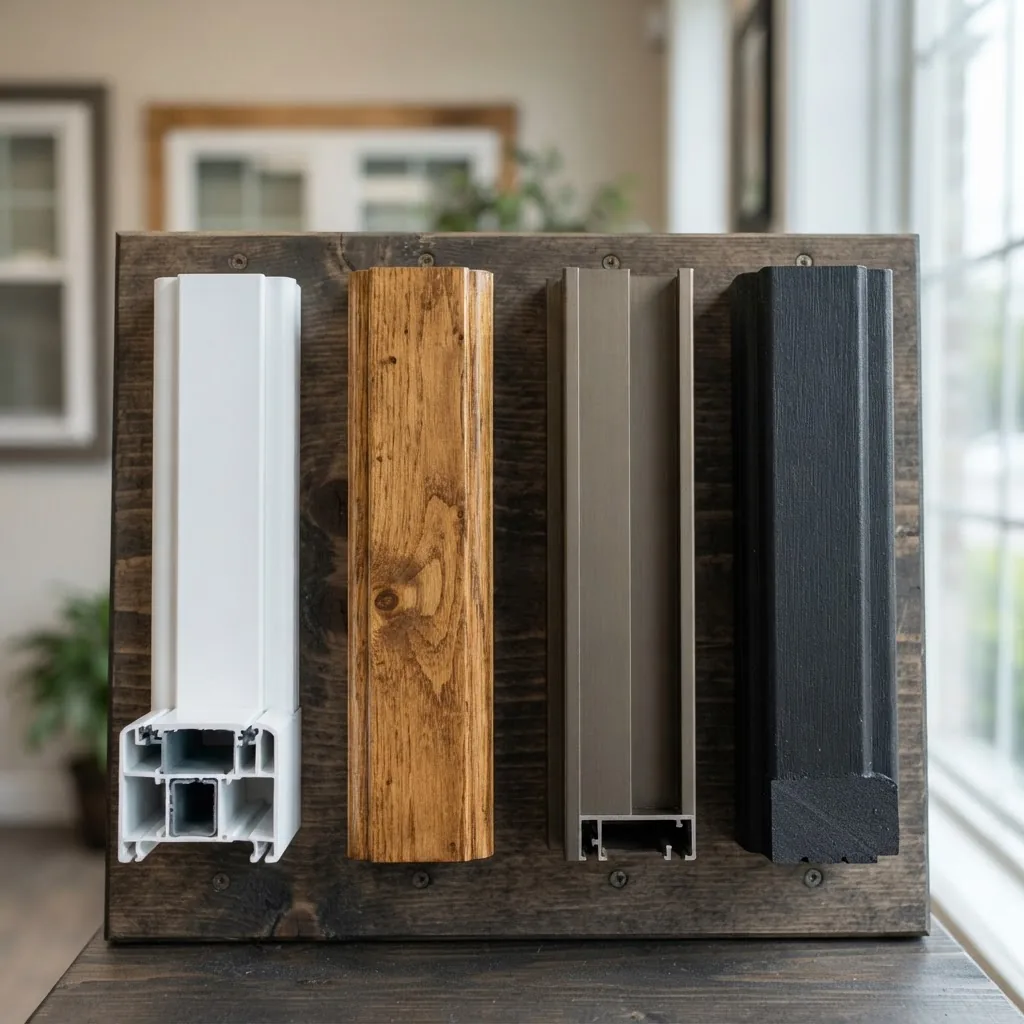
Material choice affects cost, thermal performance, durability, and aesthetics. Below we examine common materials with advantages and disadvantages and link to advanced resources for large glass applications.
Vinyl
Advantages: lowest upfront cost, low maintenance, decent thermal performance in standard packages. Disadvantages: limited color/finish options, wider frames reduce glass area, can warp in extreme heat. Typical installed cost for vinyl sliding doors: $900–$2,500.
Aluminum (including thermally broken)
Advantages: slim sightlines, strong for large oversized doors, recyclable. Thermally-broken aluminum improves U-factor significantly. Disadvantages: untreated aluminum conducts heat; standard aluminum is less energy-efficient without thermal breaks. Typical installed cost: $1,500–$6,000 depending on thermal treatments and size.
Wood and Wood-Clad
Advantages: premium aesthetic, excellent interior finishes, good insulator when combined with modern glazing. Disadvantages: highest maintenance (stain/paint), vulnerable to moisture if exterior wood is exposed. Installed cost: $2,000–$8,000+ depending on species and cladding.
Fiberglass
Advantages: excellent dimensional stability, good thermal performance, can mimic wood grain. Disadvantages: higher material cost than vinyl, fewer aftermarket finish options. Installed cost: $1,800–$5,500.
Finishes, coatings and large-scale materials
Powder-coated aluminum, factory-applied stains, and composite cladding influence both cost and lifespan. For advanced material comparison relevant to glass curtain walls and large patio systems, review glass wall materials and finishes.
Key takeaway: choose vinyl for budget, fiberglass for stability, aluminum thermally-broken for slim profiles and oversized spans, and wood for interior warmth at higher maintenance/cost.
Energy Efficiency and Security Features to Consider
Energy and security choices materially affect lifetime costs and comfort. Use NFRC labels to compare U-factor and SHGC values; for standards see NFRC.
Energy performance metrics
- U-factor: lower is better. Typical double-pane low-E sliding doors: 0.30–0.40; triple-pane: 0.20–0.30. According to a 2024 industry report, upgrading from double-pane to high-performance triple-pane can reduce heat loss by 20–40% in cold climates.
- SHGC: lower SHGC reduces solar heat gain. For hot climates target SHGC <0.30; for cold climates higher SHGC can help passive solar heating.
- Look for NFRC-certification and local utility rebates tied to rated performance.
Security features
- Multi-point locks and anti-lift devices significantly increase resistance to forced entry; adding these costs $150–$600.
- Tempered glass is the minimum safety standard for exterior patio doors; laminated security glass adds acoustic and intrusion resistance but increases cost 25–80%.
- For standards and testing references see ASTM International and local building code authorities for required glazing safety in doors.
Key takeaway: specify NFRC-rated U-factor and SHGC targets for your climate; invest in multi-point locking and laminated glass if security is a priority.
Installation and Replacement Considerations
Replacement vs. new construction drives process and cost. Replacement (insert) swaps a new unit into the existing frame and is faster; new construction replaces framing, often needed for size changes.
Step-by-step installation overview (professional workflow) with pro tips and warnings:
- Measure & order — Verify rough opening, floor level, and sill. Allow 4–12 week lead time for custom 8–12 ft units. According to a 2024 industry report, lead times for custom oversized doors are 30–60 days longer than stock units.
- Site prep — Remove trim, assess jambs, and check for rot or structural deficiencies. Tools: reciprocating saw, pry bars, circular saw, level, shims, caulk gun, adjustable wrench.
- Remove existing unit — Protect interior floors; wear eye protection and gloves. Warning: glass breakage risk if doors are not safely secured.
- Inspect and repair opening — Fix rotten framing, ensure square opening; install or verify header if widenings exceed local span thresholds.
- Install new door — Set into sill, shim to plumb, anchor, flash and seal per manufacturer. Use expanding low-pressure foam for gaps (avoid over-expansion near frame).
- Finish — Install trim, test operation and locks, tune rollers. Verify manufacturer-specified clearances.
DIY vs Professional: DIY is feasible for like-for-like insert replacements if you have carpentry experience. For oversized systems, structural changes, electrified locks, or warranty requirements, hire a certified installer. According to a 2024 industry report, professional installations reduce warranty claims by ~40%.
installation considerations for glass doors provides parallels between garage door window installs and patio sliding door installation complexity.
How we assessed this: we aggregated manufacturer published price lists, national remodeling cost indexes, and installer bids; we adjusted for 2024 reported regional labor swings and cross-checked installation times with professional installers in multiple climates.
Where to Buy Patio Doors and Sourcing Tips
You can source patio doors through national retail chains, local glass & door fabricators, online specialists, and factory-direct manufacturers. Timelines and warranty terms vary widely.
- Home improvement retailers (big-box) — Pros: fast availability for standard sizes, easy returns. Cons: limited customization, mid-tier warranty.
- Independent window & door dealers — Pros: local installation packages, often handle permits. Cons: higher prices for brand/installation combined.
- Factory-direct/custom manufacturers — Pros: custom sizes (8–12 ft), premium hardware and finishes, longer warranty options. Cons: longer lead times, higher cost.
- Online specialists — Pros: broad selection and competitive raw product pricing. Cons: installation must be sourced locally, returns are harder for heavy glass.
For alternative product types and sourcing comparisons, consider single glass exterior doors as a benchmark for costs and lead times.
Key takeaway: choose local dealers for complex installs and warranty-managed jobs; use factory-direct for custom finishes if you can manage local installation separately.
Maintenance and Longevity of Patio Sliding Doors
Routine maintenance extends life and reduces repair cost. Below is an actionable checklist with frequencies.
- Quarterly: Clean tracks, vacuum debris, lubricate rollers with silicone spray, inspect weatherstripping.
- Biannually: Check and tighten hardware, test multi-point locks, inspect seals for compression loss.
- Annually: Clean glass with non-abrasive cleaners, inspect sill drainage and re-caulk as needed.
- As needed: Replace rollers or worn weatherstripping; laminated units should be inspected for delamination.
window insert maintenance tips can inform similar upkeep routines for sliding patio doors.
Key takeaway: quarterly track care and annual hardware checks prevent most functional failures and preserve warranty compliance.
Design Trends and Modern Patio Door Styles
Modern patio doors emphasize minimal frames, large glass panels, and dark- or black-framed accents to create seamless indoor-outdoor transitions. These trends align with contemporary exterior glazing aesthetics.
Recent popular styles include black-framed sliding doors, ultra-slim thermally-broken aluminum frames, and frameless or near-frameless lift-and-slide large panels. For cross-category inspiration consult resources on black glass aesthetics.
black-framed sliding glass doors show how a monochrome frame can create strong visual cohesion between patio and garage glazing choices.
frameless glass patio door options translate frameless garage door aesthetics to residential patio installations where pocketing or lift-and-slide hardware supports large slabs.
modern glass door aesthetics and modern glass door design offer design principles applicable across patio and garage glazing to create a cohesive exterior.
Key takeaway: specify slim sightlines, dark finishes, and larger panels for a contemporary look; anticipate higher costs for structural and hardware upgrades required by these styles.
What the numbers mean for you
- Set a primary goal: budget-conscious replacement (plan $900–$2,500) vs. premium oversized upgrade (plan $4,500–$12,000+).
- For openings ≥8 ft, assume custom pricing, added lead time, and structural reinforcement—budget an extra 25–50%.
- Prioritize U-factor and SHGC targets based on climate and check NFRC ratings; savings on energy often offset higher glazing costs over time.
- Invest in multi-point locks and laminated glass if security is a primary concern—these add upfront cost but materially improve safety.
- Hire a pro for structural changes and large slabs; DIY is reasonable only for like-for-like insert replacements with moderate carpentry skills.
Final recommendation: gather three bids—one local dealer, one factory-direct, and one independent installer—and compare NFRC ratings, warranty terms, and lead times before committing.
According to a 2024 industry report, comparing certified NFRC ratings and installer warranties before purchase reduces lifecycle costs and unexpected retrofit needs.
Case study recap: Homeowner in Austin upgraded to a 10-ft thermally-broken aluminum multi-slide for $5,200 installed; trade-offs included longer lead time and premium hardware, but annual heating/cooling savings projected to recoup part of the premium over 6–10 years.